Follow Us on Google
• We’re not appreciated; many see us as dirty, uneducated, unskilled, they lament
By Kafilat Akinwunmi
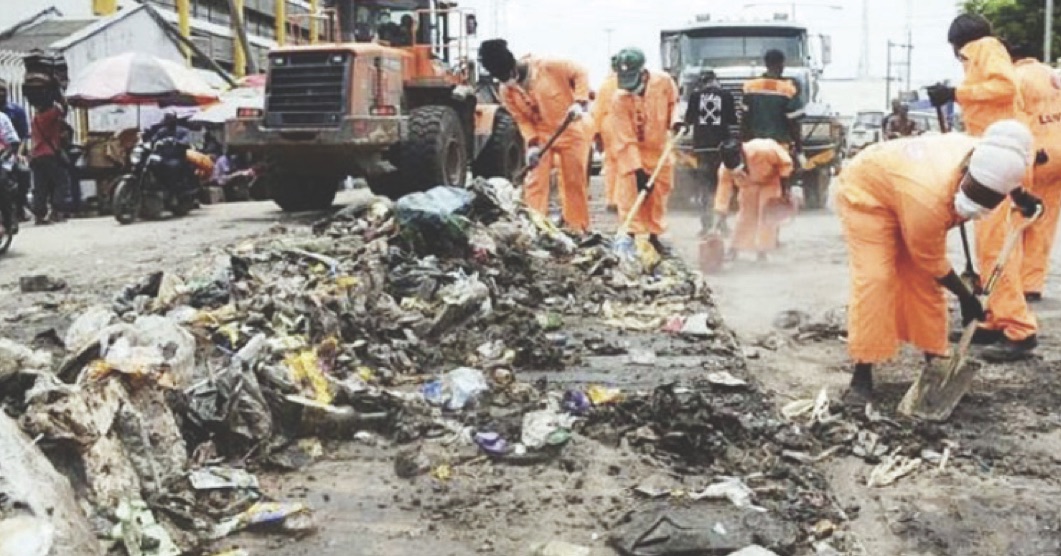
According to some waste handlers, handling and taking care of people’s refuse is one of the most labour-intensive and least appreciated jobs around. This statement was made by many of them not only in terms of the wages they receive from working, but because of how most sanitation workers are under-looked in their field of work. Most of them complained that they live in hazardous conditions which affect their health..Although provisions are made for waste handlers, the bacteria and diseases that come from everyday contact with waste cannot be overemphasized.


For several years, waste handlers have continued fighting for recognition of their work. They are a critical workforce, potentially contributing to achieving higher level of sanitation in Nigeria at large, yet they still face several challenges in their field of work They continue to be subjected to everyday stigmatisation and they face various socio-economic vulnerabilities and remain at the receiving end when it comes to the ill impacts of informal waste collection and treatment.
Sadly, waste handlers are the ones who suffer for the waste collection that both young and old use, yet they are subjected to more mockery and are less appreciated.
When Saturday Sun visited one of the waste managing organisations in Lagos, one of the waste manager who wished to remain anonymous, spoke to our correspondent. He explained how he suffered tuberculosis for six months before he was able to overcome the ailment.
“I had to spend at least six days out of a week in the hospital. I was on drugs for an average of eight months before God took control. Though I suffered from tuberculosis, I had no choice but to return to my job because nobody is ready to help anybody in this our country, All I need to do is ensure I maintained personal hygiene and adhere to certain safety measures. Also, we face a lot from working as waste handlers,” he said.
He went further to explain how people discourage waste handlers. “But evacuating waste does not make you smell, all one needs to do is maintain personal hygiene. So I wonder why people most times behave like they are not the ones who deposited most of the waste we are handling. Every occupation has its own hazards and we’ve learnt and managed for quite some time, so it has literally become a part of us since it’s what we do every day. Most waste managing companies provide kits for their workers, and it very unfortunate that some of these workers prefer to sell safety kits instead of using them for themselves. In fact some waste handlers are the ones giving themselves problems.
“I could remember sometime ago, when we were provided with milk to recover some of the essentials that we lose during our work, some of us who are also waste handlers refused to use them for their personal health benefits, which was the sole reason for the provision of milk in the first place. Instead, they sold them. In fact, most of the waste handlers sold them to outsiders instead of using it to maintain their health,” he said.
According to Mr Afolabi, waste isn’t something anyone can run away from. “It is one of the reasons life is flowing. Because the more we produce to survive, the more waste is generated. And as waste handlers, I believe people should refrain from believing that waste handlers are dirty because that’s what most people think. Once they notice that waste is your source of livelihood, they begin to advise people to get better jobs. Before I came into waste, I wasn’t familiar with waste handling but as time went on, I adapted. I used to avoid them getting on my bare hands and as time went on, I was able to withstand both the smell and how it felt to be in waste. Moreover, it’s not even as if we don’t wash up after work.”
A woman in her late 40s who identified as Mrs Malik is a street sweeper. She explained how she suffers from everyday body ache, catarrh, and cough. Hr words: “Working as a street sweeper is not a child’s play. Only the strong can survive. Because sometimes when we are sweeping, some people will still have the effrontery to dump waste where we’ve swept. Nigerians don’t pity us at all; instead they harass us at every given opportunity. Some drivers will even speed past you as if they want to run into you. I believe they would never do these things if we were their wives, mothers or relatives.”
She added that one of the issues that waste handlers face is public stigmatisation. “Handlers should be more appreciated. Most people don’t even know how to maintain cleanliness at home yet they act as if waste street sweepers are not human,” she bemoaned. Another street sweeper identified as Mrs Emmanuel in her smattered English explained how she was almost knocked down by a vehicle. She noted that the driver never bothered to look back to even say he was sorry.
“I’ve had several encounters with this kind of drivers in my two years of working as a street sweeper. Many of them don’t care if we die, as long as they are not captured. They believe it is fine but God will judge them,” she told the reporter.
Ayeni is also a waste handler. He believes people should be sensitised that waste handlers are also human and they should be sensitised on the role waste handlers play in protecting the public. According to Ateni, “some people view waste handling as a dirty, undesirable job, leading to stereotypes and discrimination against workers in the industry. Then there is the perception that waste handlers are “uneducated” or “unskilled,” despite the complex and technical nature of our work. Many people don’t realise the crucial role that we, waste handlers play in maintaining public health and safety. Yet they criticize us saying we’re into dirty job. Some communities may view waste facilities as a nuisance or a sign of economic decline, leading to NIMBY (Not In My Backyard) attitudes but we stand to ensure the safety of the people, so people should learn not to criticize waste handlers.”
However, Saturday Sun also asked a medical doctor about his professional opinion on the common health hazards that might be faced by an average waste handler. He recommended that vaccinations, safety measures and routine screening procedures be administered on waste handlers.
Dr Kasim Omokanye of Limad Hospital, Lagos spoke with our correspondent. He said: “The hazards waste handlers are exposed to ranges from physical injuries e.g from pricks from needles or broken glasses, contacts with blood, blood product or body fluids through which they may get infected with diseases, direct contamination of body parts with microbes (germs).
He went further to mention some of the statutory measures and regulations aimed at preventing and or mitigating the hazards. He explained: “There are statutory measures and regulations aimed at preventing and or mitigating these hazards which includes, Dedicated vehicles specially designed for this purpose with regular disinfectants and fumigation, Protective tools like gloves, boots, face masks etc, Regular medical check up and screening for common ailments that they are exposed to.
However, at the point of contact viz hospitals, it is regulated that there must be proper segregation of the different medical waste.
Dr Kasim also outlined some screening procedure and vaccinations routines done for the workers which includes HIV, hepatitis, typhoid, and the like. These are usually done to provide safety for the workers put their life at risk to make our country a better place. Some other vaccinations recommended for waste handlers are tetanus injection full dose, hepatitis, vaccination, typhoid vaccination and others.