Follow Us on Google
Words are not innocent. They carry weight. They carry memory. They carry consequences. A careless word can ignite a riot. A reckless phrase can destroy a reputation. A misleading sentence can alter the course of public opinion. A nation may survive bad roads, poor electricity, and even economic hardship. But no democracy can long survive the corruption of language. Two concepts help us understand this danger. The first is contextomy. The second is doublespeak.
Contextomy is the art of cutting a statement away from its natural environment. It is quotation by amputation. A sentence is removed from the paragraph that explains it. A phrase is detached from the thought that qualifies it. A fragment is presented as the whole. The words remain authentic. The meaning does not. The quotation is accurate. The interpretation is false. Historian Milton Mayer coined the term while describing the propaganda techniques of Julius Streicher, the notorious publisher of Nazi Germany’s anti-Semitic newspaper, Der Stürmer. Streicher specialised in extracting isolated portions of texts and presenting them in ways that inflamed prejudice and hatred. Meaning was not merely reported. Meaning was manufactured. The branch was shown. The forest was hidden. The effect was devastating.
The second concept is doublespeak. If contextomy mutilates meaning from outside, doublespeak manipulates meaning from within. Doublespeak is language with two faces. It says one thing and reserves the right to claim another. It invites one interpretation today and offers another tomorrow. It throws a stone and hides the hand. It opens a door and leaves an escape route. George Orwell warned about this phenomenon long ago. In the world of doublespeak, words cease to describe reality. They begin to camouflage reality. Truth becomes slippery. Accountability becomes elusive. Responsibility becomes negotiable. Democracy becomes vulnerable.
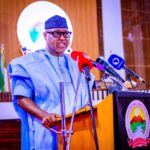
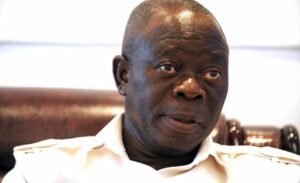
The recent controversies surrounding Senator Adams Oshiomhole present a fascinating case study in the interplay between contextomy and doublespeak. The first controversy arose from comments concerning the suspension of Senator Natasha Akpoti-Uduaghan. Reacting to debates surrounding the committee report that recommended her suspension, Oshiomhole reportedly stated that some senators informed him that although their names appeared on the report, they never signed it. He referred specifically to Senator Ireti Kingibe and suggested that others had raised similar concerns.
The implications were immediate. If lawmakers did not sign a report but their names appeared on it, many Nigerians naturally interpreted the statement as an allegation of forgery. Headlines reflected that interpretation. Social media amplified it. Political actors weaponised it. The controversy exploded. Then came the recantation dressed as ‘clarifications’. Senator Oshiomhole insisted that he never alleged forgery. No senator’s signature was forged, he declared. He went further to express regret if his comments embarrassed the Senate or any of its members.
The dust had hardly settled before another storm erupted. This time, it involved Senate President Godswill Akpabio and the Nigerian National Petroleum Company Limited. Speaking during discussions surrounding Senate investigations into alleged financial discrepancies within the NNPCL, Senator Oshiomhole launched a blistering criticism of what he described as entrenched nepotism. According to him, influential Nigerians had transformed the upper levels of the corporation into a family estate. Children. Uncles. Cousins. In-laws. Everybody’s relatives. Everybody’s beneficiaries. Everybody’s inheritance.
Then came the explosive statement. He claimed he had been told that the Senate President’s daughter secured employment outside the normal recruitment process and was placed in what Nigerians would describe as a juicy position. Again, the implications were immediate. Again, headlines buzzed. Again, social media convulsed. Again, the public heard accusations of favouritism and abuse of influence. And once again, ‘clarifications’ followed controversy. Senator Akpabio’s spokesman denied that any of the Senate President’s children worked in the NNPCL or its subsidiaries. Characteristically, Senator Oshiomhole sought refuge in his playbook: he was merely repeating information somebody had given him. His criticism, he claimed, was directed at a broader culture of nepotism. He was speaking generally. He was not accusing anyone of wrongdoing beyond concerns about due process.
Similarly, when his description of NNPCL officials as a “bunch of criminals and thieves” generated outrage and drew a formal dissociation from the Senate, he argued that he spoke in his personal capacity and that his remarks were being misunderstood. Thus emerges a pattern. A statement is made. A controversy follows. A clarification arrives. A denial emerges. An explanation appears. And the public is left standing in a fog of competing meanings. This is where the central question arises. Are we witnessing contextomy? Or are we witnessing doublespeak?
There is evidence of both.
Certainly, contextomy is a permanent danger in contemporary media culture. Television interviews lasting thirty minutes are reduced to thirty-second clips. Nuance is sacrificed on the altar of virality. Qualifications disappear. Conditions vanish. Caution is removed. A complex argument becomes a sensational headline. The economics of attention rewards outrage rather than accuracy. In such an environment, it is entirely possible for remarks to be misunderstood; context to disappear; and meaning to suffer. Yet, contextomy alone does not fully explain the recurring pattern before us. The problem is that the original statements themselves carry implications that ordinary listeners can hardly be expected to ignore.
If a senator says lawmakers did not sign a report but their names appeared on it, citizens will naturally wonder whether forgery occurred. If a senator, who says somebody obtained employment without following due process, citizens will naturally infer favouritism. If a senator says an institution has become a family business populated by relatives and political connections, citizens will naturally suspect corruption. These are not unreasonable conclusions, more so when the senator in question is not known to have been formally diagnosed of ‘verbal diarrhea’. They arise from the ordinary meanings of ordinary words. This is where doublespeak enters the conversation.
It is, without doubt, a difficult perch for Senator Adams Oshiomhole. When a politician’s public utterances seem repeatedly to hover uneasily between the Scylla of contextomy and the Charybdis of doublespeak, the speaker risks cultivating an image no statesman should desire; i.e., that of one, who is used to saying enough to provoke conviction, yet leaving enough unsaid to permit denial. Whether that perception is deserved is almost beside the point. In public life, perception is often the shadow cast by repeated speech, and shadows have a stubborn habit of outliving the objects that produce them. A tongue that constantly demands interpretation soon ceases to inspire confidence. It begins to acquire the imprimaturs of the proverbial forked tongue, not because every word is false, but because every word appears capable of pointing in opposite directions. And once language acquires two shadows, trust struggles to recognise the original voice. In politics, perception often outruns intention, and repeated ambiguity eventually becomes its own testimony.
Doublespeak thrives in ambiguity. Its genius lies in implication without commitment. The allegation is forceful enough to generate public reaction. The subsequent clarification is flexible enough to deny responsibility for the reaction. The statement travels. The speaker retreats. The public remains confused. The controversy survives. Accountability disappears. Whether intentional or not, the effect is corrosive. And the victim is not merely language. The victim is democracy itself. Democracy is built upon trust. Trust is its oxygen. Trust is its bloodstream. Trust is its invisible constitution. Without trust, institutions become shells. Without trust, laws lose authority. Without trust, elections lose meaning. Without trust, citizenship becomes cynical.
Every democratic institution depends on the credibility of language. The courts issue judgments through words. The legislature passes laws through words. The executive governs through words. The media informs through words. Citizens deliberate through words. When words become unstable, institutions become unstable. When language becomes uncertain, governance becomes uncertain. When truth becomes negotiable, democracy becomes fragile. This is the deeper significance of the Oshiomhole episodes. The issue is larger than Senator Natasha Akpoti-Uduaghan. It is larger than Senator Godswill Akpabio. It is larger than the NNPCL. It is even larger than Senator Adams Oshiomhole himself. The issue concerns the quality of democratic conversation in Nigeria.
The Senate, as the highest legislative chamber of the republic, bears a special responsibility. Its authority rests not on force but on credibility. Citizens expect disagreements. They expect debates. They expect partisan rivalries. What they do not expect is confusion over basic facts. Did senators sign the report or not? Was the signature of Senator Ireti Kingibe appended on the Committee’s Report, which she openly stated in an Arise TV prime time interview that she never saw? Did anyone receive preferential employment or not? Were procedures violated or not? These questions require clarity. Not ambiguities. Not ambivalences. Not prevarications. Not equivocations. They require evidence, not insinuation. They require precision, not elastic language.
Political titles are speech-act commitments, not merely ceremonial labels. Far from being verbal jewelry, political office titles – ‘Honourable’ ‘Distinguished,’ ‘His Excellency’ – are covenants with language, contracts with democracy, and solemn reminders that the higher the office, the heavier the tongue. They are neither ornamental grammar nor what syntacticians working within Chomskyan tradition of Transformational-Generative Grammar (TGG) refer to as ‘Empty Category,’ i.e., a syntactic placeholder without a constitutive substance. They are not a liquor-joint sobriquet or a decorative prefix for official letterheads. Such appellations are laden with semantic weight and moral expectation. They constitute a constitutional burden worn as an honorific. They demand disciplined speech, measured judgment, and accountable utterance. They signify excellence in judgment, restraint in speech, and fidelity to truth.
Therefore, clarity is not optional. It is a democratic duty. Speak clearly. Accuse clearly. Defend clearly. Apologise clearly. Retract clearly. Do not hide behind ambiguity. Do not shelter beneath implication. Do not depend and feast on the confusion of listeners. Nigeria faces too many serious challenges to become a republic of perpetual retractions and recantations. The Nigerian state requires clarity. She requires truth. She requires accountability. For whether the Oshiomhole controversies arose from contextomy, doublespeak, or a dangerous mixture of both, they reveal a troubling reality: language itself is becoming a battle-ground; meaning is becoming contested territory; and truth itself is becoming negotiable.
It is no longer a mere semantic contest; it is an epistemic war over who has the power to define reality. And when words lose their anchors, institutions lose their bearings. When institutions lose their bearings, democracy loses direction. When democracy loses direction, the republic begins to drift. A nation that can no longer distinguish between what was said, what was meant, and what is later claimed to have been meant contends with the risk of trust deficits. And when trust dies, democracy is left standing on stilts, swaying with every wind of propaganda, distortion, insinuation, and denial. When words become fleeing refugees from meaning, democracy soon becomes an orphan of history.
Democracy begins with votes. But it survives through words. And words, once released into the marketplace of history, seldom return unchanged. That is why those entrusted with the republic must guard their tongues as jealously as they guard the Constitution. Nigeria does not only need better politicians; she needs better language. She needs leaders, whose words illuminate rather than obfuscate, whose language clarifies rather than confuses, whose utterances build trust rather than mortgage it. For in the end, nation-states are not destroyed only by bullets and bombs. They are also diminshed by contextual amputations, Janus-faced utterances, and amoebic semantics.
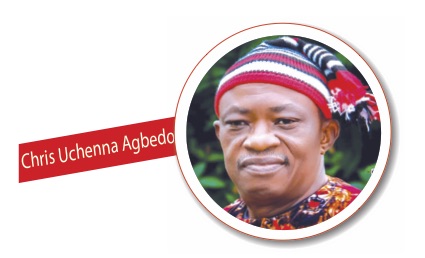
• Agbedo writes from the University of Nigeria, Nsukka.