Follow Us on Google
From Bimbola Oyesola
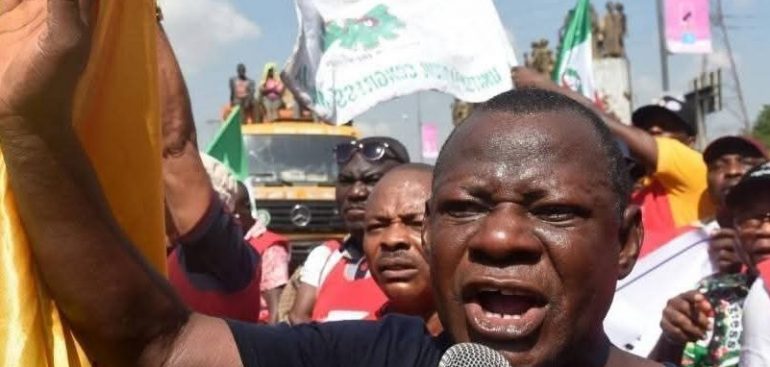
Nigeria’s organised labour and civil society movements have continued to mourn the sudden death of one of their most revered activists, Abiodun ‘Aremson’ Aremu, who died in a tragic hit-and-run accident on Sunday, October 12, 2025, in Ifo, Ogun State.
The incident, which occurred near his home, has sent shockwaves through the Nigeria Labour Congress (NLC) and the broader progressive movement, with many describing his passing as “a devastating loss to the working class.”
Aremu, a founding member of the Labour Civil Society Coalition (LASCO) and Joint Action Front (JAF), was celebrated as a fearless defender of the poor and a strategist of the people’s struggle. Known for his fiery intellect and deep ideological commitment, he dedicated his life to fighting injustice, building worker solidarity, and advancing the cause of social and economic equality.
“Comrade Aremu was no ordinary activist, he was a teacher, a revolutionary, and a patriot who lived and breathed the struggle,” said Joe Ajaero, President of the Nigeria Labour Congress (NLC), in a statement by the Congress. “He was one of the most consistent voices against exploitation and oppression in Nigeria. His death is not only painful; it is suspicious, and we demand a thorough investigation.”
The NLC expressed grave concern over the circumstances surrounding his death, describing the incident as “a so-called hit-and-run” and drawing parallels with the mysterious death of another activist, Patrick Naagbanton. “We cannot and will not accept this as a mere accident,” Ajaero added. “The working class deserves answers, and the truth must be revealed.”
Throughout his career, Aremu played a pivotal role in uniting Nigeria’s organised labour movement with the broader community of the oppressed. Through platforms such as LASCO and JAF, he mobilised thousands during key national struggles, including protests against fuel price hikes and anti-people economic reforms.
His colleagues describe him as a man who never compromised his principles, even in moments of personal risk.
Beyond street activism, Aremu was a scholar and mentor who believed that every struggle required intellectual grounding. To that end, he founded the Amilcar Cabral Institute of Ideological Studies (ACIS), which became a training ground for young activists in socialist thought and people-centred leadership.
“He always said the battle for the future is the battle for the minds of the youth,” recalled one of his former student. “Through ACIS, he gave us clarity, courage, and purpose.”
Other News
A committed internationalist, Aremu’s activism extended beyond Nigeria’s borders. He was a leading figure in the Nigeria Movement for the Liberation of Western Sahara and the Nigerian Movement of Solidarity with Cuba, consistently linking the Nigerian struggle to global campaigns against imperialism and injustice. His peers say he believed deeply that “the freedom of one nation is tied to the freedom of all.”
In recognition of his lifelong commitment, tributes have poured in from labour unions, human rights organisations, and international allies. The Academic Staff Union of Universities (ASUU) described him as “a bridge between thought and action,” while civil rights advocate Dr. Joe Okei-Odumakin hailed him as “a people’s general whose courage and intellect were unmatched.”
To honour his memory, the NLC announced plans for a mass ideological burial on Thursday, October 23, in Ifo, Ogun State.
The ceremony is expected to draw thousands of comrades, students, and sympathisers from across Nigeria. “It will not just be a burial,” said NLC spokesperson Benson Upah. “It will be a rallying point to recommit ourselves to the struggle he lived and died for.”
His colleagues say the best way to honour Aremu’s legacy is to continue the fight he championed. “He taught us that the liberation of the working class will not be handed down; it must be won through unity, ideology, and persistence,” said Auwal Musa Rafsanjani, Executive Director of CISLAC. “Aremu’s legacy is a challenge to all of us to remain steadfast and fearless.”
Calls are already mounting to immortalise his name. Several groups have proposed renaming the Amilcar Cabral Institute in his honour and launching an Annual Aremu Memorial Lecture to promote ideological education and people’s mobilisation. The NLC has also urged Nigerians to support his family, describing them as “partners in his lifelong struggle for justice.”
Though his voice has been silenced, many believe Aremu’s spirit remains alive in every protest, classroom, and union hall where workers gather to demand a better world.
As the NLC concluded in its tribute: “His body has fallen, but his ideas are invincible. Nigerian masses will miss him, Nigerian workers will remember him, and the struggle he lived for will continue until the liberation of the working class is complete.”
Abiodun Aremu was a lifelong advocate for workers’ rights and social justice. He played leading roles in the NLC, LASCO, and JAF and was widely respected for his ideological clarity, organisational discipline, and mentorship of young activists.