Follow Us on Google
Nigerian women seek financial freedom through agriculture
By Juliana Taiwo-Obalonye and Francis Onyedikachukwu
For Issa Zainab Ahmed, a university degree was supposed to be her passport to financial independence. But six months after graduating from Bayero University, Kano, she found herself at home, unemployed and uncertain about what the future held.
Like many young Nigerian graduates, she had completed her education with hopes of securing a job and building a career. Instead, she was confronted with unemployment, with few opportunities to put her qualifications to use.
Her circumstances changed when she learnt about an agricultural empowerment programme offering young women an opportunity to establish businesses through poultry farming.
Although agriculture was not necessarily her original career ambition, the prospect of acquiring productive skills and earning an income was enough to convince her to participate.
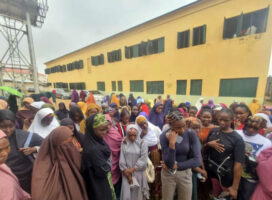
“I graduated six months ago. Since I graduated, I’ve been at home. I’ve not been doing anything. So, when I heard about it, I was excited to come out, at least to keep me busy,” she said.
For Ahmed, the opportunity represents more than the prospect of raising chickens. It is a chance to escape the uncertainty of unemployment, acquire a new skill and begin building a source of income in an economy where a university degree does not always guarantee a job.
Her experience reflects the predicament of many Nigerian women who, despite their willingness to work, remain excluded from economic opportunities because of limited access to capital, productive assets, training and markets.
For some, the challenge begins after graduation. For others, particularly rural women farmers, it is the struggle to obtain land, afford machinery, secure financing and earn a fair return from years of agricultural labour.
Across these different circumstances, agriculture is increasingly being explored as a route to financial independence, with cooperatives, development organisations and government-backed initiatives seeking to help women move beyond subsistence production into sustainable businesses.
Ahmed’s opportunity is part of a programme being implemented by Christian Aid, in partnership with the Female Farmers Society of Nigeria and with support from the Mastercard Foundation. The initiative targets women aged between 18 and 35, with the aim of creating employment and business opportunities through agriculture.
Although the immediate intervention focuses on poultry production, its broader ambition is to help women participate in agricultural value chains, develop entrepreneurial skills and gain access to markets.
For Ahmed, the opportunity has already changed how she views her immediate future.
Asked whether she would continue in poultry farming, she said she was willing to embrace it and develop the necessary interest.
“In this country, I don’t think there’s anything like passion for anybody. You find yourself anywhere. So, you just have to gain passion for it to enjoy doing it,” she said.
Her statement captures the difficult choices facing young Nigerians who must often look beyond their academic training to find viable means of earning a living.
While Ahmed is taking her first steps into agriculture, Dr Maimuna Abdullaye Habib, national president of the Female Farmers Apex Cooperative Society, is working to help women overcome the structural barriers that prevent them from turning agricultural production into wealth.
For Habib, empowering women farmers is not simply about increasing the number of people engaged in agriculture. It is about giving them the resources, skills and commercial opportunities to earn sustainable incomes.
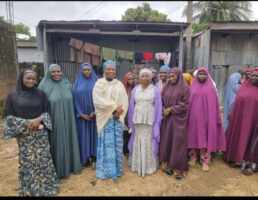
The society has established registered female farmers’ cooperatives in about 34 states, providing a platform for women to access financing, training and agricultural support.
It has also trained 500 rural women in beekeeping in Gwagwalada and Kwali area councils of the Federal Capital Territory (FCT), providing 120 beehives and pursuing plans to expand the initiative.
Its partnership with the University of Abuja, which has made 30 hectares of farmland available to the cooperative, is expected to support crop and vegetable farming, as well as expanded beekeeping activities.
These initiatives reflect an attempt to address the multiple challenges confronting women farmers, whose contributions to food production have not always translated into financial security.
Habib believes women must be supported not only to produce food but also to process, package and sell their products at prices that reflect their labour and investments.
“Most of the farmers in Nigeria are women. They contribute about 70 per cent of food in Nigeria. So, when you talk about farming, you talk about food security, you talk about rural women farmers,” she said.
Other News
Her assertion underscores the importance of women’s participation in agriculture, particularly in a country where food production remains closely linked to rural livelihoods and household incomes.
Yet, despite their contribution, many women farmers continue to operate with inadequate equipment, limited financing and little control over the markets through which their produce is sold.
For Habib, changing this situation requires moving women away from dependence on basic farming tools and helping them become commercially competitive.
High cost of turning farming into wealth
For many smallholder farmers, the traditional hoe and cutlass remain the primary tools of production, limiting the size of farms they can manage and the volume of produce they can supply.
Habib identified mechanisation as one of the greatest obstacles confronting women farmers, citing the N42 million cost of a tractor as beyond the reach of most cooperatives.
She said the society had approached the Federal Ministry of Agriculture for assistance under an arrangement requiring farmers to pay 10 per cent upfront and repay the balance over three years.
“With mechanisation, you farm more and produce more. With hoe and cutlass, you do less. But if you have a tractor, you do more, then you get more,” she said.
Finance is another challenge. Through a partnership with KoboWeb Microfinance Bank, the society offers members loans at an interest rate of four per cent to expand their agricultural businesses.
However, Habib said middlemen continued to undermine women’s earnings by controlling access to buyers, leaving farmers with limited bargaining power.
She cited maize procurement for government silos as an example of a system in which intermediaries often stand between producers and buyers.
“If they can contact the women or contact our female farmers directly, our farmers can supply directly, so this problem will be solved,” she said.
The society is therefore encouraging cooperative marketing and processing to help women secure better returns. Its ambition also extends to exporting honey, sesame seeds, soybeans and hibiscus flowers.
“Our aim is export,” Habib said, explaining that training, improved packaging and participation in international agricultural exhibitions would help members access overseas markets.
Tinubu’s interventions bring more women into agriculture
The growing interest in women’s agricultural empowerment also builds on interventions by Nigeria’s First Lady, Senator Oluremi Tinubu, through the Renewed Hope Initiative (RHI).
In February 2024, Tinubu launched the Women Agricultural Support Programme in the South-East, providing N500,000 each to 100 women farmers, alongside agricultural inputs and training. The initiative was subsequently extended to other geopolitical zones, with 20 women farmers in each state receiving the same grant.
In the South-West, North-Central, North-East and North-West, the programme provided grants and agricultural training, including support for cultivation and produce preservation. In the FCT, 20 women farmers also received N10 million in total, amounting to N500,000 each.
In July 2025, the First Lady’s agricultural support was extended to women across Edo State’s 18 local government areas, with beneficiaries receiving poultry chicks, improved seeds, fertilisers, farm tools and financial assistance.
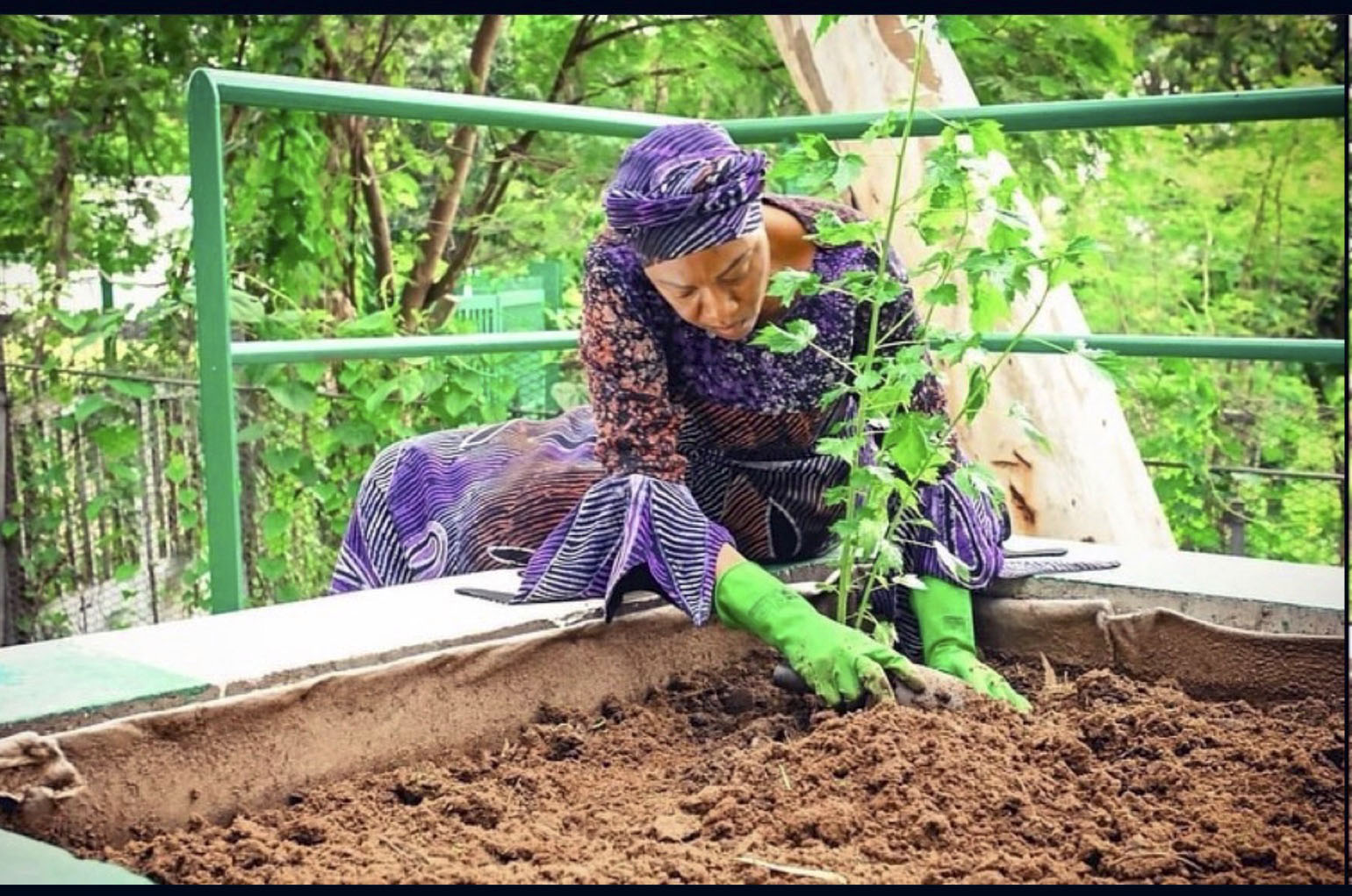
Tinubu also introduced the Every Home A Garden competition to encourage household food production, particularly among women, as part of efforts to improve nutrition and food security.
The maiden competition culminated in December 2024, when Veronica Kidafa Mbaya of Borno State emerged the national winner. She received a N25 million grand prize, including an additional N5 million announced by the National Agricultural Development Fund. The other 19 finalists also received N2.5 million each.
The initiative demonstrated how home gardening could provide households with fresh food while creating opportunities to earn income from surplus produce.
A future beyond subsistence
In Kubwa, Bilkis Suleiman, Amira of the Women Indawa branch, sees agricultural empowerment as an opportunity to address youth unemployment and the frustration experienced by young people without productive activities.
She pledged to monitor beneficiaries to ensure they sustain their businesses and reinvest their earnings.
For Ahmed, who had spent six months at home after graduation, the opportunity offers a chance to acquire new skills and explore a different career path.
Habib’s five-year vision is broader. She wants the society to operate nationwide, with its members’ products reaching African and international markets.
Achieving that ambition will require affordable financing, modern equipment, reliable transportation, quality assurance and access to buyers.
Ultimately, the success of these interventions will depend not simply on the number of grants awarded, chickens distributed or hectares cultivated, but on whether women can turn these opportunities into profitable enterprises.
For Ahmed, agriculture offers a way out of unemployment. For established women farmers, it presents an opportunity to overcome longstanding barriers to prosperity. Both are pursuing the same goal: financial independence and a more secure future.