Follow Us on Google

From Adanna Nnamani, Abuja
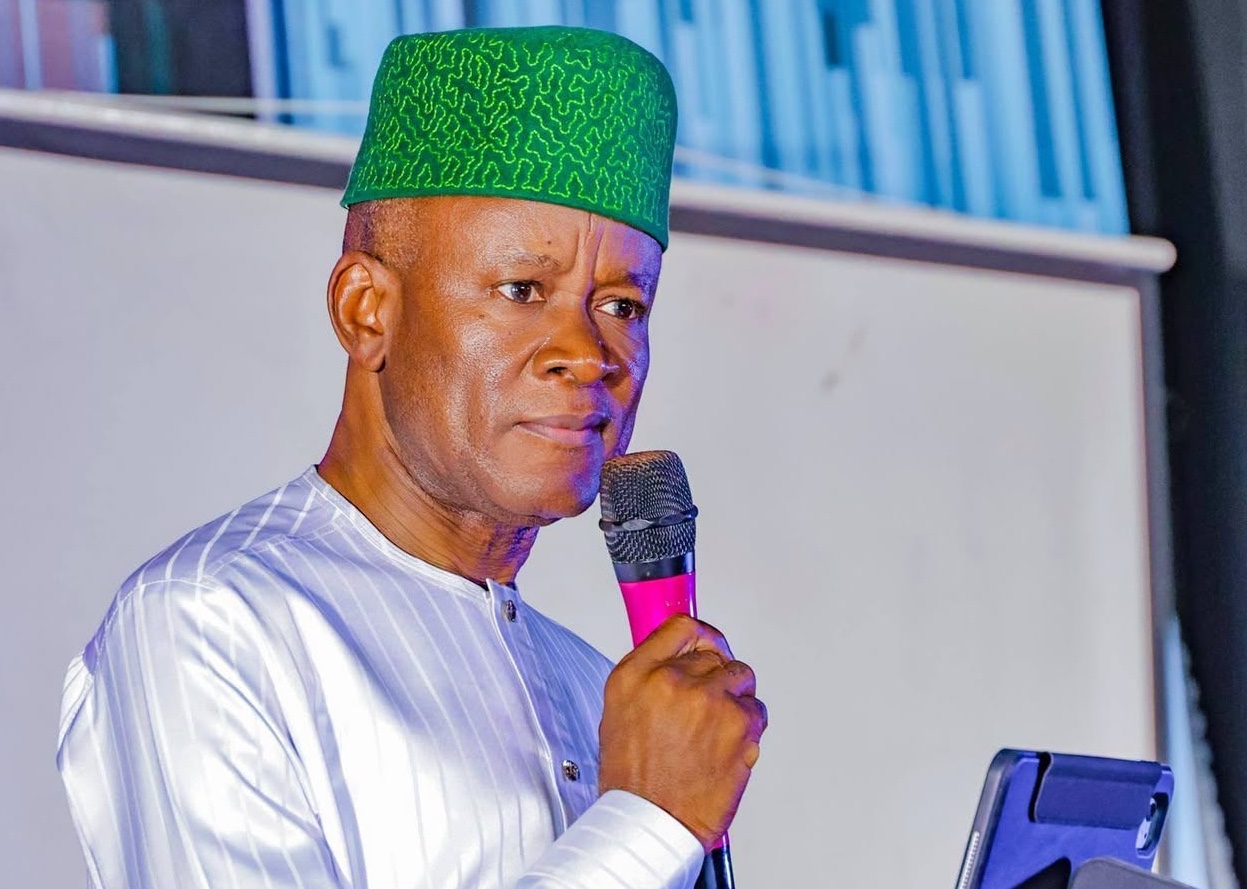
The Minister of State for Industry, Trade and Investment, Mr. John Enoh, has raised concerns over Nigeria’s low manufacturing contribution to exports to African countries, saying manufactured goods account for less than 1.5 per cent of the country’s exports to the continent.
Enoh, who spoke at the Nigerian Export-Import Bank (NEXIM) stakeholders’ business forum in Abuja on Thursday, said Nigeria exported N6.65 trillion worth of goods to Africa in the second quarter of 2026, but manufactured goods which accounted for only N390 billion. He said the country exported nearly six times as much in raw materials as manufactured products, describing the figures as a major challenge to Nigeria’s industrial development and export competitiveness.
According to him, the country’s manufacturing capacity utilisation also remains significantly below that of other African economies, with the Manufacturers Association of Nigeria (MAN) putting Nigeria’s figure at 9.5 per cent, compared with 81 per cent for Morocco and 76 per cent for South Africa.
Enoh said the low capacity utilisation meant that a substantial proportion of Nigeria’s industrial capacity was lying idle, awaiting improved access to electricity, credit and orders. He, however, noted that African countries were increasingly demanding manufactured and semi-processed products, presenting an opportunity for Nigeria to expand its industrial base and capture a larger share of the continental market. The Minister said manufactured and semi-processed goods account for more than 60 per cent of goods traded among African countries, compared with only 13 to 17 per cent of what the continent exports to the rest of the world.
He argued that the African Continental Free Trade Area (AfCFTA) had created an opportunity for Nigeria to overcome the limitations of small national markets by providing access to a continental market of about 1.4 billion people, with a combined Gross Domestic Product of approximately $3.4 trillion.
According to him, the agreement would only benefit countries capable of producing goods that meet market demand.
“An agreement can lower a tariff, but it cannot fill a container. The AfCFTA has opened the door. It is industry that must work through it.
“The factory comes before the border post. That’s my key message here today,” he said.
Enoh disclosed that Nigeria recorded N27 trillion in exports in the second quarter of 2026, with crude oil accounting for less than half of the total.
He added that the country sold N6.65 trillion worth of goods to African countries during the period, while imports from the continent stood at N1.10 trillion.
Giving a breakdown of some of the products exported to neighbouring African countries, the minister said Nigeria sold N1.32 trillion worth of diesel, N9.75 billion of diesel fuel, N4.7 billion of petrol and N1.8 billion of fertiliser.
He described the figures as evidence that Nigeria’s industrial policy was beginning to produce results, but stressed the need to expand the range and value of locally manufactured products.
Other News
The minister also said five products accounted for about 91 per cent of Nigeria’s total exports to Africa, underscoring the need to diversify the country’s export base.
He said the Federal Government was implementing the Nigerian Industrial Policy, anchored on four key sectors: metals and solid minerals, oil and gas, construction and manufacturing.
Enoh said the government had also gazetted Nigeria’s provisional schedule of tariff concessions in April 2025, allowing Nigerian goods to move under AfCFTA preferences.
He added that Nigeria ratified the Protocol on Digital Trade in November 2025, while the export phase of the National Single Window was expected to commence on December 14 to provide exporters with a single platform for obtaining licences, permits and certificates.
The minister disclosed that Nigeria recorded $6.1 billion in non-oil exports in 2025, the highest in the country’s history, with 281 products shipped to 120 countries, including 36 African countries.
He said the Industrial Revolution Work Group, chaired by him and co-chaired by the president of MAN, was working to translate government policies into concrete production outcomes through sector-specific interventions.
Enoh urged financial institutions to provide long-term financing for industrial production rather than concentrating only on financing export shipments.
“Finance the factory and not the shipment. Trade finance moves what already exists. Industrial finance creates what does not yet exist,” he said.
He also called for increased financing for regional trade and product certification, warning that exporters could lose access to markets when their products fail to meet required standards.
According to him, the AfCFTA offers Africa an opportunity to double its manufactured goods production and lift more than 15 million people out of poverty if fully implemented.
He challenged Nigerian businesses and financial institutions to ensure that the country becomes a major production hub for the continent.
“What they will ask is what did Nigeria ship? After the AfCFTA, do we continue shipping raw materials or be challenged to do better?
“Let the answer be stamped on the side of the box in letters that are large enough to read from Dakar to Dar es Salaam: made in Nigeria, sold in Africa, and financed across by NEXIM,” he said.