Follow Us on Google
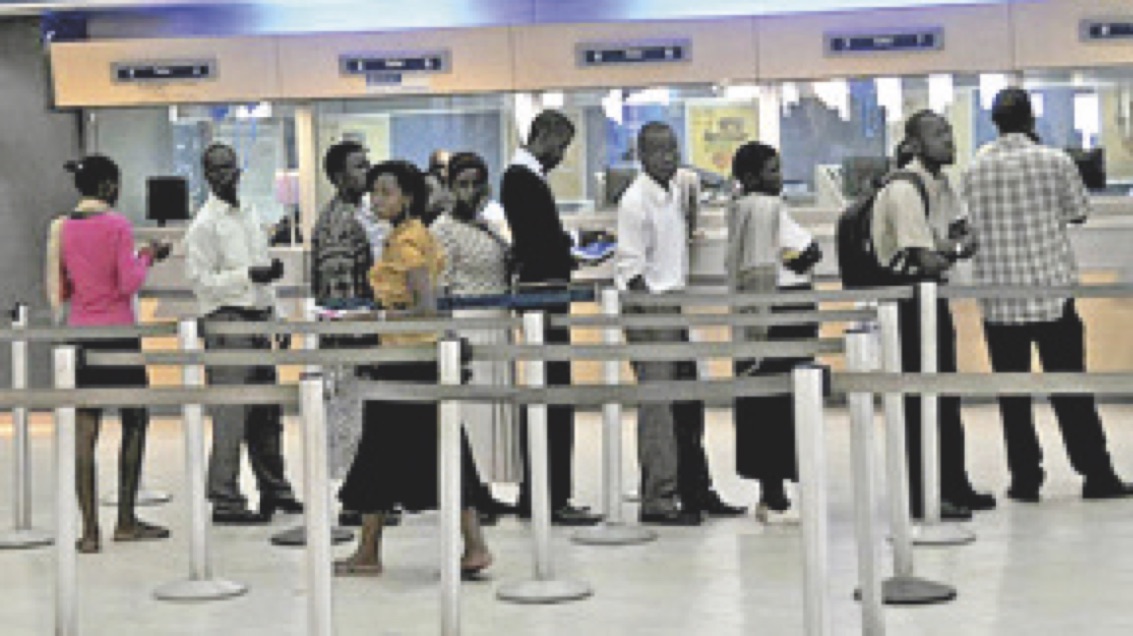
•Experts give tips on how Nigerians can safeguard their money as fraudsters prey on unsuspecting bank customers
By Olakunle Olafioye
The ever-increasing fraudulent activities of scammers is fast eroding the confidence of Nigerians in the country’s digital ecosystem.
Nigeria, according to a 2021 report by a California-based cyber security company, Palo Alto Network, was reported to lose about $127 billion to Internet fraud annually.
However, with fraudsters becoming more proficient at scams in recent years employing more sophisticated tactics and tools, security experts believe the losses could be more.
Tales of agony from victims of fraud bear the testimony of the growing sophistication of this crime and their perpetrators.
Recently, the Economic and Financial Crimes Commission, EFCC, identified Automated Teller Machine, ATM, and Debit Card swapping as one of the modes of operation of these fraudsters.
According to the Head, Media and Publicity, Dele Oyewale, the modus operandi of fraudsters involved in this criminal practice involves keeping a debit card of the same bank, and in the guise of helping a confused bank customer at any ATM point, swaps the card in such a hurry that the customer would not notice and at the same time, the fraudster memorises the pin used in trying the fake cards.
“These cards get stuck in the machine due to a wrong pin and the fraudster quickly abandons the victim, advising him/her to report to the bank while making away with the victim’s card to make immediate withdrawals from the account,” he explained.
Card swapping, according to the anti-graft commission, typically happens at any service delivery point, such as Point of Sale (POS) terminals, ATM points, among others.
It, therefore, enjoined the banking public to be more circumspect in the use of debit cards.
But scammers do not have to wait for their victims at service delivery points every time.
Many unsuspecting Nigerians continue to lose their hard-earned money even right from the comfort of their places of abode or offices without having to step outside.
A typical example is a case of a woman, Mrs Christianah Olowu, who lost her N382, 000 to an Internet fraudster.
Giving account of her misadventure, the mother of two said that she was about retiring to bed on the fateful night when she received a WhatsApp call from a caller who claimed to be one of the coordinators of an online prayer group she belonged to. “The caller said he called to ask me if I was aware of a scheduled online prayer meeting slated for that night, but I replied that I was not aware. He, therefore, informed me that a code had been sent to me to confirm my availability or otherwise for the meeting. Just then I received the code.
“He later requested I dictate the code to him and I obliged him ignorantly.
“While I was waiting for the programme to start, I received another call from a different caller, this time around a female voice. The lady identified herself as a customer care personnel from my bank and informed me that some people were trying to log into my bank account. She even asked if I had any interaction with anybody which required that I reveal a code sent to me and I answered in the affirmative.
“She, therefore, concluded that I had played into the hands of fraudsters. She advised me that I should change my password and offered to help me when her instructions became too complicated for me. While this was going on, it did not occur to me that it was the same mobile line that was compromised earlier that I used in opening the account until I received a debit alert to the tune of N382, 000,” she said regrettably.
Mr Lawal Ayinde, a private school teacher, had spurned so many tempting, but dubious overtures from people he suspected to be fraudsters in the past until he was introduced to the one he considered less risky.
His desire to have an additional source of income had led him to fall for a dubious offer for a training programme in resin arts, which he saw on social media.
The registration process for the programme, according to him, required that he clicked a link and provided some information on the Facebook account where the programme was advertised. “Subsequently, I was required to save a mobile number I saw on the link as one of my contacts on whatsapp and send a confirmation to the same number that I had completed the registration process. I received a code afterwards as I was informed earlier. Someone later called to ask if I received the code and later requested I supply him the code which I did. And that was it.
“My next observation was that I could not access my Whatsapp account again. At first, I thought it was a network issue until someone called me to confirm if I was the one soliciting financial assistance with my account. Somebody on my contact list fell for the trick and sent money to the account provided by the trickster before realizing that my account had been hacked,” he explained.
Nigerians are worried that electronic and Internet-related financial crime continues to fester despite various biometric registrations they were compelled to undergo in recent years.
Indications that stakeholders in the Information and Communication Technology sector are not less perplexed by this challenge had increased over the years.
The Nigeria Communications Commission, NCC, had expressed its frustration over the challenge during the Second Quarter Industry Consumers Advisory Forum (ICAF) held in Lagos earlier this year and blamed the nation’s telecommunication companies partly for the problem.
NCC had expressed the view that if the telecommunication companies improved on the security architecture of their networks, unwarranted access to such crimes would be effectively blocked.
But in a swift response, the umbrella body of the telecommunication companies, the Association of Licensed Telecom Operators in Nigeria, ALTON, differed with the commission.
Executive Secretary of the association, Mr Gbolahan Awonuga, argued that the nation’s telecom industry was one of the highly regulated sectors in the world.
This, according to him, “is the reason the industry has become the toast of investors all over the world. So, operating in this type of regulated sector almost imposes on you the obligation of getting everything right. And, to be fair, operators in Nigeria are living above board in their responsibilities. I do not agree that the problem of e-fraud is as a result of operators’ poor infrastructure. The operators consistently upgrade their infrastructure to the extent it can cope with threats.”
But while the blame game continues, security experts believe Nigerians owe themselves the obligation of safeguarding their hard-earned money from fraudsters by being circumspect in their financial dealings with strangers.
A cyber security expert, Stephen Nwaeri, admonished Nigerians against greed and urged them to avoid being careless with their banking
His words: “One of the signs people should look for is when someone is putting an offer that looks too good and too attractive before you. Secondly, people should be more circumspect when dealing with people online. You can’t afford to be negligent or easily carried away when dealing with people online especially when they claim they are calling you from your bank.
“They should not be careless with their banking data. Sometimes, they will just send OTP to you and ask you to call it back for them on the phone. Don’t make the mistake of calling it or sending it to them. If you have any reason to believe that you need help from your bank, it is better you go there.
“The truth is that before your account could be hacked, the hacker must first of all hack into the software of the bank. The only way to give them access to your account is when you cooperate with them by releasing your banking details or the OTP sent to you. Again Nigerians should be very careful when using POS because your ATM card could be swapped or the numbers on it could be taken. And with that they are home and dry. These are some of the signals one should watch out for,” Nwaeri advised.
Also in its latest advisory to Nigerians, EFCC admonished Nigerians to ensure their ATM or debit cards are kept in safe places and ensure they check their cards very well and confirm it is theirs after making use of them.
“Cards should be kept in sight or in a safe place. Whenever you get your card back after making any payment, make sure it is actually your card and not just one that looks similar. Regularly check your bank statements for any unknown transaction. Set transaction alerts to monitor any activity on your accounts or with your bank card. Cover the keypad with your hand or body when entering your PIN at POS terminal/ATM machines.Do not be in a rush to make payments or withdrawals, and request assistance only from officials of the bank. Call your banks to block your ATM cards immediately when your cards are stuck in the ATM machines or whenever you observe any irregularity,” the anti-graft agency advised.