Follow Us on Google
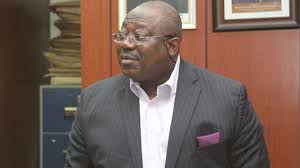
Chairman, Federal Civil Service Commission (FCSC), Prof. Tunji Olaopa, yesterday, listed some measures that could be taken to reform the civil service and make it viable.
He spoke in Abuja during a visit by the Head of Service of Taraba State, Mr. Paul Maigida Tino.
Olaopa recalled that he had been part of the conversation to raise the bar of professionalism of fellow bureaucrats in the Taraba State civil service twice. He said he was proud of the passion to learn new ideas by the civil servants he engaged at the two training seminars, the last as recent as September 2023.
He said that civil servants could regain their prestige if they were deliberate, committed and focused on their drive to re-professionalise through reinventing the service as a value-based profession and calling.
He also urged them to “invest in re-skilling and there is the LEAP-P plus growing model in the federal civil service that state services could benchmark. We can deepen digital penetration and innovation by implementing e-government policies, strengthening accountability mechanisms and democratic accountability for better stewardship relationships with the people cum public in the medium-term.”
However, he stressed that, “it is trite and self-serving to initiate reform for enhanced competitive pay and compensation simply to achieve activism-rooted objectives outside of sustainability considerations.”
Thus for him, this should not be without consideration for affordability and what workers will give in return as productivity bargains with even greater concern for how they will work with government “to contain the daily exploding cost of governance, which has stifled the resourcing of development programmes and projects.
“By all means, we should help the government to unbundle its entire expenditure structure, redundancies and waste, which will extend to the administrative side to the restructuring of our bloated federation and expensive presidential system.”
Olaopa, however, cautioned against boxing the government to “financial commitments that make the workforce in the organised sector of the economy to continue to consume the bulk of national wealth with the bulk of Nigerian tax payers ignored and emasculated in perpetual poverty.”
Still noting the necessity of workers to be productive, he said: “Clearly, we need to do more to strengthen the induction and probation system, not just through classroom-based teaching on the different bureaucratic instruments for public administration, but systematic on the job, learning on such core competences that underpin the civil service operations namely, economic planning and management, council secretariat administration and the different elements of the policy making and management processes, public service central governance system, strategic human resource management, which we sometimes call establishment, and management services, and of course, public service delivery systems and the dynamics in the creation of public values. We must induct public managers early to educate them on democratic principles and accountability mechanisms, and the peculiarity of the profession as custodian of democratic governance codes and the public interest and the dividing lines between the business sector, civil society non-state institutions and politics, as well as their mutual interdependence within frameworks of constitutional order, the rule of law and the principles undergirding public service professionalism.”
According to Olaopa, given the growing complexity of development policy management and changing frontiers of the role of the state in the context of globalisation and “the now volatile, uncertain, complex and ambiguous or VUCA-rized global policy environment, and such confounding issues as climate change, cybersecurity, terrorism, and structural unemployment, among others, our training investments tend to emphasise the big issues such as strategic planning, talent, knowledge and performance management, strategic communication, monitoring and evaluation, and public private partnerships, while we neglect the building of such basic skills as registry operations cum records management, writing and communication skills, problem-solving, decision making, time management, management communication, stakeholder relationships management, speech writing skills, donor relations, industrial relations and negotiation skills, to name just a few.”
Consequently, he noted, there is an imperative need for gradual rethinking of the intellectual bases of skills for managing the business of government, which will in turn, inform the restructuring of the civil service cadres.
“Besides, this will demand the development of competencies, catalogue, and specification of the generic skills required by officers on each grade level in measure that serves as the basis for training, capacity development, career cum talent management, capacity utilisation, leadership pipelining and succession planning,” he said.
The seasoned bureaucrat stressed that it was now urgent and critical for the civil service to strengthen strategic partnerships with non-state actors in the national economy. He identified the most critical in this regard as the need to build civil servants commercial skills and exposure to the working of the private sector, given their shared responsibility as the engine of growth of the economy.
“We need more enabling regulatory frameworks that do not stand in the way of the productivity of businesses. Indeed, we need to engraft our numerous administrative governance codes, rules and regulations, with good corporate governance principles and practices to enable seamless working synergies with the industry,” he stated.
Olaopa also highlighted the need to deepen mentoring, coaching, and staff exchange that enables internships, sabbatical leaves, and the flow of ideas and good practices from other sectors in measures that minimise inbreeding and insularity of the public administration system.
“The need to build skills for enhanced collaborative remodelling of politics-administration relationships is becoming an issue to take seriously so the capacity of the civil service as game changer is deepened and consolidated as we work to support political and governance reforms and overall performance levels of our governments and Nigeria’s global competitiveness.
“Overall, the spirit of deferred gratification, public spiritedness which elevates public service into a calling in the service of higher purpose, one that eschews the entitlement culture of something for nothing that is at the root of bureaucratic corruption and service’s loss of public trust which we must work hard to restore,” he said.
The Taraba Head of Service, Tino, said he visited in order to seek synergy and mentorship from the FCSC under the chairmanship of Prof. Olaopa.