Follow Us on Google
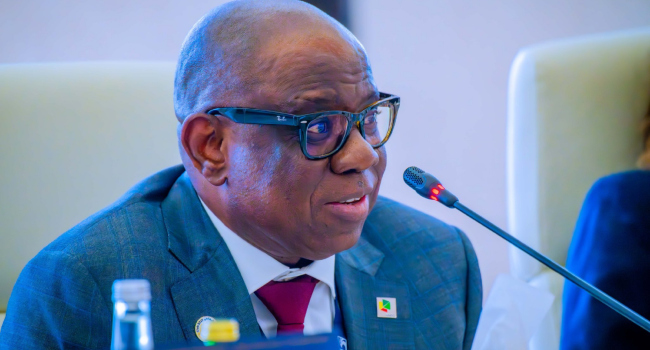
The Group Chief Executive Officer of the Nigerian National Petroleum Company Limited (NNPC Ltd), Bayo Ojulari, has said the decision to halt operations at Nigeria’s state-owned refineries was driven by a simple but uncomfortable truth: the facilities had become permanent cost centres that never paid for themselves.
Speaking at the Nigeria International Energy Summit (NIES), Ojulari said NNPC’s internal assessment showed that the refineries had crossed the line from underperforming assets into structural liabilities.
“These refineries were not just struggling,” he said. “They were consuming value every single day.”
Nigeria operates four government-owned refineries with a combined installed capacity of 445,000 barrels per day. In theory, these facilities should have guaranteed energy security and reduced fuel import dependence. In practice, they have remained chronically idle, operating at single-digit capacity or not at all for long stretches.
Ojulari said that continuing to fund their operations under the old framework would have been fiscally irresponsible.
“You cannot keep putting money into an asset that never pays for itself,” he said. “At some point, you have to stop and rethink the entire structure.”
Official data shows that between 2010 and 2023, more than ₦11 trillion was spent on turnaround maintenance and rehabilitation of the refineries. Despite this, Nigeria continued to import the bulk of its refined petroleum products, draining foreign exchange and distorting the domestic fuel market.
Operators in the sector believe that Nigeria’s refineries operated efficiently through the 1980s and much of the 1990s, but performance declined in the 2000s as institutional focus shifted away from operational excellence toward EPC contracting, O&M structures, and financing-driven interventions.
This transition weakened preventive maintenance culture, increased reliance on turnaround maintenance cycles that proved more commercially attractive to external parties, and contributed to the gradual erosion of in-house operational capacity within NNPC.
According to Ojulari, the problem was not a lack of funding but a flawed operational model.
Other News
“We focused on financing and contracts,” he said. “We never focused on operating excellence.”
The shutdown, he explained, allows NNPC to stem losses while exploring a more sustainable path forward. Ojulari stressed that halting operations does not mean abandoning the assets.
“This is not about shutting down forever,” he said. “It is about stopping the waste.”
“Whether you love Dangote or not, thank God it is a Nigerian refinery that is working,” he said. “It has given us the space to make tough decisions.”
With private-sector refining capacity coming on stream, NNPC is no longer under pressure to keep unviable assets running simply to avoid fuel shortages.
Looking ahead, Ojulari said NNPC is actively pursuing partnerships with experienced global operators who can bring both technical expertise and long-term accountability.
“We are open to equity partnerships,” he said. “Because when people have skin in the game, they behave differently.”
Ojulari concluded that the refinery shutdown marks a shift toward fiscal realism.
“This is how you protect national wealth,” he said. “Not by pretending, but by acting.”