Follow Us on Google
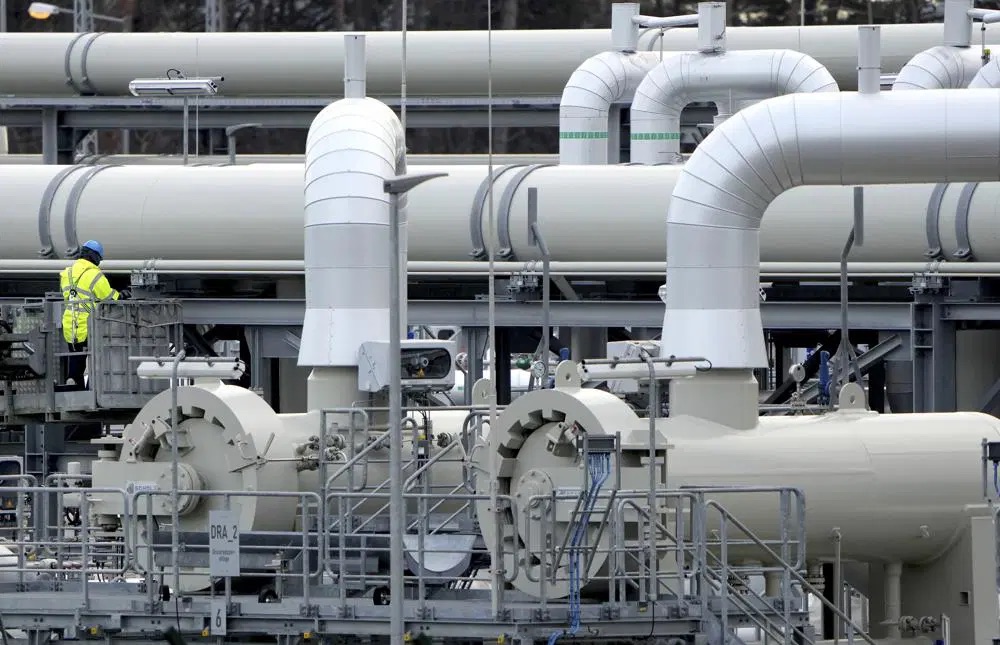
Nigeria’s major indigenous oil producers are sitting on about N2.86 trillion in cash, giving them more money to invest in drilling, new wells and other projects aimed at increasing oil production.
Financial statements reviewed by Daily Sun showed that Aradel Holdings had the largest cash balance of N1.72 trillion, followed by Seplat Energy with N598.35 billion and Oando with N544.92 billion.
Together, the three companies increased their cash holdings by about N456.34 billion in the first half of 2026.
The increase came as the companies generated more money from their oil and gas operations, while Oando also raised additional funds to support its expanding business.
The strong cash position comes at a time when the companies are moving from acquiring oil assets to developing them and increasing production.
In recent years, Aradel, Seplat and Oando have bought major oil and gas assets, significantly increasing their reserves and production capacity.
Aradel consolidated its position in ND Western and acquired a majority stake in Renaissance Africa Energy, while Seplat completed the acquisition of Mobil Producing Nigeria Unlimited. Oando, on its part, completed the acquisition of the Nigerian Agip Oil Company.
With these acquisitions, the companies now have larger portfolios of oil and gas assets. Their immediate challenge is to turn those assets into actual production through drilling new wells, repairing existing wells and carrying out smaller projects that can quickly add to output.
Seplat and Oando have indicated that most of their spending on oil projects this year will take place in the second half of 2026.
Seplat plans to increase the number of active drilling rigs from five in the first half of the year to eight in the second half.
The company had spent $109.8 million on capital projects in the first six months, against its full-year target of between $360 million and $440 million. This means it could spend another $250 million to $330 million before the end of the year.
The money will be used mainly to drill new wells and increase production from some of its recently acquired and existing assets.
The company is also working to restart production at Yoho, increase output from the ANOH gas project and complete the first phase of its Oso-BRT development.
Oando is also stepping up its drilling activities. It plans to spend between $90 million and $100 million on capital projects this year.
The company intends to use the money to drill seven development wells and carry out about 100 other activities that do not require the use of drilling rigs across its OMLs 60–63 and other assets.
OML means Oil Mining Lease, which is a government-granted right allowing a company to explore and produce oil from a particular area.
Oando has already brought the Idu 6ST and Samabri 4ST wells into production this year. Drilling is also under way at the Samabri 7 and Idu 15 wells, with more drilling activities planned for the second half of the year.
Other News
Looking beyond 2026, Oando has identified 62 development wells and 55 planned interventions as part of its strategy to raise production to about 100,000 barrels of oil equivalent per day in the medium term.
Aradel’s cash position also reflects the rapid expansion of its business.
The company generated about $1.05 billion in cash from its operations in the first half of the year. It spent $217.45 million on equipment and other assets and repaid $184.61 million in borrowings.
Despite these payments, Aradel’s cash balance in dollars increased by about $197.15 million.
Its average production also jumped sharply to 139,500 barrels of oil equivalent per day in the first half of 2026, from 22,400 barrels per day in the same period of last year.
The company has maintained its full-year production target of between 110,000 and 140,000 barrels of oil equivalent per day.
Seplat also generated strong cash from its operations, recording $985.9 million in the first half of the year.
However, it spent only $109.8 million on capital projects during the period and ended June with $433.8 million in unrestricted cash.
The company also reduced its net debt by 45 per cent to $370.7 million after repaying and cancelling $200 million under its Advanced Payment Facility, a financing arrangement that provided funds to the company against future oil sales.
Seplat has increased its expected cash tax payment for 2026 to between $600 million and $650 million. It also expects to pay about $270 million in underlying dividends to shareholders.
Oando, however, has a much heavier debt burden, with borrowings of about N2.70 trillion at the end of June.
To strengthen its finances and fund its expansion plans, the company is planning a N200 billion rights issue, under which existing shareholders will be offered new shares. It is also working on a $1.5 billion debt issuance programme.
The companies’ ability to turn their large cash balances and fresh funding into higher production will be closely watched by investors.
Seplat is targeting production of between 135,000 and 155,000 barrels of oil equivalent per day in 2026, while Oando’s target is between 40,000 and 50,000 barrels per day.
In the first half of the year, Seplat averaged 139,509 barrels of oil equivalent per day, while Oando averaged 42,789 barrels per day.
The companies are therefore under pressure to ensure that the money being committed to drilling and other oil projects results in more barrels and stronger earnings.
Investors are expected to pay close attention to the companies’ next financial results, due from early October, to see how much of the N2.86 trillion cash pile has been invested in productive projects and whether the spending is translating into higher oil and gas production.