Follow Us on Google
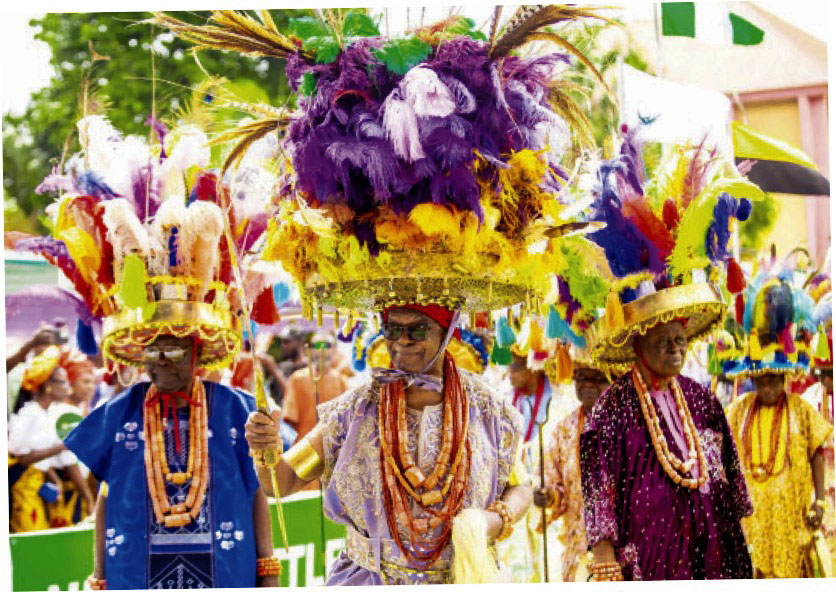
• Through more than 15 years of sustained sponsorship of Onitsha’s historic Ofala Festival, Globacom is helping preserve a 500-year-old cultural legacy, empower a new generation and demonstrate how Nigeria’s rich heritage can become a catalyst for tourism and economic prosperity
By Marcellinus Arinze
As the Globacom-sponsored Ofala Festival in Onitsha, Anambra State, ended on Saturday, October 17, thousands of cultural enthusiasts who attended the week-long event from around the country and the Diaspora as well as millions of others who followed the events on different media platforms witnessed one remarkable occasion when the past came alive before their eyes.
On display was the splendour of tradition, animated by the rhythms of ancestral drums and sustained by the enduring pride of the people of Onitsha Kingdom.
It was a magnificent convergence of royalty and spirituality embodied by the traditional ruler of Onitsha, His Majesty, Igwe Nnaemeka Achebe, and the rich history and communal identity that has endured for more than five centuries.

But Onitsha Ofala is more than a colourful annual spectacle. It is a living testament to the resilience of a civilisation, a celebration of the continuity of tradition and an expression of a people’s determination to preserve their identity while advancing into the future.
Increasingly, it is also becoming a compelling illustration of how cultural heritage can contribute to tourism, enterprise and national development. In this evolution, Globacom, Nigeria’s indigenous telecommunications company, has played a significant role through its sustained sponsorship of the festival since 2011.
The partnership, which spans more than 15 years, represents a powerful convergence of tradition and technology. It demonstrates how corporate commitment, when aligned with cultural preservation, can help elevate a historic celebration beyond its immediate community, bringing its significance to wider Nigerian, African and international audiences.
The 2026 edition carries particular significance, marking the 25th Ofala under the reign of His Majesty, Igwe Nnaemeka Alfred Achebe, CFR, mni, the Obi of Onitsha. Anchored on the theme, “Igba Mbo, Iga N’Iru — Strive and Advance: From Resilience to Progress,” the celebration encapsulates a message that resonates far beyond the boundaries of the ancient kingdom: honour the foundations upon which you stand, but never cease to advance.
A living heritage, renewed across generations
Ofala occupies a sacred place in the cultural life of the Onitsha people. According to the Obi of Onitsha, it has remained the high point of the kingdom’s ceremonial calendar for more than 500 years, since the founding of Onitsha Ado N’Idu on the banks of the River Niger.
At its heart is a profound spiritual tradition. The festival marks the monarch’s emergence from Inye Ukwu na Nlo, a period of spiritual seclusion during which he communes with his ancestors, reflects on the fortunes of the kingdom and seeks divine blessings for the community.
The subsequent ceremonies reaffirm loyalty to the traditional institution and bring together titled chiefs, age grades, families and sons and daughters of Onitsha from near and far. The royal dance, magnificent regalia, traditional music and colourful processions are outward expressions of a deeper cultural inheritance.
As the Obi explained in his foreword to Ofala – A Living Heritage, a Coffee Table book on the festival published by Globacom, the tradition has evolved from a sacred royal obligation into a celebration of national and global significance without losing its spiritual core.
This balance between continuity and evolution is central to Ofala’s enduring appeal. Its traditions remain authentic, while its capacity to inspire new generations and engage wider audiences continues to grow.
The philosopher George Santayana’s celebrated observation, “Those who cannot remember the past are condemned to repeat it,” offers a useful reflection on the importance of preserving such traditions. Cultural heritage gives a people a sense of origin, continuity and direction. It provides younger generations with an understanding of the values that shaped their community and a foundation from which to confront the future.
For this reason, Ofala is not simply a celebration of what Onitsha was. It is also an affirmation of what the kingdom intends to become.
Globacom’s enduring contribution
The transformation of Ofala into a festival of wider national and international prominence has been supported by purposeful partnerships, with Globacom occupying a central position.
In the foreword, the Obi of Onitsha acknowledged Globacom’s contribution to preserving the authenticity of Ofala while enhancing its presentation, documentation, broadcast and global reach.
His tribute is significant because it identifies the different dimensions through which corporate support can strengthen a cultural institution. Financial backing creates room for planning and execution; publicity extends visibility; documentation preserves memories; and broadcasting enables people beyond the immediate community to participate in the celebration.
These contributions help transform a local cultural treasure into an experience that can be discovered, appreciated and celebrated by wider audiences.
The company’s Chairman, Dr Mike Adenuga Jr., has consistently demonstrated a commitment to the preservation and promotion of Nigerian culture through the company’s association with the festival and also with Ojude Oba festival in the south west. For Globacom, the partnership is not merely a sponsorship arrangement; it is a relationship rooted in an appreciation of cultural identity and its contribution to nation-building.
In his message to the Obi for the 2026 festival, Dr Adenuga described the company’s association with Ofala as much more than a corporate partnership, expressing pride in its contribution to the preservation, celebration and wider projection of the heritage of Onitsha.
He also commended the monarch’s ability to preserve cherished traditions while embracing the aspirations and opportunities of the modern age.
This alignment between traditional leadership and corporate vision is particularly important in a society seeking to modernise without sacrificing its cultural foundations. It demonstrates that progress and preservation need not be opposing forces.
Indeed, Globacom’s association with Ofala reflects the philosophy behind its clarion call, “Never Settle for Less”: to honour what is worthy while continually striving for something greater.
Applied to culture, this is a powerful proposition. It means preserving the integrity of a tradition while seeking better ways to document it, communicate its significance and extend its reach.
Ofala, culture as an economic force
Beyond its cultural and spiritual importance, Ofala illustrates the considerable economic possibilities embedded in Nigeria’s heritage.
Every successful festival brings together a network of economic activities. Visitors require accommodation, transport and food. Traditional attire creates business for designers, tailors and fabric merchants. Performances provide opportunities for entertainers, musicians and creative professionals. Artisans, photographers, event organisers and local traders also benefit from the activity surrounding the celebration.
Other News
The potential impact extends beyond the festival grounds. Visitors may explore Onitsha’s commercial centres, sample local cuisine, discover historic sites and engage with the community. With appropriate planning, these experiences can encourage longer stays, repeat visits and greater expenditure within the local economy.
Ofala could therefore serve as an anchor for a broader cultural tourism offering in Onitsha, complementing the city’s established commercial reputation with a distinctive heritage experience.
The opportunity is especially relevant for young people, who can find pathways into tourism management, hospitality, creative production, digital marketing, tour guiding and cultural enterprise. Women-owned businesses, indigenous craftspeople and small enterprises can also benefit when tourism development is deliberately designed to distribute opportunities across the community.
Globacom’s sustained support contributes to the visibility and organisation needed to advance this potential. But the wider opportunity calls for collaboration among the private sector, government, traditional institutions and tourism professionals.
The global evidence is encouraging. The United Nations Educational, Scientific and Cultural Organization has noted that cultural tourism accounts for approximately 40 per cent of tourism revenues worldwide. Its work on culture and sustainable development also highlights the capacity of heritage-based initiatives to strengthen local economies and create livelihoods.
Nigeria, with its extraordinary diversity of festivals, traditional institutions, historic settlements, music, cuisine and crafts, has substantial resources upon which to build.
The task is to move beyond the periodic celebration of cultural wealth towards its systematic development as a sustainable tourism asset.
Lessons from Brazil and Japan
Countries that have successfully promoted their cultural traditions offer valuable lessons for Nigeria.
Brazil’s Rio de Janeiro Carnival, for instance, has grown into an internationally recognised cultural attraction, supported by extensive organisation, global publicity and a tourism ecosystem encompassing accommodation, transport, restaurants, entertainment and retail.
According to the Rio de Janeiro City Hall, Carnival 2025 was projected to generate approximately 5.7 billion Brazilian reais in economic activity for the city. The estimate illustrates the scale of opportunity when a cultural celebration attracts visitors and stimulates spending across multiple sectors.
Japan offers a different but equally instructive example. Traditional festivals, historic temples, local crafts, indigenous cuisine and heritage districts are integral to the country’s tourism proposition. The country promotes its festivals as opportunities for visitors to encounter community traditions and experience the country’s cultural identity.
For Nigeria, the lesson is not necessarily to reproduce the Carnival of Rio or Japan’s festivals. Rather, these examples demonstrate what can be achieved when authenticity is supported by effective promotion, accessible visitor information, good infrastructure and consistent investment.
Ofala’s uniqueness is its greatest asset. Globacom’s partnership provides a useful foundation for such an ambition. By helping Ofala reach wider audiences, the company contributes to the process through which cultural recognition can translate into tourism interest and, ultimately, economic opportunity.
Connecting culture to the digital future
As a telecommunications company, Globacom occupies a distinctive position in this cultural journey. Its business is built around connectivity, and connectivity can play an increasingly important role in preserving and promoting heritage.
In the digital age, a festival’s audience need not be limited to those physically present at the venue. Photographs, videos, interviews, documentaries and digital archives can introduce its traditions to people across Nigeria and around the world.
A professionally produced account of Ofala can explain the significance of the Obi’s emergence, the symbolism of traditional regalia, the history of the Onitsha Kingdom and the values represented by its ceremonies. Such storytelling can deepen understanding and inspire people to experience the festival for themselves.
Digital platforms can also help local businesses reach prospective visitors, while artisans and cultural practitioners can showcase their work to audiences beyond their immediate environment.
The 2026 festival’s activities reinforce this connection between heritage and contemporary opportunity. The Youth Carnival organised by the Onitsha Ado Youth Council brought cultural groups, including Otu Odu Onitsha, Egwu Odu and Agbalanze, into the streets in a vibrant display of traditional identity.
Young participants appeared in elaborate costumes representing prominent traditional rulers, including the Obi of Onitsha, the Oba of Benin and the Ooni of Ife. Fashion parades and competitions further demonstrated how cultural expression can inspire creativity and youth participation.
The wider programme also includes a Medical and Wellbeing Outreach and the Oreze International Art Exhibition, broadening the festival’s contribution to community wellbeing and the creative arts.
These activities illustrate that heritage can be a platform for more than spectacle. It can encourage youth enterprise, nurture artistic talent, promote social engagement and create new opportunities for cultural exchange.
Globacom’s sustained involvement helps provide the visibility and support through which such initiatives can contribute to a broader national conversation about culture and development.
From celebration to sustainable prosperity
For Ofala to realise its full tourism potential, however, publicity and sponsorship must be complemented by a deliberate development strategy.
Infrastructure, accommodation, sanitation, transport, public safety and visitor services are essential to a successful tourism destination. Cultural programmes should be supported by heritage tours, local food experiences, craft exhibitions and opportunities for visitors to learn about the history of Onitsha.
Equally important is the preservation of authenticity. Tourism should enhance the appreciation of Ofala without compromising the sacred traditions at its heart. The community must remain the principal custodian of its heritage, with economic benefits extending to the people whose traditions make the festival distinctive.
Globacom’s long-standing partnership offers an example of how the private sector can contribute to this process. The next frontier is to build on the visibility already achieved, connecting the festival more deliberately to tourism infrastructure, youth skills, digital storytelling and local enterprise.
As the Obi’s chosen theme, “Igba Mbo, Iga N’Iru — Strive and Advance,” suggests, the preservation of a great heritage is not a reason to stand still. It is a foundation for further achievement.
Ultimately, the enduring value of Globacom’s association with Ofala lies in the possibilities it helps illuminate. A festival rooted in the history of one community can become a source of pride for an entire nation. A tradition preserved across generations can inspire new industries and livelihoods. And technology, rather than displacing culture, can help it travel farther and speak to more people.
Ofala belongs to Onitsha, but its message reaches beyond the banks of the Niger. It reminds Nigeria that cultural heritage is not a relic to be admired from a distance; it is a living resource capable of strengthening identity, enriching tourism and advancing economic development.
Through its sustained sponsorship, Globacom is helping ensure that this remarkable legacy remains visible, valued and relevant to future generations.
While the Egwu Ota (war dance), and the drums of Ofala may announce the arrival of the monarch and signify the authority of the Igwe over his chiefs and subjects, but the deeper resonance is a call to a nation: to cherish its heritage, invest in its people and transform the riches of its culture into a lasting foundation for progress.
•Marcellinus Arinze, a culture enthusiast, lives in Lagos.