Follow Us on Google
By Bianca Iboma -Emefu
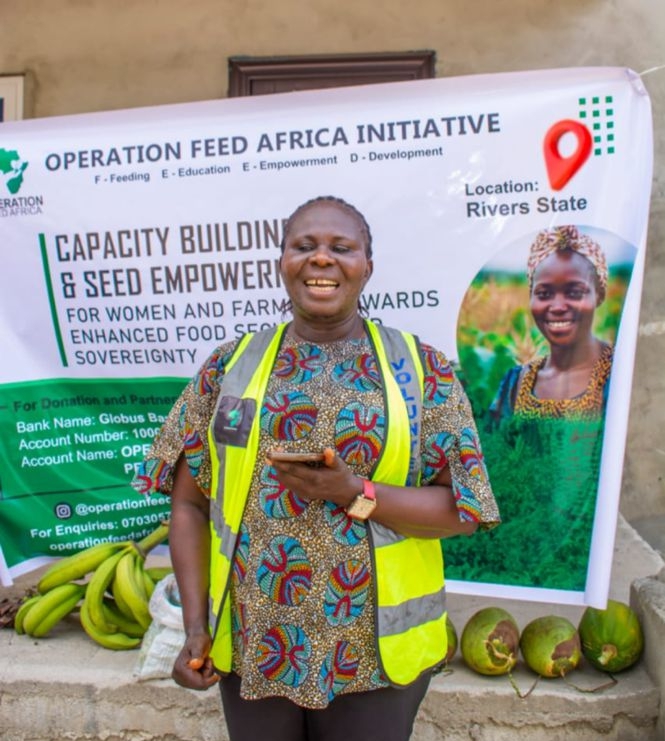
In a bold move to secure Nigeria’s food future, the ‘Operation Feed Africa Rivers’ Agricultural Empowerment Program recently launched a series of capacity-building workshops aimed at transforming rural farming communities.
While the initiative has made commendable strides—training women and farmers on sustainable techniques and promoting food sovereignty—the program is now grappling with alarming setbacks that threaten its long-term success.
Under the theme: “Capacity Building and Seed Empowerment for Women and Farmers Towards Enhanced Food Security and Sovereignty,” the program has achieved significant milestones, including gender-focused training, resource distribution, and knowledge exchange through farmer field schools. Notably, 60% of the participants in these workshops were women, receiving specialized instruction in value addition to curb post-harvest losses—a move that promises to boost household incomes and community resilience.
However, behind these successes lies a stark reality: farmers are battling persistent threats that could undermine the entire effort. Farmers report frequent theft of crops, especially during harvest seasons, which has become a major deterrent to increased production. This theft not only diminishes income but also jeopardizes the food supply chain, leaving families vulnerable to hunger and economic instability.
Adding to their woes, farmers face acute shortages of affordable fertilizers, impeding soil fertility and crop yields. Many still rely on traditional farming methods, but without access to necessary inputs, their efforts to increase productivity are severely hampered.
Climate change remains an uncontested adversary. Erratic rainfall, flooding, and prolonged dry spells have caused unpredictable harvest outcomes, further exacerbating food insecurity in the region.
Despite these hurdles, Operation Feed Africa Rivers remains committed to its mission. But experts warn that unless urgent measures are taken to combat crop theft, improve access to agricultural inputs, and adapt to climate challenges, the program’s potential to transform rural livelihoods could be severely compromised.
As Nigeria strives to achieve self-sufficiency and food sovereignty, the fight is far from over. The government, private sector, and local communities must rally together to address these critical threats—before the progress made is washed away by the growing storm of insecurity and climate adversity.