Follow Us on Google

•Speaks on early years, education in Russia, business forays
By Fred Itua, Abuja
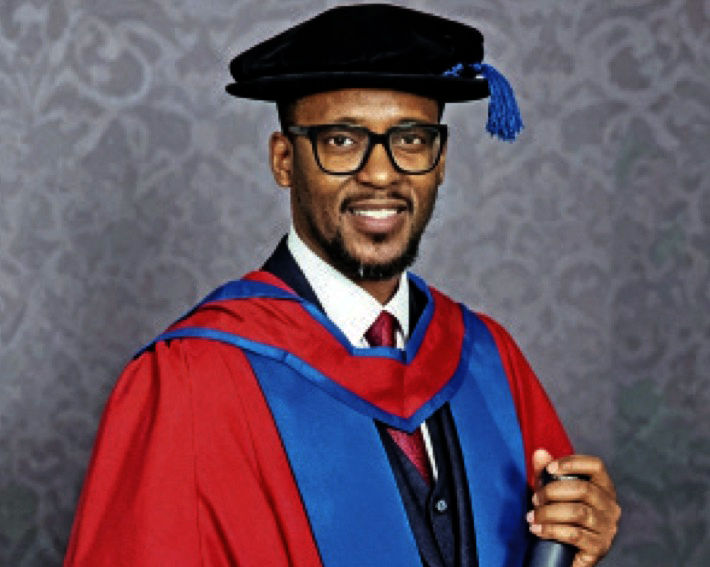
Professor Obiora Okonkwo is an accomplished entrepreneur and chairs the board of several companies, including United Nigeria Airlines Company Limited; Solicom Engineering Limited and Rokada Security Company Limited, among others. He’s a Russian-trained political-economist.
In this interview with Saturday Sun, the business mogul opens up on his personal life, formative years and his sojourn in the Russian Federation, where he got his first, second and third degrees.
Many Nigerians may not be privy to how Professor Obiora Okonkwo grew up. Can we get a peep into your formative years?
My story isn’t that of a silver spoon. My story is neither of a silver spoon nor from grass to grace. I was born into a middle class family in Ogidi, Anambra State. Ogidi is the capital of Idemili North Local Government Council. I was born in Gombe State just before the civil war. My father was there and was trading. He was doing well by every standard. Due to the civil war, they were forced to relocate to the East. From the stories I heard, it was a close shave with death. I was just a few-days-old baby and they had to sleep in the bush for three days before they finally found their way to Ogidi. My life started in Ogidi. I fished my Primary Three in Ogidi before I went to Onitsha in Primary Four to finish. My dad was already a trader in Onitsha Main Market.
I lived in Onitsha with my father. My community was just about 12 kilometres. I was too small then and my father didn’t allow me stay at home alone after school. He had a friend who had a tailoring shop. After school, I would wait there. He picked me out of my siblings because they saw some traces of a young man who could be misled in life. He felt leaving me with my mother would be a problem, because he feared that she wouldn’t have the ability to contain me. Looking back, I wasn’t doing anything wrong. I was just being a normal child. The training was different then. Parents were very involved. Anything outside expected norms was a red alert. Taking me to Onitsha was the right thing for them. Then I’d finish from school and go to that tailoring shop. The man had to keep me busy. It turned out to be a blessing in disguise. I didn’t go home broke because the man always gave me something. It was meagre, but the money was enough to take care of me. We continued that way until I was in Primary Six when I could go to my father’s shop.
I was like the errand boy. I remember then when a customer came and requested something. When we didn’t have it, I was the one who would secretly go to another shop and get it as if it was from our other shop. Whatever they got from it, they gave me my cut. I did that until I was old enough to start doing it for myself. My school wasn’t far from home and I was a day school student. Having your money then was something else. I already saw myself then as a businessman in the making. As luck would have it, my father, at the age of 50, had a stroke. He was a very hard-working man. He was very organised. He had to take care of himself by going back to the village. I was 14 years old then and was in Class Three. The responsibility of running the shop fell on me. I continued that way after my school daily. It was fun for me because I was the boss of the business. I had access to money. When I was approaching the time to write my SSCE examination and JAMB, I had to justify reasons I should remain in the market. My elder brother had graduated from the university and was like our father. He wanted me to continue with school. While others were studying to pass, I studied to fail SSCE and JAMB so I could remain in the market. He refused to accept that and he had to lock the shop. He knew I could pass my examinations. I was left with no option and that was how my journey to Lagos began.
My sister was already married and living in Lagos. I went there to continue my education. The idea was to get into a university. In between, my father spoke with a friend who was a billionaire then. He was just setting up. They were transiting from the Import Licence Regime to the Second Tier. One day, the big man was visiting his townsman, and my sister spoke with him about me. She told him I needed to be busy. I had no qualifications. The Intention was to be either a cleaner or a messenger in his office. We were moving to a new office. When I got there, he asked me to arrange the office. In the process of doing that, I scanned through the documents and got a glimpse of what he was into. Knowing that there was a new system, I looked into how it works and understood it. When he returned, I advised him on how the system would work. He was surprised. The man didn’t employ any other person as long as I worked there. The office became my main office. In the 1980s, I became the sole signatory to the company accounts. In a week or one month, I could run transactions of up to N100 million then. That was how big it was. Business was booming. I was paid enough to be happy at that age. I was already talking to people at the highest levels, and had meetings with Managing Directors of banks and others. But I made a choice to pursue my education and get the needed degrees to fit into the Nigerian system. I resolved to school overseas, and the United States of America was my first choice.
I started the application process. That period, I visited my village, and an uncle who was the president of the Association of Igbo in Europe had come home to announce that they were collecting scholarship applications for those who wanted to study in Russia. I joined. At the point, I didn’t know anything about Russia. Beside the World Cup, I didn’t know anything about them. I went for the interview and passed. I didn’t do it with serious interest. I was confused. I asked for my admission to be deferred to give me time to think. It was deferred until the following year. I didn’t go to Russia with the full intention of staying there. I was already making money from what I was doing. My plan was to go to Russia and then move to America. There was a direct flight then from Nigeria to Russia. I had about $10,000 cash with me. Other students who were with me didn’t have up to $100. I had the money because I wanted to go to the United States of America. Not like I stressed or suffered. That was why I said if you look at my story, it is not that of grass to grace or anything of sort.
You had your first, second and third degrees in Russia. Many Nigerians have funny impressions about Russia. How true are some of those fears?
I got into Russia during the Mikhail Gorbachev era. It wasn’t pure communism then. But, no matter the impression, you’ll judge with my experience. I was supposed to use Russia as a transit point, but what I saw when I got there surprised me. As foreign students, we were treated like diplomats. Though I came with good money, I didn’t spend more than $20 in a month. I was on a full scholarship. Everything was paid for. They provided us with stipends same with what professors earned. I discovered that Nigerians who were already there from Nigeria were doing business. I found a comfortable home. Within my first three months in Russia, I was back to Nigeria with goods to sell. I also encouraged my folks to do the same. You know we came for a preparatory course for a year. We were errand boys to those older Nigerians. Since I had enough money, I didn’t have to be a boy to anybody. I was doing buying and selling. When I was in my second year, Russia was already opening up. I started my business internally in Russia. I was importing cocoa and doing business with people in the United Kingdom. My business was growing. At the age of 25, I was already a millionaire in dollars. My education was at Peoples Friendship University in Russia, which was the flagship institution. It remains the university that had the highest number of foreign students in the world. When I was there, there were students from 160 countries. Education was topnotch, and it was the best. The quality of education in Russia will beat Ivy League schools in the United States of America. Education was all-inclusive. The system encouraged thinking. That’s why they are where they are. I studied Economics in my first degree. Some of my mates who couldn’t pass the common entrance then were sent to Law and other faculties. In Economics, it was tough. I was able to go through the stages. I gave myself a time frame of 10 years to return to Nigeria. I didn’t want to leave anything to chance. I took my school very seriously and my business too was doing well. If you come to a class and there are 40 topics, nobody will hide anything from you. It means the examination questions will come from the 40 topics. We were usually not more than 15 in a class. It was 90 per cent seminars and 10 per cent classes. You were given time to prepare for examination. You’ll pick a topic and face a panel. I don’t think we operate that system in Nigeria. While facing the panel, you defend your topic orally. That teaching method makes you think on the spot. I don’t know why Nigeria should not emulate that. The lecturers don’t expect you to give back what they gave you.
It is very different here where lecturers can be very vindictive. Some boast about people who did not pass their courses. In Russia, their mathematics is a combination of arithmetic and algebra. In Anglophone African countries, we don’t do algebra. Francophone countries do algebra. So francophone students did well in algebra while anglophone students did better in mathematics. However, they would provide extra lessons for students who were lagging behind so they could catch up. This is just a picture of education in Russia as it was then. That was the tradition. Learning was not stressful. People like us were able to adapt. We came out with good results. If you look at my transcript, you’ll see that I had all A’s. During my era, you’ll do a five-year stretch and come out with a Masters Degree. That’s if you were doing well in class. In your fourth year, you’ll be given the opportunity to start taking courses for the Masters. For that privilege, you’ll have to apply and a panel will review your application. For people like us who had good grades, it wasn’t a challenge. A number of people couldn’t go through that process.
I had to go straight for my PhD after my Masters Degree in Economics and International Development. I was particular about Nigeria. From my undergraduate days, I did my research around Nigeria. I did my thesis on the Structural Adjustment Programme introduced by Ibrahim Babaginda. When I introduced that, it was a big deal of interest for the faculty. It was new and peculiar to Nigeria. They needed to know what was happening. I was encouraged to do that. I’d to travel to Nigeria to get materials and do my research in English because my Russian language wasn’t very good at the time. Later, I did something on strategic planning. I upgraded my thesis in my undergraduate and added strategic planning and that became my thesis for Masters. I wanted to continue that through my PhD. In Russia, your PhD is in three parts unlike Nigeria where you’ve five parts. When I started, Babaginda had left and that affected the transition programme. It also affected the Structural Adjustment Programme. There was nothing anymore to do. I had already concluded my PhD in Economics. What became the trend was transition to civil rule. Sani Abacha started this. I had to change my course. So, I settled for Political Science. But my university wasn’t offering that course. It was offered by the Academy of Science, another top university for international relations. I started all over again. I took examinations. When I introduced the topic, it became interesting. As at then, the issue of transition was not common in Africa. Besides Ghana, no country had done it. So, I did most of my field work in Nigeria. I had to chronicle past events and all the historical perspectives. Abacha died and Abdulsalami Abubakar came and introduced his own transition programme. At that point, I had already wasted time. There was no internet then. I discussed with my supervisor and we agreed that we should analyse and make predictions. That was my journey in Russia. I had already returned to Nigeria and had started my business and had to go from Nigeria to defend my doctoral thesis in Moscow. I had a permanent suite at the Transcorp for six years.
You’re a man of faith. But for a man of your calibre, one would naturally expect you to seek spiritual protection. Did your upbringing influence that?
My parents were very strong Catholics. Though my mum was raised in a traditional home, she converted and wedded in the Catholic Church. My dad was a realist and lived by the dictates of religion. But he wasn’t an everyday church person. My faith was from my mother, who was completely given to the Catholic Church. I was brought up that way. If you think I’m religious, wait until you see my immediate younger brother, who is a Catholic priest. He has been a priest for 27 years. That’s where I’m coming from. I see things only from that perspective. Looking back and seeing what my parents achieved, I feel proud. My dad, for instance, lost his parents at a tender age and only attended school to only Primary Two. My mum didn’t have any formal education at all. She got married at age 16. But they were the most intelligent people I ever lived with. They had nine children. All of us are doing well. Even my two sisters who are late now did well. We are useful to the society and didn’t give our parents any reason to weep. If being religion gave them that peace and we were raised like that, why should I drop such?
Airline business is very expensive. Why did you settle for that?
I’ve always been in the service sector. I do a lot of things that people don’t know. If you think that I give good lectures and entertainment, you’re mistaken. I’m stronger in security matters. Both in knowledge and in practice. I can beat my chest that my input to security had helped the country in fencing off terrorists. I won’t go beyond that. Going into Aviation was by accident. As a result of my activities in the security sector, I was approached by one of the services for partnership. One of the service chiefs had promised the African Union that the Nigeria will help in moving troops. But they didn’t have the resources and manpower. So, they decided to set up a Civil Aviation company. They approached me and we agreed on a partnership. I invested in it and everything was okay. By the time everything was ready to take off, the service chief was replaced. You know how things work here. The equipment I bought for the partnership was stuck in Turkey for five years. I believe no man is God. I took it as a challenge and had to take over the company. After negotiations, I owned 100 percent of the company. So, I had to start and build from the scratch. So, I am an accidental airline operator. But, it hasn’t been easy. When you conquer one thing, something else comes up. When I was about to take off, COVID-19 happened. I sent 27 pilots to South Africa. They left in March. Two days after there was lockdown. They were trapped for nine months. The aircraft I had purchased were stuck in Mexico for one year. I had to maintain them. Those were the challenges. After that, the aviation fuel hit. And now the currency challenge. We are battling with demons. But we’ll succeed.
Do you regret going into aviation?
No, I don’t regret it. I don’t run away from challenges. There is no sector that is not feeling the impact of economic challenges facing the country at the moment.