Follow Us on Google
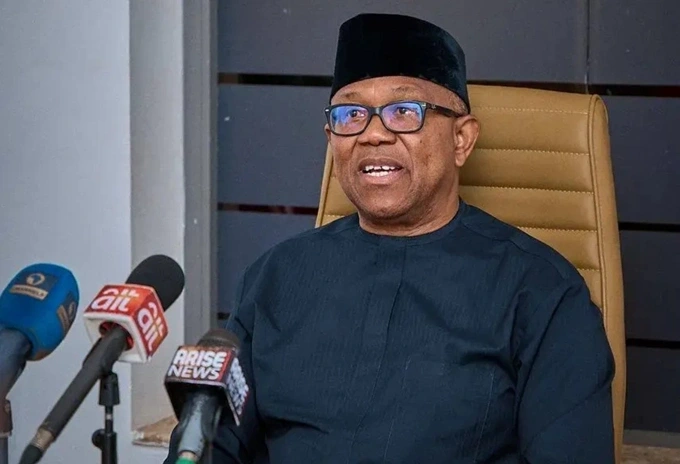
From Sola Ojo, Abuja
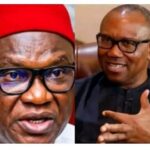
2023 presidential candidate, Peter Obi, has criticised President Bola Tinubu’s administration over what he described as a wasteful $9 million expenditure on foreign lobbyists.
To him, the spending reflected misplaced priorities amid Nigeria’s persistent development challenges.
Obi, on his verified ‘X’ handle on Friday, stated that the reported use of public funds for lobbying in Washington, D.C., United States, was difficult to justify at a time when key social sectors, particularly health and education, remain severely underfunded.
According to Obi, Nigeria has remained in the low Human Development Index (HDI) category from 1990 to 2025, despite having comparable or better economic indicators than countries such as China and Indonesia at the start of the period.
He noted that while those countries have advanced to medium and high HDI levels, Nigeria has stagnated.
He recalled that in 1990, Nigeria’s per capita income was about three times higher than China’s, arguing that the difference in outcomes reflects policy choices and leadership priorities rather than a lack of resources.
Other News
Obi contrasted the reported $9 million lobbying expenditure estimated at N14 billion with the 2024 capital allocations to six federal teaching hospitals, one from each geopolitical zone, which collectively amount to N13.9 billion.
Adding fact to his claim, Obi mentioned the Universities and their budget for the year 2024: University College Hospital, Ibadan N2.67bn; Ahmadu Bello University Teaching Hospital, Zaria, 2.46bn; University of Nigeria Teaching Hospital, Enugu, 2.8bn; University of Benin Teaching Hospital, Benin City, 2.43bn; University of Ilorin Teaching Hospital, Ilorin N1.16bn; and University of Maiduguri Teaching Hospital, Maiduguri N2.37bn
To Obi, the comparison highlighted what he described as a contradiction in government spending priorities.
He further pointed to Nigeria’s low life expectancy and high maternal mortality rate, noting that childbirth remained one of the most dangerous experiences for women in the country.
Obi argued that the funds used for lobbying could have been channelled toward purchasing critical medical equipment, strengthening hospital infrastructure, and improving health outcomes.
Describing the situation as unacceptable, Obi said public funds should be used to address urgent domestic needs rather than to “manage perceptions abroad.”
He, therefore, urged the Tinubu administration to adopt stricter fiscal discipline and focus on investments that directly improve citizens’ welfare. He quickly added that sustained development depends on consistent and deliberate policy choices.