Follow Us on Google

By Ifeanyi Chukwuka
Since independence, Nigeria as a sovereign nation has been searching for a system of government that will be inclusive for all the over 280 ethnic groups in the country.
As a nation, Nigeria is divided naturally by the Rivers Niger and Benue into three major geo-political entities with different culture, languages, behaviour and religion; the North, West and the East. The Hausa are in the North, the Yoruba in the West and the Igbo in the East.
Expectedly, political activities in the First Republic were anchored primarily on regional/ethnic bias which enthroned tribalism into the politics of the nation. Instead of politics of national unity, the British parliamentary system of government created a serious tribal geo-political system where each ethnic bloc was only concerned on fostering primordial tribal political sentiments. Consequently, the British parliamentary system failed as it led to the military takeover of government in 1966, through a bloody coup in which many political leaders of the northern region were assassinated.
The Second Republic of the NPN, NPP, and UNP were formed again in line with the same old tribal sentiments. The leaders again emerged and paid lip services to national unity. The military again staged coups and counter-coups and flushed out the Second Republic.
The military coup that ushered in the regime of General Ibrahim Babangida seemed poised to eradicate the tribal political framework in Nigeria. Babangida established two political parties and successfully balanced Nigerian political weight on two legs instead of the tripod stands of the First and Second Republics. For the first time, Nigerians of different ethnic groups were now made to belong to one of the two political parties.
Unfortunately, as this novel and laudable political sagacity of the Babangida regime was about to take root, the same Babangida uprooted and destroyed what he planted. The rest is now history. Interestingly, Babangida’s political order caused all the Azikiwe, Awolowo, Aminu Kano, Joseph Tarka, Waziri Ibrahim progressives to belong to one of the established political parties, the Social Democratic Party (SDP) and the conservatives in the National Republican Congress (NRC).
Undoubtedly, what could have enthroned a new political order characterised with enviable systematic political modus operandi, tactically and intelligently fashioned out by a political scientist – Prof Humphrey Nwosu – was again truncated inexplicably by General Babangida. Since then, Nigeria has returned back to the old multi-ethnic tribal geo-political blocs.
Historically, before the commencement of the Nigerian civil war, which was fought with bitterness, vengeance and acrimony, the Nigerian government with the wisdom of the British immediately severed the regional Eastern bloc by carving out the Rivers State with headquarters in Port Harcourt and the Cross River State with headquarters in Calabar. This tactical war manoeuver worked by alienating these two tribal blocs from the original Eastern Region making the Igbo a minority when juxtaposed with the original major geo-political blocs of the Hausa and the Yoruba.
Consequently, immediately after the war, the River State government emboldened by the defeat of the Igbo and with the support of the Federal Government seized all the property of the Igbo in Port Harcourt in what was called the “Abandoned Property saga”.
Regrettably, all efforts of the Igbo to reclaim their property in Port Harcourt was in vain. As a matter of fact, one can without equivocation, categorically state that the Igbo have thus found it difficult to regain their lost political glory since after the war. Since Nigerian politics is always balanced on a tripod stand of Hausa, Yoruba and Igbo and with the former Eastern Region butchered into pieces, it is now a herculean political task to get the Igbo back as a major political force in Nigeria. Indeed, Igbo presidential ambition has become as elusive as the electric fish.
Over the years, uncountable Igbo politicians have attempted the presidency, but without success. With the exception of Dr Nnamdi Azikiwe, no Igbo man had ever been nominated or won the candidacy of his party.
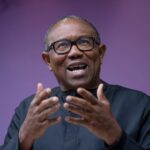
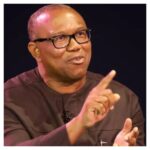
It is against this backdrop that the emergence of Mr Peter Obi as the presidential candidate of the Labour Party that defiled the old political order of the Igbo man always playing a second fiddle in national politics, excited not only the Igbo, but also the whole nation, particularly those who believe in equity and fairness. Mr Obi broke the barrier of political ethnicism or Igbo candidature and ventured into reaching out to all Nigerians with his new political ideologies. He demonstrated a unique form of political mobilization and conviction. He refused to sell himself first as an Igbo man, but rather as an astute politician, selling his novel political agenda to Nigerians. Like the great Martin Luther King of America, Mr Obi told Nigerians about his dreams of a new Nigeria where every individual will be catered for by the government, where youth unemployment will be drastically reduced to the barest minimum, where government wasteful spending and corruption will be curtailed. He promised Nigerians that universities will once again under his regime regain their lost glories and ASSU strikes will be no more. With the promise to eradicate insecurity and rampant kidnappings that have bedeviled the nation and caused many to flee from Nigeria, Mr Obi further promised to transform Nigeria from a consumption nation to a production one, as well as to reorganize the power sector with a view to eradicating the epileptic electricity supply.
All these and many more political promises, penetrated the hearts of many Nigerians irrespective of their tribes. Mr Obi buttressed and authenticated his claims by the political slogan “Go and verify”. This sold and sank into many Nigerians who are tired of the old order who were fond of making promises without action. Nigerians wanted a change and they saw Mr Obi as a vehicle with which to actualize that. Obi’s slogan spread rapidly like President Obama’s “Yes We Can”.
Mr Obi without doubt created a political movement not because he is an Igbo man, but because he sold wonderful verifiable political ideas aimed at creating magic panaceas to Nigerian problems. He authenticated his claims by referring Nigerians to his eight years legacies as the governor of Anambra State. Furthermore, surrounded by the youths ladened with creativity, the social media became agog with creative slogans like “I am Obidient,” spreading Obi’s political popularity to all the nooks and crannies of Nigeria and across the Atlantic and Pacific oceans like the wild bush harmattan fire.
Perhaps, the greatest political attribute of this astute politician is his doggedness despite being mocked by the old political order that he has no structure and was only a social media noise maker. But he was to prove them all wrong. He was able to transform a hitherto unknown, dying political party, LP, into a formidable entity. Today, politics in Nigeria without the mention of Mr Obi, the youths and the Labour Party is like the map of Nigeria without Lake Chad. Obi has built Labour Party from the top to the bottom thereby giving the party the hitherto lacked structure.
With a sweeping victory in the recently conducted presidential election in states like Delta, Edo, Cross River, Anambra, Plateau, Nasarawa, FCT Abuja, Imo, Abia, Lagos, Enugu and Ebonyi, Obi and the Obidient Movement have created a new political order in Nigeria’s political equation. Thus, Peter Obi is a political all-conquering Napoleon of the Igbo land in particular and Nigeria in general.
Not even the Great Zik of Africa, the late Dr Nnamdi Azikiwe, with his oratory power, political versatility ad ability to speak the three major Nigerian languages nor the peoples General Ikemba Nnewi, the late Emeka Odumegwu Ojukwu, were able to perform his political fit just within five months in national politics as a standard bearer of his party.
Conclusively, Peter Obi’s political movement and acceptability in Nigeria was not because he is an Igbo man, but that his political sagacity and provable, verifiable ideas are unparalleled to none living or dead. For these reasons and more, I am calling on all Nigerians youths and all Obidient Nigerians not to lose hope.
On the other hand, I also wish to advise all those octogenarians, some of whom are over 86 years of age who could not lift this nation when opportunities were given to them in their prime time to desist from fanning the embers of disunity that may truncate the yearnings and aspiration of the youths and other Obidient Nigerians. Please do not speak for Mr Obi who has opted for a democratic process of reclaiming his stolen mandate. Desists from unduly heating of the polity by urging the Obidients and the youths to embark on civil disobedience to score some cheap political popularity. Such statements like “Nigeria will cease to be if Bola Ahmed Tinibu is sworn” in is irresponsible, unfortunate, and condemnable.
Mr Obi did not make anyone his spokesman. He is aware of the heavy baggage of all you discredited old politicians of yester-years are carrying. He knows when to talk and he has addressed the nation that he won the election, and he would prove it. He has done it before in Anambra State where it took him three good years to reclaim his mandate. Surely, he will do it again. An Igbo hunters adage says: “When the hunted animal escapes the bullet of the hunter today, tomorrow is another hunting day, and the animal may not escape again.
• Dr Chukwuka writes from Dallas Texas, USA