Follow Us on Google
From Bimbola Oyesola
The Nigeria Union of Petroleum and Natural Gas Workers (NUPENG) has called on President Bola Ahmed Tinubu to urgently convene a broad-based stakeholders’ meeting to clarify the recently signed Executive Order affecting Nigeria’s oil and gas industry.
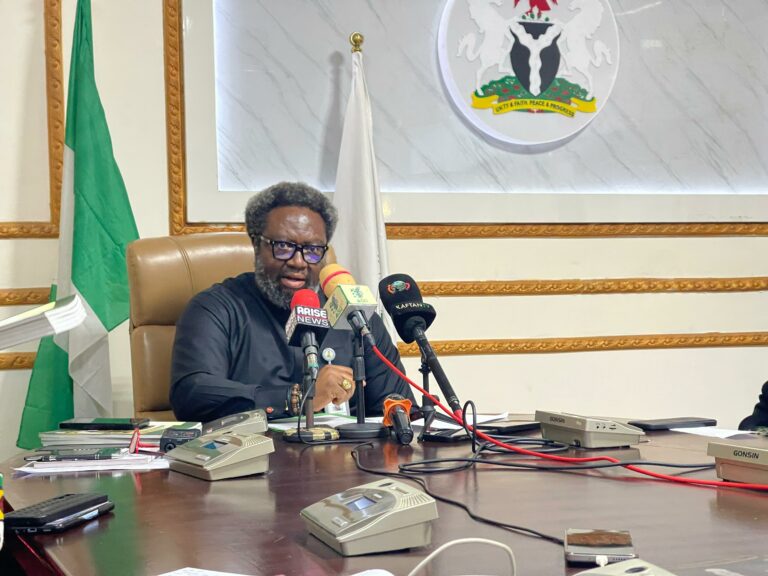
In a press statement signed by its President, Prince Williams Akporeha, on Sunday, the union expressed deep concern over what it described as widespread anxiety among petroleum workers across the upstream, midstream and downstream segments of the industry.
According to the statement, the Executive Order, signed by President Tinubu on Wednesday, has generated uncertainty due to what the union called a lack of comprehensive public engagement and explanation regarding its content and intent.
“As critical stakeholders in Nigeria’s oil and gas value chain, petroleum workers have expressed deep concern and anxiety over the content, intent and implications of the said Executive Order,” Akporeha stated. “The absence of detailed public engagement has naturally generated tension within the sector.”
The union warned that workers are particularly worried about how the directive could affect their employment, welfare and job security, especially as it concerns the operations of the Nigerian National Petroleum Company Limited (NNPCL) and other major operators in the industry.
NUPENG noted that the oil and gas sector remains the backbone of Nigeria’s economy, contributing significantly to national revenue, foreign exchange earnings and employment generation. Any major policy shift, it argued, must therefore be accompanied by transparency and inclusive consultation.
“Any policy shift, particularly one introduced through an Executive Order, has far-reaching consequences for regulatory frameworks, investment decisions, operational standards, and labour relations within the sector,” the statement read.
Other News
The union outlined specific areas where it believes urgent clarification is required. Chief among them is the precise scope and objectives of the Executive Order, including the reforms or adjustments it seeks to introduce.
It also questioned how the new directive interacts with the Petroleum Industry Act (PIA), asking whether the Order amends, reinterprets, or expands existing provisions under the landmark oil and gas legislation.
Further concerns center on the potential impact on workers and existing labour agreements. NUPENG is seeking assurances that the Executive Order will not undermine job security, conditions of service, collective bargaining agreements, or ongoing restructuring processes within the industry.
Another critical issue raised by the union is indigenous participation and local content development. “How will it influence Nigerian companies and employment opportunities for citizens?” the statement queried, underscoring fears that insufficient clarity could weaken local participation in the sector.
NUPENG cautioned that without proper consultation and explanation, misinterpretations of the Executive Order could spread across the industry, potentially destabilizing operations and undermining the industrial harmony that stakeholders have worked hard to sustain.
“We firmly believe that a timely stakeholders’ meeting, bringing together organized labour, regulatory agencies, operators, host community representatives, and other critical actors will help douse rising tension, address misconceptions, and foster transparency and trust in government policy,” Akporeha said.
While reaffirming the union’s commitment to constructive engagement, national development and sectoral stability, the NUPENG President emphasized the organization’s constitutional responsibility to defend its members. “We are duty-bound to protect the rights, welfare and job security of our members whose livelihoods depend on clear, fair and predictable policy frameworks,” he declared.
The union therefore urged President Tinubu to take immediate steps to engage stakeholders and provide the necessary clarifications, stressing that such action is vital “in the interest of industrial peace, economic stability, and national progress.”