Follow Us on Google
The chairman of the National Salaries, Incomes and Wages Commission (NSIWC), Major General Junaid Bindawa (retd), has said that the commission and the Petroleum Technology Development Fund (PTDF) have a strategic role in human capacity development.
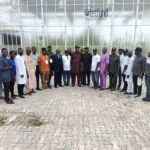
Speaking when he led a delegation of the management staff of the commission on a courtesy visit to PTDF in Abuja, Bindawa stated the need for the two agencies to collaborate in the area of training.
In a statement, Head of Press and Protocol, Mr Emma Njoku, quoted Bindawa as saying that although the mandates of PTDF and NSIWC are distinct, there are significant areas of convergence that provide a strong basis for deeper institutional collaboration.
‘’Such convergence is in areas of developing indigenous human and institutional capacity for the petroleum industry through education, training, research and development, and other interventions aimed at building the technical and professional competencies required for national development,’’ he noted.
The NSIWC boss explained that the NSIWC has a critical responsibility in the area of salaries, incomes and wages policy, including advising government on remuneration matters, promoting a fair, sustainable and coherent remuneration system within the public service, and undertaking relevant research, analysis and policy development in support of national economic and labour policies.
Bindawa also noted that both institutions therefore share a common interest in human capital development, institutional effectiveness, productivity, research, evidence-based policy and the development of highly skilled manpower, as the commission is also a stakeholder in the Petroleum Industry Act (PIA), 2021.
“The PIA gave a major participatory role to NSIWC in determining remuneration as a major stakeholder in the future of the oil and gas sector under Part III: Section 13(2), Section 21(a-c), Section 35 g(i-iii) and Section 44(a-c),” he explained.
The commission’s chairman said that the commission would, therefore, welcome discussions with the management of PTDF on how to establish a more structured framework for co-operation between the two institutions.
Other News
In his remarks, Executive Secretary of the Petroleum Technology Development Fund (PTDF), Professor Shuaib Aliyu, called for harmonisation in the salary structure of federal government workers.
He condemned the lopsidedness in the salaries of civil servants, stating that the problem with the country’s development is a lack of strong human capital development and that this can be corrected through a well-motivated workforce.
Consequently, he called on NSIWC to work towards bridging the dichotomy in salaries and wages and achieving harmonisation, as no single sector is more important than the other.
He also noted that, because of a lack of motivation, the teaching profession is almost becoming a dumping ground for job-seekers, especially at the primary and secondary levels, adding that the country cannot develop without human resources.
Aliyu said that the PTDF was ready to collaborate with NSIWC in areas of training in human capital development, as the commission plays a critical role in the welfare and motivation of the workforce.
He noted that since the mandate of the NSIWC has to do with the welfare of staff, the collaboration will be reciprocal, as the commission has expertise in salary administration from which the PTDF will benefit.