Follow Us on Google

By Ighomuaye Lucky, Benin
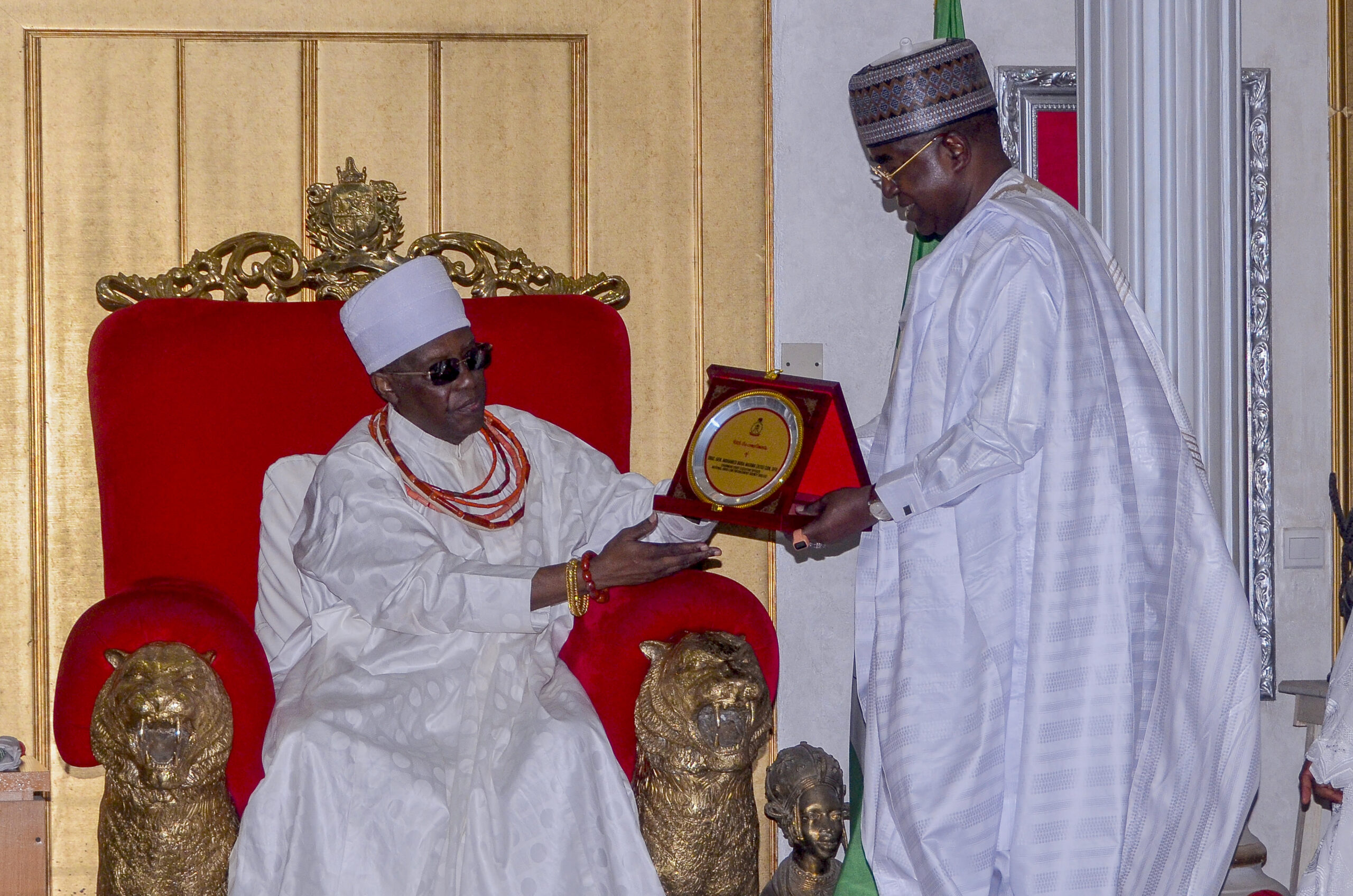
The Oba of Benin, Oba Ewuare II, and the Chairman and Chief Executive Officer of the National Drug Law Enforcement Agency (NDLEA), Brigadier General Mohamed Buba Marwa (retd.), have called for stronger collaboration among traditional institutions, government agencies and other stakeholders to combat drug abuse and trafficking across the country.
The monarch pledged the continued support of the Benin traditional institution for the campaign against illicit drugs, particularly efforts aimed at protecting young people and communities from the devastating consequences of substance abuse.
The renewed commitment came as Marwa raised concern over the prevalence of drug use in Nigeria, disclosing that more than 15 million Nigerians were involved in drug consumption, a situation he described as a major national challenge requiring collective action beyond conventional law enforcement.
Speaking during a courtesy visit by the NDLEA chairman to the Benin Palace, Oba Ewuare II commended the agency for its sustained efforts to combat drug trafficking and abuse, stressing that the menace required the cooperation of traditional rulers, religious leaders, government institutions and other stakeholders.
The monarch maintained that traditional institutions, because of their closeness to communities and influence over their subjects, had important roles to play in sensitising the public, particularly youths, to the dangers of illicit drug consumption and trafficking.
He emphasised the need for sustained prayers, moral guidance and collective responsibility in tackling the problem, noting that the campaign against drug abuse should remain a shared commitment of society rather than the exclusive responsibility of security and law enforcement agencies.
The Oba also spoke on the preservation and recovery of Benin’s cultural heritage, recalling the longstanding efforts of his predecessors to secure the return of priceless artefacts taken from the ancient kingdom.
He noted that the gradual repatriation of the cultural treasures reflected years of persistence, diplomatic engagement and commitment by the Benin traditional institution to reclaim its historical heritage.
Oba Ewuare II particularly welcomed the anticipated return of about 40 Benin artefacts from a Swedish museum, describing the development as another significant achievement in the continuing campaign for the restitution of cultural objects removed from the kingdom.
He maintained that the recovery of the artefacts was important to preserving the history, identity and cultural inheritance of the Benin people for future generations.
Earlier, Marwa expressed concern over the increasing dangers posed by illicit drug consumption and trafficking, warning that the menace had continued to threaten public health, family stability, community development and national security.
Other News
The NDLEA chairman disclosed that more than 15 million Nigerians were involved in drug use, underscoring the scale of the challenge confronting the country and the need for a comprehensive response.
He said the agency had intensified its operations against illicit drug trafficking networks, citing more than 1,200 arrests and seizures exceeding 30 tonnes of illicit substances in the previous year.
Marwa, however, stressed that arrests, seizures and prosecution of offenders alone could not sufficiently address the problem, particularly where poverty, unemployment and other socioeconomic challenges continued to expose communities to illicit drug cultivation and trafficking.
According to him, the agency requires the active support of traditional rulers, religious organisations, civil society groups, community leaders, the media and other stakeholders to strengthen public enlightenment, discourage drug consumption and prevent young people from being recruited into criminal drug networks.
He explained that the NDLEA had consequently adopted complementary strategies aimed at addressing the underlying economic conditions encouraging illicit drug production, including its alternative development initiative designed to provide legitimate sources of livelihood for communities involved in illegal cultivation.
Under the programme, Marwa said communities engaged in illicit drug cultivation were being encouraged to embrace productive agricultural activities, including cassava, yam and maize farming, as alternatives to growing prohibited substances.
He explained that the initiative, supported by the Federal Government and state governments, was intended to create sustainable economic opportunities through improved access to agricultural inputs and essential community infrastructure.
The intervention, according to him, also envisages the provision and improvement of roads, schools, healthcare facilities, water supply and other basic amenities capable of supporting legitimate economic activities and improving living conditions in affected communities.
Marwa maintained that providing viable alternatives to illicit drug cultivation would complement the agency’s enforcement operations and contribute to reducing the economic incentives driving individuals and communities into the illegal drug trade.
He stressed that the success of the programme would depend largely on sustained cooperation among government institutions, traditional authorities and local communities, particularly in promoting public awareness and encouraging participation in legitimate agricultural enterprises.
The NDLEA chairman expressed appreciation to Oba Ewuare II for the royal audience and his continued support for the campaign against illicit drugs.
He appealed for sustained collaboration with the Benin traditional institution in mobilising communities, sensitising youths and promoting a society free from drug abuse and trafficking.