Follow Us on Google
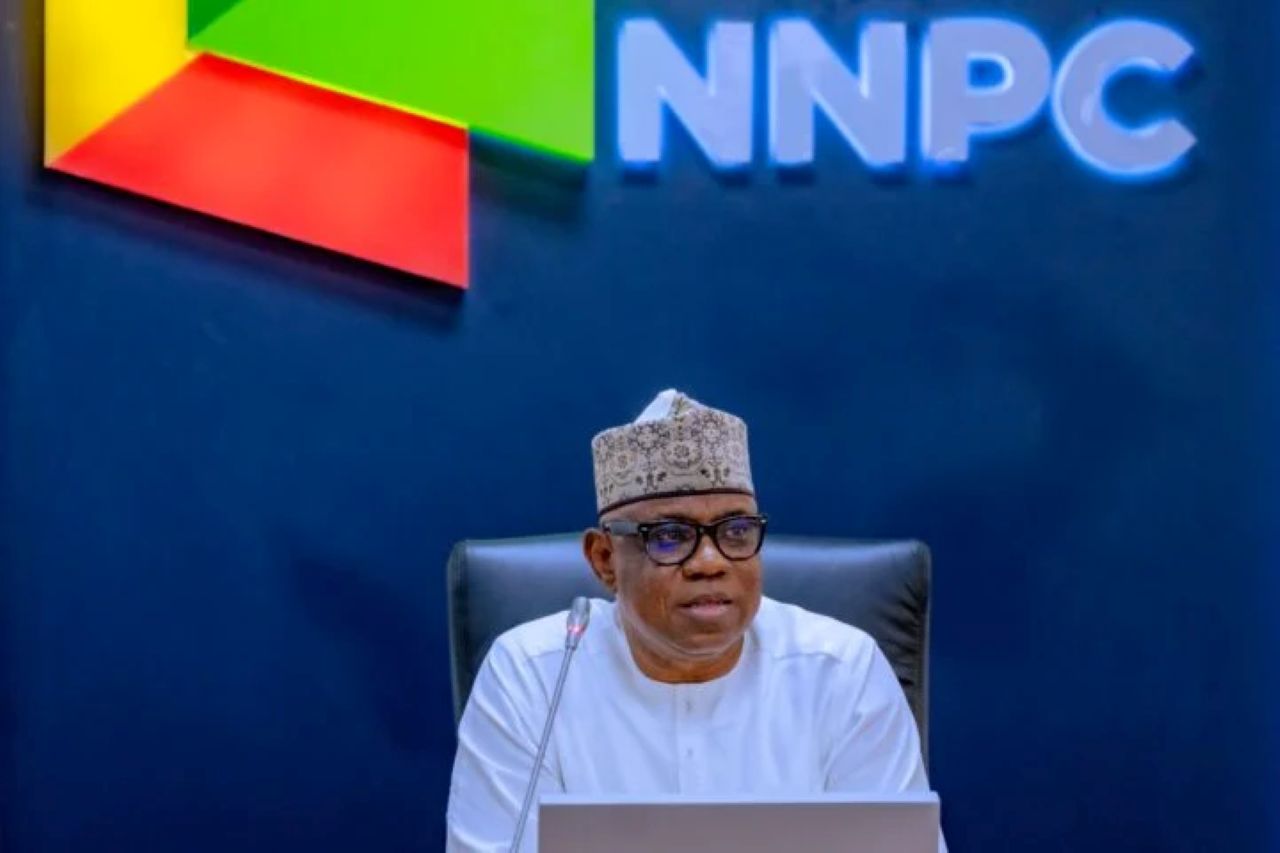
It is unfortunate that the Nigerian National Petroleum Company Limited (NNPCL) is always in the news for the wrong reasons. If it is not about non-remittance of funds to the Federation Account, it is about hidden profits, financial discrepancies or outright dubious accounting statements. All of these allegations erode public and investors’ confidence in the oil company. It also tarnishes the corporate image of the company. The latest of such unsavoury news is the alarming allegation of missing N210 trillion reportedly uncovered in the company’s audit reports.
The disputed figures comprised N103 trillion in accrued expenses and another N107 trillion listed in the auditor’s report as receivables. Both discrepancies were discovered during the recent review of NNPCL financial records between 2017 and 2023. Consequently, the Public Accounts Committee of the Senate issued a 10-day ultimatum to the Group Managing Director of NNPCL, Bayo Ojulari, to explain the discrepancies or face full constitutional weight of the Senate.
The Senate panel also gave seven days of grace to the management and auditors of the company to provide answers to the queries regarding these discrepancies in the audited report submitted to the Senate for scrutiny. The initial ultimatum had expired without the appearance of the NNPCL officials. Instead, the management of the company had on June 24, requested two months postponement to tidy up its books. The Senate Committee on Public Accounts said it was unimpressed with the reason and describing it as unacceptable, irresponsible and suspicious.
The Committee also said the delay by NNPCL was indicative of a deliberate evasion to defend the allegations of financial irregularities. While we loathe the discrepancies in the firm’s audit report, the explanation of the management of NNPCL to delay the Senate summon is untenable and unacceptable. As a commercial entity owned by the federal government, the NNPCL must be efficiently and transparently run like other corporate entities in line with global best practices. The opaqueness and shoddiness in its affairs must be jettisoned forthwith. Its financial records, revenue remittances to government and audit reports must be impeccable.
The NNPCL should emulate its counterparts such as the Saudi Arabia’s Aramco and Brazil’s Petrobras, which have become models on how to run profitable national petroleum companies. For instance, Aramco generated over $722 billion in four years, making it the most profitable and valuable company in the world, surpassing iPhone maker, Apple. Aramco’s net income for the 2024 financial year was $106.2 billion, while its net income for the first quarter of 2025 was $26 billion compared to $23.3 billion for the Q4 2024. Its total revenue in 2023 financial year is 40 per cent of Saudi Arabia’s Gross Domestic Product (GDP). This has helped to overhaul Saudi’s economy and reshaped the global economic order.
On the other hand, the NNPCL reported a loss of N16 trillion in 2023 financial year, a year after it transited to commercial entity from a government corporation. Unlike Aramco and Petrobras, the NNPCL contributed a paltry 5.70 per cent to Nigeria’s total GDP in 2024. This boldly underscores the opaque nature and apparent poor management of the NNPCL. The latest allegation over the company’s financial statement is one among many. It has even become a recurring decimal in the company’s history.
In 2021, the Nigeria Extractive Industries Transparency Initiative (NEITI) revealed that the NNPCL and 13 other government agencies failed to remit $9.85 trillion to the federation account. The amount represents 8.47 per cent of the $23 billion total revenue generated by the federal government during the period. Specifically, the NEITI report identified $1.95billion of unremitted revenue by NNPCL. The unremitted revenue by NNPCL included $286.43 million from export crude sales, $871 million from domestic sales, $722 million in Liquified Naturally Gas (LNG) dividends, and other revenues from transportation and domestic gas proceeds.
Also in 2017, the NNPCL reportedly failed to account for N5.15 trilion in unremitted funds. Therefore, the management of the NNPCL should endeavour to appear before the Senate Committee on Public Account and explain the discrepancies in its accounts. Evading the committee is not an option. Therefore, it is appropriate that Ojulari and other relevant officials of the NNPCL should appear before the Public Accounts Committee of the Senate and address the financial discrepancies.
Undoubtedly, there are some questions begging for urgent answers. For instance, why are there discrepancies in the financial accounts of NNPCL? Why did its subsidiary, the National Petroleum Investment Management Service (NPIMS), post a profit of N9trillion between 2017 and 2021, and the NNPCL recorded a hefty loss of N16 trillion in the same financial year? Going forward, the NNPCL should strive to be transparent in its operations. Anything short of that is unacceptable.