Follow Us on Google
• says Oil production surges to 1.7mbpd in 2025; gas tops 7bcf/day, eyes 1.8mbpd, $30bn investments by 2030
From Juliana Taiwo-Obalonye, Abuja
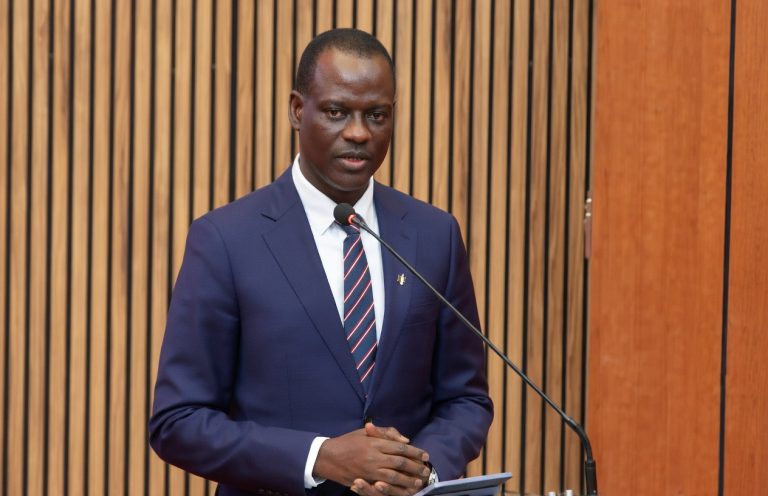
Group Chief Executive Officer of Nigerian National Petroleum Company Limited (NNPCL), Bayo Ojulari, has expressed confidence that intensifying rivalry among downstream petroleum operators will ultimately reward everyday Nigerians, despite short-term market disruptions during this shift to a competitive landscape.
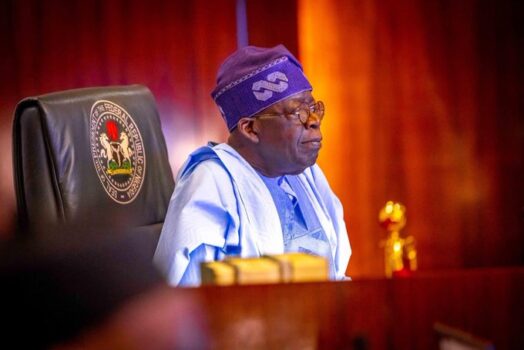
Speaking to reporters following a Sunday meeting with President Bola Tinubu at his Lagos home, Ojulari highlighted the move toward a willing-buyer, willing-seller model, noting initial challenges would give way to long-term advantages.
“At the end of the day, Nigerians on the streets are going to be the beneficiaries. Where there is healthy competition, the buyers are the ultimate beneficiaries”, he said.
He said the discussion focused on NNPC’s 2025 year-end results, 2026 plans, and gratitude for presidential guidance amid reforms. “I came to update Mr President about the end-of-2025 performance of NNPC and to discuss our strategic priorities for 2026. It is also to thank Mr President for the inspiration he has given to the new NNPC management and board through this very challenging period of transformation”, he stated.
Ojulari called the overhaul demanding yet essential, crediting Tinubu’s support for key advances: “transformation is very difficult. With his backing, we have been able to begin to make significant improvements to the structure of NNPC.”
NNPC posted strong gains in 2025 output versus 2024. “Last year, we were producing about 1.5 million barrels per day. This year, we are getting to over 1.7 million barrels per day in terms of oil production,” Ojulari noted, with gas also climbing sharply.
“Our gas production increased from about 6.5 billion standard cubic feet per day to over 7 billion standard cubic feet per day. Those improvements are underpinned by very structural changes within the organisation”, he said.
Other News
He noted that a standout achievement was advancing the Ajaokuta–Kaduna–Kano (AKK) Gas Pipeline. “We successfully completed the welding of the main line of the AKK. We were able to cross the River Niger, which had been a struggle for many years”, he shared. He explained that this paves the way for northern gas connections starting early 2026.
“By completing the main line, we can now begin to make all the connections in the early part of next year. That brings gas in its full form to the northern part of Nigeria”, Ojulari added, naming Kaduna, Kano, Ajaokuta, and Abuja as prime beneficiaries to spur industries. “We will begin to see industrial parks, gas-based industries, fertiliser plants and power generation.”
Speaking on 2026 targets and PIA reforms, he said boosting output tops NNPC’s 2026 agenda, demanding targeted investments. “When we say increasing production, it sounds simple, but there is a lot that goes into it. It means attracting the right investment, whether in oil or gas”, he explained. The firm aims for at least 1.8 million barrels per day, higher gas levels, more final investment decisions, and portfolio reviews.
Ojulari said President Tinubu praised progress but reminded of ambitious target: “Mr President charged us with driving his performance aspiration. He reminded us of the target of attracting over $30 billion in additional investment by 2030.” He said the President also reaffirmed the 2 million barrels per day goal by 2027.
Addressing downstream pricing worries, Ojulari pointed to Petroleum Industry Act (PIA) changes: “the PIA did something fundamental. It separated regulation from business.” Regulators like Nigerian Midstream and Downstream Petroleum Regulatory Authority (NMDPRA) and Nigerian Upstream Petroleum Regulatory Commission (NUPRC) now handle oversight, while NNPC functions commercially. “Post-PIA, NNPC is not a regulator.
We are a CAMA company that must compete profitably”, with no more federation allocations.
He said NNPC acts as backup supplier, partnering with players like Dangote Refinery.
“Competitiveness is not easy. We are in the early stages of a willing buyer-willing seller market,” he acknowledged. “By the time you have a refinery like Dangote in-country, which we did not have before, the market will be impacted.”
Viewing local refining as a boon, Ojulari urged collaborative navigation: “It is a great thing to have a major refinery in Nigeria supplying West Africa and other parts of the world. What we need to do is to walk through this reality together so that the market forces can stabilise and everyone can be okay.”