Follow Us on Google

Africa’s dependence on medicines and healthcare products developed and manufactured outside the continent poses a growing threat to health security, experts have warned.
The Director-General of the Nigeria Natural Medicine Development Agency (NNMDA), Prof. Martins Emeje, said Africa could not achieve meaningful health security while relying heavily on foreign countries for essential medicines, arguing that the continent must urgently invest in research, development and local production.
“If you don’t do research and development as a nation, you are a joker country,” Emeje declared.
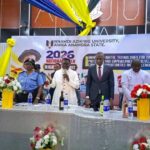
He spoke in Lagos while commemorating the 2026 African Traditional Medicine Day, themed, “Reflection on Research and Development Efforts for Traditional Medicine towards Achieving Universal Health Coverage in the Africa Region.”
According to him, Africa has the biodiversity, medicinal plants and indigenous knowledge required to build a stronger local medicine industry, but warned that these resources would remain largely untapped without systematic research, documentation, regulation and investment.
Emeje cautioned that medicine insecurity could become as dangerous as food insecurity if African countries failed to develop the capacity to research, manufacture and regulate medicines locally.
He said one of the immediate priorities should be documenting the knowledge of traditional medicine practitioners who have spent decades working with medicinal plants and therapies before such knowledge is lost.
Such documentation, he said, would enable researchers to preserve, authenticate and scientifically investigate traditional practices and potentially develop them into safe and effective healthcare products.
The challenge, however, is not simply to promote traditional medicine, but to establish which remedies are safe and effective enough for wider healthcare use.
Keynote speaker at the event, Professor of Medicine and Endocrinology, Prof. Andrew Uloko, stressed that the age or cultural acceptance of a traditional remedy could not, on its own, establish its safety or effectiveness.
He said researchers must determine what works, what does not and what could be harmful, while preserving indigenous knowledge that risks disappearing as older custodians die without passing it on.
Uloko called for systematic documentation of traditional practices and medicinal plants, proper identification and authentication of plants, laboratory studies and appropriate scientific and clinical assessment of promising remedies.
“The goal is not to discredit traditional medicine, but to provide the evidence needed to determine which practices and products can safely enter a modern healthcare system,” he said.
Other News
The World Health Organisation (WHO) also urged Nigeria to strengthen the documentation, regulation and quality assurance of traditional medicine as part of efforts to integrate safe and effective practices into the national healthcare system.
The Head of the Traditional, Complementary and Integrative Medicine Unit at WHO, Dr Kim Sungchol, said Nigeria’s rich traditional medicine heritage and widespread use of traditional remedies represented an opportunity to improve health and wellbeing, particularly in the management of chronic conditions.
Sungchol said about 180 countries recognise the use of traditional medicine among their populations, making the sector an important component of global healthcare.
He said the WHO Global Traditional Medicine Strategy 2025–2034 provides a framework for countries to develop traditional medicine through evidence-based research, stronger regulation and appropriate integration into national health systems.
According to him, Nigeria should begin by comprehensively documenting traditional medicine practices and herbal medicines used by communities.
Such documentation, he said, would help generate evidence on the safety, quality and effectiveness of traditional remedies and provide a foundation for research and development.
The WHO official also called for capacity-building programmes for traditional medicine practitioners, particularly in infection prevention and control.
He said relevant aspects of biomedical training could be incorporated into training programmes for traditional practitioners to improve patient safety and the quality of care they provide.
Sungchol further urged the Nigerian government to establish and strengthen mechanisms for licensing traditional medicine practitioners and regulating traditional medicine products.
He said effective licensing and regulation would provide the foundation for integrating qualified practitioners and safe traditional medicine services into the national healthcare system.
For Africa, the experts said, the choice is no longer between traditional and conventional medicine, but whether indigenous knowledge can be transformed through science, regulation and investment into healthcare solutions that are safe, affordable and capable of reducing the continent’s dependence on imported medicines.
Without that transformation, Africa risks remaining a source of medicinal resources and traditional knowledge while continuing to import the finished products developed from them elsewhere.