Follow Us on Google
Accuses NASS of anti-worker legislation
_________________________
From Adanna Nnamani, Abuja
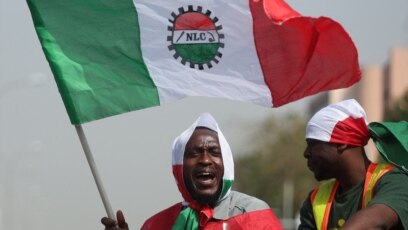
The Nigeria Labour Congress (NLC) has vowed to resist what it described as a sinister plot by the National Assembly to amend the Nigeria Social Insurance Trust Fund (NSITF) and Employees’ Compensation Act (ECA), warning that the move is a direct attack on workers’ rights and welfare.
NLC President Joe Ajaero issued the warning at the 2025 Annual Labour Conference of the Labour Correspondents’ Association of Nigeria (LACAN), held in Abuja on Thursday.
Ajaero accused lawmakers of plotting to “capture the workers’ fund” and divert it from its primary purpose of providing protection for injured workers and their families.
The labour leader also criticised the purported agenda to create Special Economic Zones that would allow certain companies to operate outside national labour laws, insisting that the move is a blatant violation of ILO Conventions 87 and 98 on the right to organise and bargain collectively.
He charged members of the media to rise in defence of workers and ensure that their platforms are not used to legitimise anti-worker propaganda.
“First, there is the sinister attempt in the Senate to amend the NSITF and ECA Acts. This is nothing but a brazen attempt to capture the Fund and divert it from its sacred purpose of protecting injured workers and their families, to use it for political ends. This Fund is the lifeblood of worker solidarity, contributed for workers. It is not a slush fund for politicians, and we will resist this criminal appropriation with every fibre of our being.
“Second, we are seeing an unholy move by the National Assembly to pass special laws that would grant a few powerful companies the licence to operate as islands of impunity, outside the known labour standards that govern our nation. These so-called ‘Special Economic Zone’ laws are a direct and violent breach of ILO Conventions 87 and 98 on the right to organise and collective bargaining, to which Nigeria is a signatory. It is the same corrosive logic that fuelled the recent de-unionisation violence at the Dangote Refinery, now seeking the cloak of legality. They want to create a country within a country where workers have no voice and no rights.
“Comrades of the pen, you are not mere observers of this struggle. You are an integral part of the trade union movement. Your recorders and keyboards are no less important than our placards and negotiation tables. They are the instruments with which we shape the narrative, counter the propaganda of the bourgeoisie, and awaken the consciousness of the masses.
Other News
“Do not allow your platforms to be used to legitimise this new legislative assault. Your duty as Labour Correspondents is twofold. First, you must join forces with the trade union movement, a part of which you are. Use your platforms to expose these anti-worker legislative manoeuvres. Investigate and report on the politicians and their capitalist allies who are behind these moves. Do not fall for their elitist framing; always centre the interests of workers, for that is who you are. Any worker in a cage anywhere in Nigeria is all workers, including you, in a cage.
“Second, it remains your sacred duty to spread the gospel of trade unionism. You must explain to the Nigerian people that our fight to protect the NSITF Fund and to uphold our labour laws is their fight. Our struggle for social justice is the bedrock upon which a truly functional democracy is built. We cannot have a democracy that works only for the rich and powerful.
“Finally, comrades, remember this: They have their legislative tricks, but we have ourselves. Our collective power, our solidarity, is the ultimate intelligence no corrupt law can break,” he stated.
Also speaking, Managing Director/Chief Executive of NSITF, Barr Oluwaseun Faleye, while delivering a paper titled “Employees’ Compensation Enforcement: Issues and Challenges in the Oil and Gas Industry”, emphasised that protecting workers in the oil and gas industry is both a statutory and moral obligation.
Faleye, who was represented by Mrs Bridget Ashang, General Manager, Abuja Region, highlighted key challenges facing enforcement of the Employees’ Compensation Act, including non-remittance of contributions by some operators, outsourcing and casualisation, weak sanctions, and poor safety culture in high-risk operations.
According to him, NSITF has stepped up enforcement through measures such as digitalisation of registration and remittance, inter-agency collaboration with the NUPRC and the Ministry of Labour, establishment of a service delivery centre in Bonny, and intensive stakeholder engagement.
The NSITF boss urged stronger legal backing to boost enforcement, mandatory compliance certificates for oil and gas contracts, and public recognition of compliant firms.
He further reaffirmed NSITF’s commitment to safeguarding Nigerian workers, insisting that the Fund will continue to pursue reforms that make the Employees’ Compensation Scheme more transparent, accessible, and humane.