Follow Us on Google
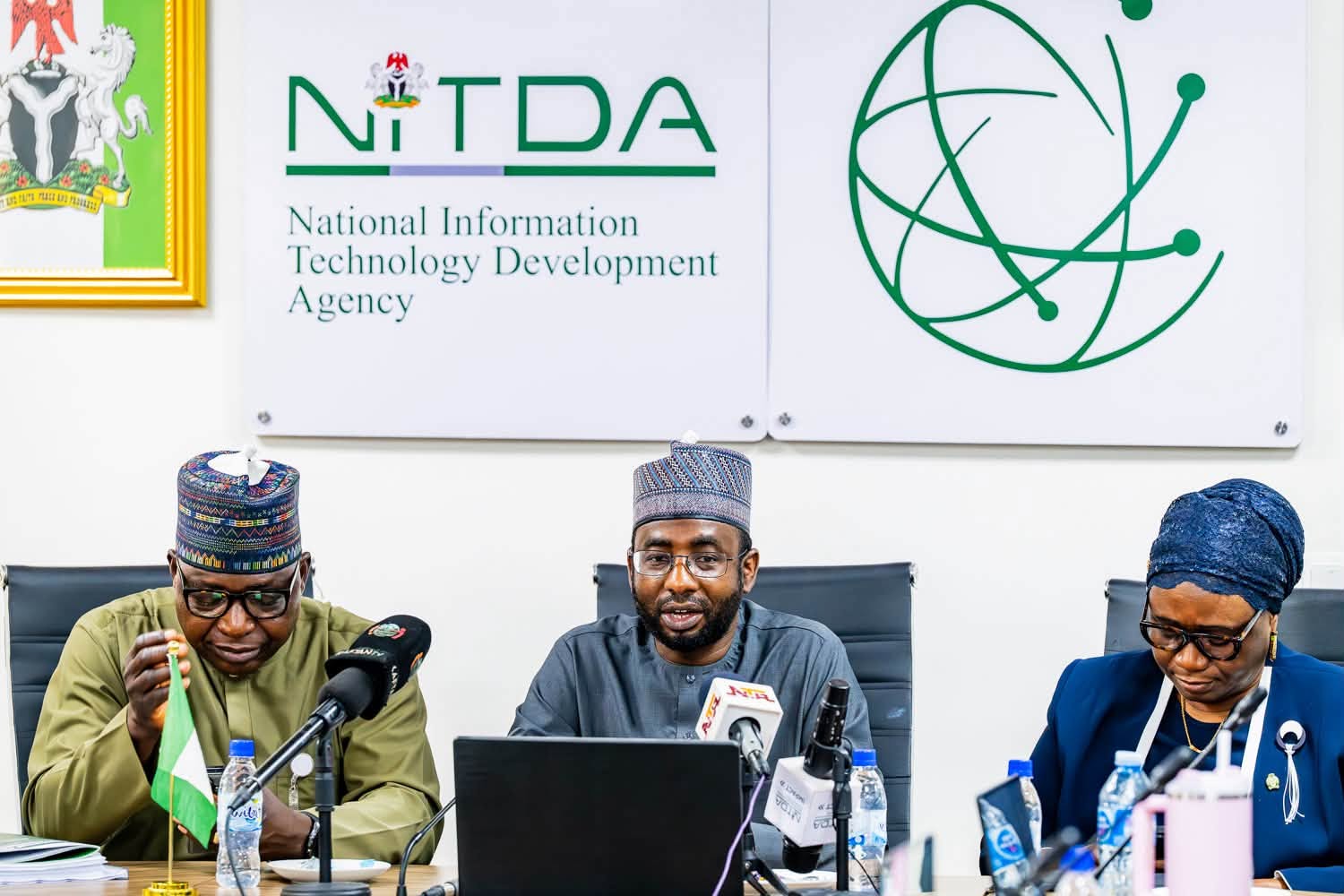
The National Information Technology Development Agency (NITDA) has cleared 1,056 Information Technology (IT) projects valued at over N3.84 trillion between July 2023 and July 2026.
The agency disclosed this in a statement issued on Thursday, following remarks by its Director-General, Kashifu Inuwa, at the 66th Annual General Conference of the Nigerian Bar Association (NBA) in Port Harcourt, Rivers State.
Speaking during a plenary session themed, “Nigeria First, Procurement Last: How E-commerce is Rewriting Contracts,” Inuwa said NITDA received proposals for 1,092 IT projects from 326 Ministries, Departments and Agencies (MDAs) during the period.
The proposed projects, he said, were valued at more than N4.24 trillion, while 1,056 projects worth N3.84 trillion were cleared by the agency.
According to NITDA, the reforms are aimed at strengthening IT procurement, improving confidence in locally developed software and advancing Nigeria’s digital sovereignty.
Inuwa identified three major reforms being implemented by the agency to address challenges around IT project planning, software adoption and digital infrastructure.
He said the first was the strengthening of the IT Project Clearance Framework, under which MDAs would be required to have a proper solution design before making budgetary provisions for IT projects.
NITDA would also certify companies providing solution design, implementation and quality assurance services, with safeguards to ensure that the three functions are not performed by the same organisation on a single project.
The DG explained that the approach was similar to the construction industry, where buildings require architectural designs before construction begins.
He said the reform would promote standardisation, strengthen accountability and ensure better value for money in government technology investments.
The second reform, he said, was the Software Assurance Framework, which is being developed to strengthen confidence in locally developed software and reduce Nigeria’s dependence on off-the-shelf solutions.
Inuwa noted that many Nigerian organisations spend significant resources customising software developed for foreign markets to meet local requirements, only to incur additional costs when vendors introduce new versions.
Other News
He said NITDA was therefore promoting solution design, software testing, standards and assurance, including the licensing of software testing companies to assess locally developed solutions.
The third reform is linked to the National Sovereign Cloud Initiative, which seeks to strengthen Nigeria’s digital sovereignty and build the country’s capacity for digital self-determination.
“When we talk about digital sovereignty, it’s about us as a nation to build the capability for digital self-determination,” he said.
According to him, the initiative would strengthen Nigeria’s digital public infrastructure and create greater opportunities for locally developed innovations to be built, hosted and scaled within the country.
He said the framework would provide for certification across key segments of the cloud ecosystem, including infrastructure providers and data centres, cloud service providers, system integrators and cloud aggregators, while establishing appropriate requirements for sensitive and critical data.
Inuwa urged stakeholders to view public procurement as a strategic instrument for building national capabilities, shaping markets and creating opportunities for Nigerian innovators.
“We look at public procurement not just as a way of government spending money, but as a powerful instrument government has for shaping markets, for building our national capabilities, as well as for creating opportunities for our innovators,” he said.
He cited the growth of Nigeria’s fintech ecosystem as an example of what deliberate policy and market opportunities could achieve, challenging stakeholders to explore similar opportunities in healthcare, education, agriculture and other sectors.
The NITDA DG also urged public institutions to rethink how they specify IT requirements, advising them to focus less on prescribing particular technologies and more on clearly defining the problems they seek to solve, the programmes they intend to implement and the outcomes they expect to achieve.
He further stressed the importance of the legal profession in ensuring that technology contracts adequately address data ownership, data processing and storage, data portability, intellectual property, security and contractual responsibilities.
He said greater clarity in technology contracts would strengthen the protection of public institutions and improve confidence in government technology investments, while the reforms would ultimately help position public procurement as a driver of local innovation, digital capacity and Nigeria’s long-term digital sovereignty.