Follow Us on Google
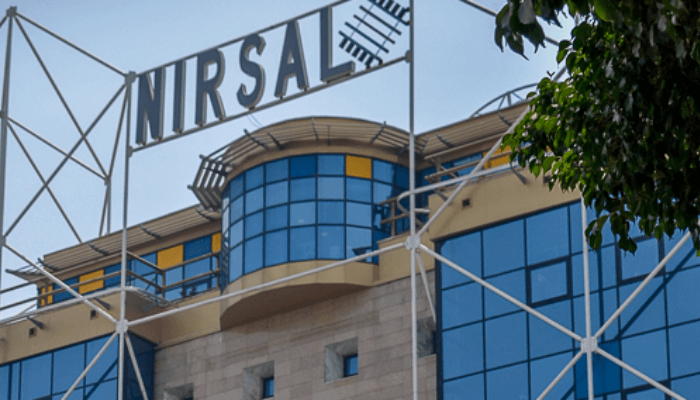
The Nigeria Incentive-Based Risk Sharing System for Agricultural Lending (NIRSAL Plc) says it has helped banks and investors release over N70 billion in loans to farmers and agribusinesses so far this year, its best performance since it started operations in 2013.
The achievement shows that NIRSAL is bouncing back strongly after a period of slow activity, following the appointment of a new Board and Executive Management. In total, the agency has now made it possible for banks to lend N270 billion to agriculture since inception, with 2025 alone accounting for almost a quarter of that amount.
The boost could not have come at a better time. In recent years, bank lending to agriculture had dropped from 6.18% in 2022 to 4.82% in 2024, while growth in the sector slowed from 2.5% to 1.7%. But NIRSAL’s renewed focus on helping banks manage risks, giving technical support, and improving value chains, such as grains, cocoa, shea, and livestock, is changing the picture.
NIRSAL’s Managing Director and Chief Executive Officer, Sa’ad Hamidu, said the results show that agriculture can attract private capital when well managed.
“N70 billion may seem small when compared to what the sector needs, but the meaning is huge.
“It proves that agriculture can be profitably and sustainably financed. With the right mix of capital, training and risk management, Nigerian agriculture can compete globally.”
He added that NIRSAL hopes to hit N150 billion by the end of 2025, as more banks and agribusinesses take advantage of its support.
“This is not yet the peak of the harvest season when merchants and input dealers seek loans,” he said. “So, there’s still a lot of lending activity ahead, and we’re optimistic about surpassing our target.”
Already, the ripple effect is being felt. Agriculture’s share of total bank lending has climbed back to 5.33% as of May 2025, showing renewed interest from banks. NIRSAL also disclosed that two newly licensed banks have entered the agricultural finance space this year, using its model to manage risks and structure loans.
Of the N70 billion so far, 32% has gone into value-added exports, helping Nigeria earn more foreign exchange from agricultural products.
Beyond the figures, NIRSAL’s approach focuses on helping both banks and farmers succeed. Its model covers everything from identifying good projects to providing expert advice, structuring deals, and issuing guarantees to reduce risks for lenders. This has helped many agribusinesses once seen as “too risky” gain access to bank loans for the first time.
“We’re seeing farmers and agribusinesses that couldn’t get loans before now being financed directly by banks,” Hamidu said. “That shows NIRSAL’s model works and can make agricultural lending sustainable for the long term.”
The N70 billion milestone also reflects NIRSAL’s massive training and capacity-building efforts. Over 1,100 bank staff have been trained on agricultural lending using its risk-sharing framework, leading to faster loan approvals and better understanding of agribusinesses. Similarly, more than 450 farmers and processors have been trained in feedlot management, export operations, and climate finance.
Hamidu said these initiatives are gradually changing how banks and agribusinesses relate.
“We’re building trust and knowledge across both sides, the more they understand each other, the easier it becomes to finance agriculture confidently,” he said.
Futuristically, NIRSAL is developing the NIRSAL LandBank Portal, a digital platform that will link farmers, banks, researchers, and policymakers. The platform will use data to identify opportunities, track risks, and guide investors in making smart decisions.
The organisation is also moving into climate finance, partnering with agencies like the Rural Electrification Agency (REA) to provide off-grid power to rural farming and processing areas. The goal, according to NIRSAL, is to make agricultural operations cleaner, more efficient, and climate-resilient.
Hamidu explained that these projects align with Nigeria’s broader economic vision.
“We’re building a stronger, climate-smart agricultural sector that can feed the nation, create jobs, and help push Nigeria towards a $1 trillion economy,” he said.
Since its creation, NIRSAL has worked to make agricultural lending less risky and more profitable for banks, helping channel funds to farmers and agribusinesses across the value chain. Its 2025 performance, Hamidu said, shows that confidence is returning to the sector.
“This year’s achievement is more than numbers, it’s proof that when farmers, banks, and government agencies work together, we can make agriculture a true engine of growth for Nigeria,” he said.