Follow Us on Google
• Vandals turn Abuja streets into death traps
From Isaac Anumihe, Abuja
Residents of the Federal Capital Territory (FCT), say theft and vandalism are leaving neighbourhoods in darkness, turning roads into death traps and forcing people to shoulder the cost of replacing stolen public property. Traffic lights gone, crash barriers ripped out, manhole covers missing, transformers gutted and armoured cables carted off. Communities that once relied on basic civic infrastructure now live with fear, expense and danger.
“Sometimes you come out and the traffic light is gone; at night it’s a death trap,” said Joyce, a resident of Pyankasa. She recalled nights when drivers, blinded by the lack of signals, sped through intersections and narrowly avoided collisions. More than once she and neighbours pooled money to replace damaged parts because, “it’s no use waiting for the distribution company — they will never come.”
Rasheed, who lives in Apo, described how strangers scaled poles under cover of darkness and severed supply cables: “This is the third time we are contributing to replace the cable. They climbed the pole at night, cut the wires and took them away. We are tired of contributing. Some families are talking about relocating because of this menace.”
Residents and community leaders point to the same pattern. A small but organised economy that strips metal from public works and sells it into growing local scrap markets. “You can see the items being sold openly in ‘pantaker’ markets,” a neighbourhood association chairman in Lugbe told Daily Sun. The stolen metal, aluminium poles, iron fittings, copper and armoured cables, move quickly through a network of middlemen and scrap dealers, leaving communities to pick up the pieces.
The human costs are immediate and stark. Without streetlights, children cannot study at night and traders who rely on evening customers lose income. Missing crash barriers and damaged handrails turn busy corridors into sites for accidents; residents report injuries, and some say vandalism has contributed to deaths. Repairing the damage drives out-of-pocket expenses from households already struggling with rising living costs.
Residents described perpetrators who blend into the city’s margins by day and strike with alarming speed at night. “It’s not difficult to notice them under the bridge pretending to be homeless or handicapped,” one community leader said. “But at night they operate like professionals.” That operational skill — cutting cables cleanly, removing heavy transformer parts and carting items away with minimal fuss — suggests coordination and knowledge beyond casual vandalism.
The spike in thefts has coincided with a wave of new installations across the FCT. Residents note that as the administration installs fresh lights, transformers and traffic systems, vandals see fresh targets.
“They don’t have to work hard to find metal anymore because the city provides it,” said a trader in a market near Jabi. The ease of resale in local markets fuels the cycle: new equipment is installed, stolen, sold and demand encourages more thefts.
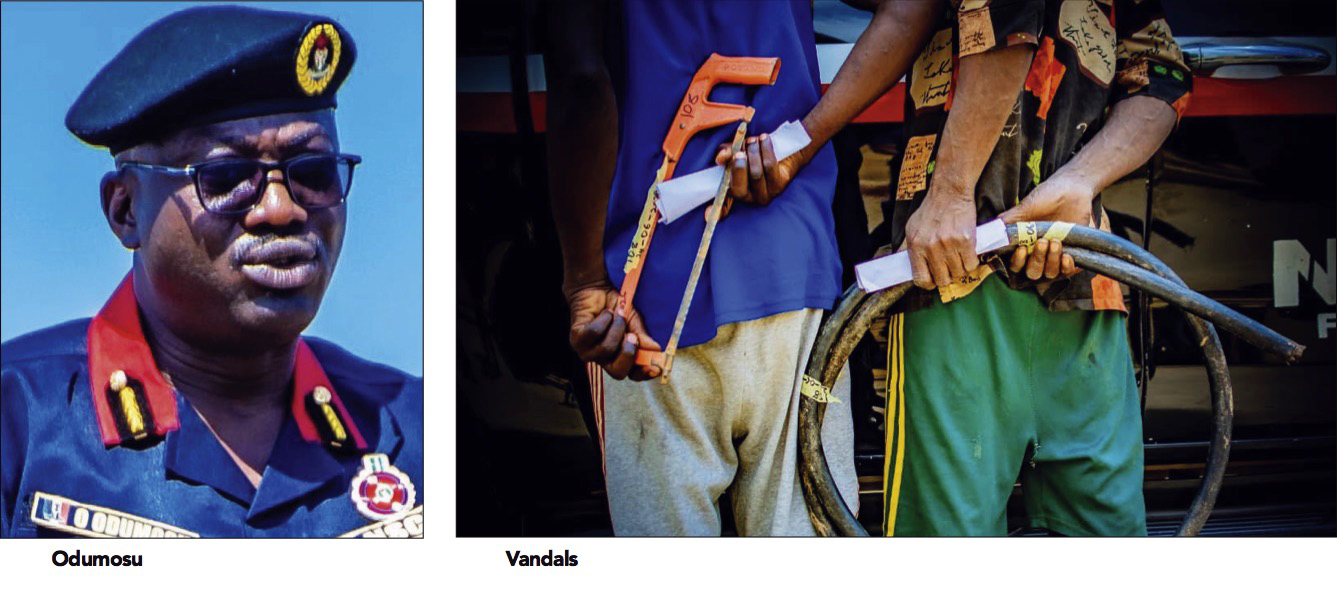
The Nigerian Security and Civil Defence Corps (NSCDC), mandated to protect critical national assets and infrastructure, says it has stepped up operations. Dr Olusola Odumosu, Commandant, NSCDC FCT, said the corps arrested more than 30 suspects between January and June: “These arrests show that the FCT Command is not backing down in its resolve to protect critical national assets and infrastructure and to chase out vandals and criminal elements from the city.”
Other News
He provided a month‑by‑month breakdown of arrests: seven in January, two in March, four in April, five in May and ten in June. He described several successful raids — the recovery of 12 vandalised crash barriers and eight poles linked to damage along Constitution Avenue; the seizure of a vandalised transformer in Dakibiyu, Jabi District; and the arrest of suspects found with transformer components being carted away. Operations also led to arrests of individuals attempting to vandalise telecommunications cables around Transcorp Bridge and fibre optic infrastructure in Lugbe.
Residents say arrests alone are not stopping the thefts. “Arresting suspects is welcome. But we need sustained policing, better surveillance and faster repair services so communities are not forced to pay for public assets,” said Lugbe community chairman. He and others urged coordinated measures that address both the supply, the theft and sale of parts, and the demand, the markets that buy stolen metal.
Suggestions from residents and local officials include securing transformers with theft‑resistant fittings, installing tamper‑proof covers on junction boxes, increasing patrols around key installations, tightening regulation of scrap yards and markets, and launching public awareness campaigns about the dangers of buying stolen goods. Business owners near affected areas want incentives for secure infrastructure investments and clearer lines of responsibility from service providers who repair and maintain public assets.
The problem, residents say, is compounded by slow or absent responses from utility companies. Joyce’s experience in Pyankasa — repeated community contributions to replace parts while waiting in vain for official repair teams — is echoed across neighbourhoods. When a service provider is perceived as unresponsive, communities feel they have no choice but to foot the bill, deepening frustration and resentment.
Experts warn that piecemeal responses will not suffice. “This is an organised criminal market that feeds on infrastructure weakness and local demand for scrap metal,” said a security analyst. “A long-term solution requires coordination between security agencies, utility companies, local governments and market regulators. You must cut off the market for stolen goods and make infrastructure harder to steal.”
For now, residents remain anxious and watchful. The thefts have changed daily routines: extra caution when crossing poorly lit roads, reluctant night travel, closed shops earlier than usual. Some families are weighing relocation to avoid persistent outages and the insecurity that follows.
Odumosu urged citizens to support enforcement efforts by providing timely intelligence: “We encourage citizens to report suspects and suspicious activity so we can act quickly to apprehend those responsible.”
But residents said they also need visible, sustained protective measures. “We want more than occasional raids and recoveries,” said Rasheed. “We want a coordinated response that protects public assets, shuts down the markets where stolen parts are sold and removes the economic incentives that feed the crime.”
As arrests continue and more items are recovered, the question remains whether the cycle of theft and replacement can be broken. Without a combined strategy that secures installations, disrupts the resale market and holds supply chains to account, communities across the FCT fear they will keep paying — in money, in time, and increasingly in lives.