Follow Us on Google

•Collapsed federal highways make life miserable for motorists, commuters
From John Adams, Minna
The Minna-Suleja Road in Niger State, a 98-kilometre stretch, is the only road that connects Minna, the state capital with Abuja, the Federal Capital Territory (FCT). It is one of the busiest highways in the state, with hundreds of vehicles traversing the road each day. But it has also become the road of death.
Statistics released by the Niger State Command of the Federal Road Safety Commission (FRSC) showed that about 147 people were killed between January and September this year in 361 road accidents in the state.
Giving the statistics of the crashes across major highways in the state within the period, acting Sector Commander, FRSC, Niger State, Nma Gana, reported that 361 road accidents were recorded, out of which 74 were fatal, 265 were serious and 22 were minor. He said 915 persons were injured and 147 killed.
The number of road accidents in the first nine months of the year was almost more that that of the whole of 2015. According to Gana, in 2015, 479 road accidents occurred, out of which 115 were fatal, 326 were serious and 40 were minor; 1,256 were injured while 191 were killed.
The FRSC boss blamed over-speeding and the terrible state of the roads, especially the Suleja-Minna highway, for most of the crashes.
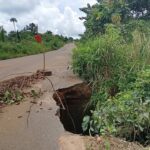
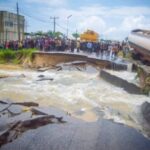
In truth, the dilapidated Suleja-Minna road has become a nightmare to motorists. More often than not, it inflicts pain on those plying it. Transportation of goods has become almost impossible, while socio-economic activities have declined considerably on account of the rundpwn highway.
Accidents on the road have become a common feature. Sometime last month, a family of five returning to Abuja, after spending the weekend with their extended family in Minna, were killed in a road crash when their vehicle had a head-on collision with a commercial but that was trying to avoid a pothole, there are many other instances like that in which human error, in the face of collapsed infrastucture have led to untimely death and disaster.
The Minna-Suleja road, which was reconstructed about 20 years ago, is among the numerous federal roads in Niger State that are now in a deplorable condition, needing urgent government attention. Niger State has the longest federal roads in Nigeria.
Spread across 15 of the 25 local government areas of the state, the roads are about 1,437 kilometres in all. Out of this, 1,115 kilometres, representing about 80 per cent, are in a deplorable condition, which has brought hardship to the people, with serious effects on their daily life and economic activities.
Some of the roads in a complete state of disrepair are the Jebba-Mokwa-Bokani road, Rijau-Niger border through Zuru in Kebbi State, the Katcha-Baro road, Agaie-Katcha and the Rofia-Swete-Segbema, the Minna-Suleja road, Tegina-Kagara-Kaduna road, Wawa-Kaima road, Auna-New Bussa-Sarkin Pawa-Kaduna road, Pandogari -Gurmana-Allawa road and the Mokwa-Makera-Tegina road.
Armed robbers and kidnappers are now taking position at the bad spots on the roads, where commuters are sitting ducks for hoodlums, and many Nigerians travelling on the roads have fallen prey to the criminals. For instance, three weeks ago, a group of armed robbers, numbering about 20, held motorists travelling along the Mokwa-Tegina-Makera-Kaduna road hostage for several hours, using the bad spots on the roads to carry out their criminal activities.
The administration of immediate past governor, Dr. Muazu Babangida Aliyu, had, in 2009, obtained a N21 billion bond from the capital market to fix some of the roads. However, even though the state government was able to rehabilitate some roads in the state, no attention was given to the federal roads, until the federal government, under former President Goodluck Jonathan, intervened.
Currently, the Bida-Mokwa Highway is the only federal road in Niger State that has received federal attention in the last 15 years, with the award of a N9 billion contract for its re-construction. It has since been completed and this has brought relief to motorists plying the road. Economic activities of the people in that axis are now at a peak.
Until the Jonathan government fixed the road in 2013, the Bida-Mokwa highway, which was abandoned by successive administrations for over 20 years, had claimed over 300 lives.
During the 2015 presidential election campaign, former President Jonathan had announced the award of the contract for the dualisation of the dilapidated Minna-Suleja Highway at an initial cost of N4.7 billion for the first phase.
However, the ovation that greeted the announcement was short-lived. As soon as the election was over and the President’s opponent was declared winner, the contractor handling the project disappeared from site and abandoned the project for want of payment.
Since then, the road has gone from bad to worse, causing living nightmares for the people travelling between the two important cities and to Abuja on a daily basis.
Motorists and other road users have continued to narrate stories of how they wasted eight to 10 hours on the road due to its sorry condition. Ordinarily, the journey should not take an hour.
Worried by the plight of the people plying the road, Governor Abubakar Sani Bello decided to do an inspection tour. He took a ride on the road recently but his convoy got stuck a few kilometres from Minna, in the midst of a gridlock. He subsequently stepped out of his car to higher ground and addressed the crowd of travellers equally stuck in the traffic.
Bello said his administration spent N500 million to rehabilitate the road, lamenting that it had collapsed again. He blamed the sudden influx of overloaded heavy-duty trailers and trucks for the collapse of the road.
The governor also recently paid a visit to the Minister of Power, Works and Housing, Mr. Babatunde Fasola, as well as President Muhammadu Buhari, appealing to them to fix the federal roads in the state.
During his audience with the minister, the governor lamented that the state lacked the wherewithal to fix the roads.
But even as Bello and residents of the state were groaning over the collapse of the Minna-Suleja road, it has been a tale of anger and anguish for the people from Niger North Senatorial District, who have accused the federal government of abandoning the federal roads in the area.
When the new Emir of Borgu, Alhaji Mohammed Sani Dantoro, spoke with journalists during a tour of some federal roads in his domain, his submission was not different from that of the Governor.
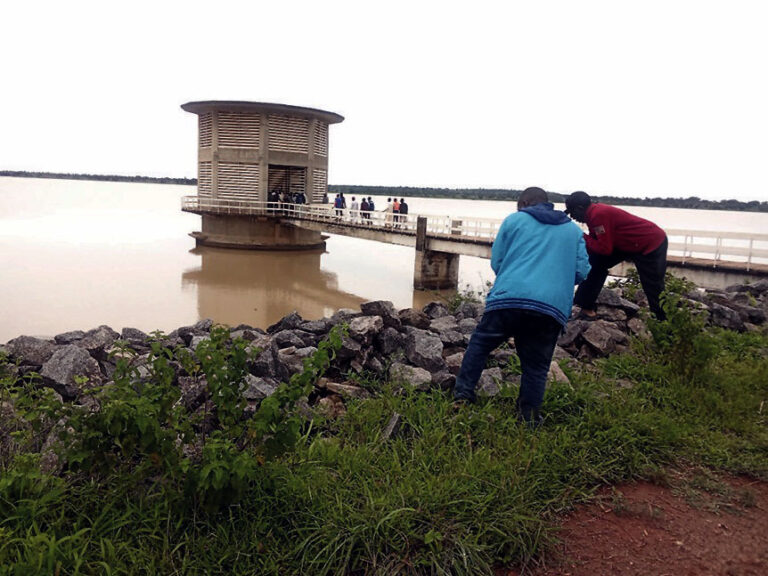
Borgu Kingdom plays host to the Kainji Dam and the Kainji National Park, but these two national monuments are today inaccessible to tourists due to the condition of the roads. The monarch lamented that the presence of federal monuments in the area had not produced the necessary benefits to residents, because the rods had made them beyond reach.
He maintained that the lack of roads in the area was a major security threat, noting that this had been responsible for the rampant cases of kidnapping and armed robbery in the axis.
The royal father made particular reference to the Mokwa-New Bussa-Wawa-Agwara and Roffia road that had been abandoned for over 40 years. He noted that it was the major cause of the criminal activities booming around the area, as communities were cut off from each other.
Daily Sun gathered that the Mokwa-New Bussa-Agwara-Roffia road was a vital component in the construction of the Kainji hydroelectric power station built around 1968, but the road was abandoned as soon as the dam was completed and inaugurated.
In 1994, the defunct Petroleum Trust Fund reconstructed the road, but since then no maintenance has been carried out on it. An attempt at re-constructing the New Busa-Wawa-Agwara-Roffia stretch of the road was made in 2010 in the heat of the 2011 presidential election. A contract for the construction of the road was reportedly awarded by the Federal Road Maintenance Agency (FERMA). At the time, former Governor of Niger State, Abdulkadir Kure, was the chairman of the FERMA board. But no significant achievement was recorded, as the contractors could not be mobilised to site.
Commenting on the federal roads in the state, Commissioner for Information, Culture and Tourism, Mr. Jonathan Vatsa, said that there was the need for the federal government to, as a matter of urgency, revisit all federal roads across the state, especially the Agaie-Katcha-Baro road. The contract was re-awarded last year, but it has been abandoned.
He said: “The over 30 kilometres Agaie-Katcha-Baro road, which cost the federal government about N17.5 billion, was awarded in January 2015 and was expected to be completed by January this year. The road has been abandoned and neglected. We want the federal government to put its roads in Niger State in good condition because, presently, there is no federal road that is passable in the state.”
Daily Sun gathered that the federal government has been making efforts at repairing portions of roads that have broke down in the state. The controller of federal roads in the state was not available for comment on the issue, but it was gathered in Minna that the federal government, through FERMA and the World Bank, has rehabilitated some dangerous sections of the roads.
Some contractors that spoke to our correspondent regretted that non-release of funds had stalled most projects, not only in Niger State, but also across the country.
“It is expedient for the federal government to pay deserved attention to funding road projects even in the face of paucity of funds,” one of them, who pleaded anonymity, told the reporter.

Foundation doles out N15m for entrepreneurship development
By Rita Ejesieme
A faith-based organization, Zakat and Sadaqat Foundation (ZSF), has rewarded winners of the second edition of its Entrepreneurship Development Project (EDP), with N15m as reward for outstanding business ideas.
Eight persons emerged as the overall winners in the empowerment programme tagged “Business Plan Competition (BPC).” The presentation of prizes and plaques was held recently in Lagos.
According to ZSF Operations Manager, Mallam Ahmed Ma’aruf, the initiative was tailored towards empowering young Nigerians with business ideas either at conceptual level known as “Idea Track” or transitional stage known as “Business Growth”.
The Foundation’s Executive Director and Chief Executive Officer, Prince Sulayman Olagunju said the BPC was an aspect of ZSF Entrepreneurship Development Project (EDP) embarked upon last year with a view to bringing together business-minded Nigerian youths to compete and showcase their creative ideas and business plans.
Olagunju said N15 million was expended on the competition.
“The economic hardship being experienced by Nigerians and has been worsened by increase in youth unemployment, security challenges across the country and the high cost of living confronting the Nigerian youths can be effectively eradicated by designing and implementing appropriate entrepreneurial programmes to engage them productively,” Olagunji explained.
He added that the project was also meant to empower the Nigerian youths with adequate seed capital.
“The number of participants increased from 128 last year to 165 this year. This increase in number of participants made our consultant and his team to spend more time in screening the participants. The consultant and experts did a marvellous job to produce the winners we are rewarding today,” he said.
The first position in the Growth Track was awarded N1.5 million, while the second got N1 million. The third position got N750,000 while the fourth position got 500, 000.
The first, second, third and fourth winners in the Idea Track category went home with the sum of N1million, N750,000, N500,000 and N250,000 respectively. All the remaining finalists went home with consolatory prizes of N100,000 each.
Prince Olagunju urged all the beneficiaries to use the fund provided by the foundation judiciously to take their businesses to the next level as a demonstration of competence and confidence reposed in them by the team of experts.
Chairman on the occasion, Ambassador Adamu Babagida Ibrahim said: “Zakat and Sadaqat Foundation’s intervention at this auspicious time is a welcome development that should be supported by well-meaning individuals and corporate citizens in order to complement the efforts of government in the delivery of socio economic welfare services to the less privileged Nigerian youths.
“I commend the board and management team of Zakat and Sadaqat Foundation for encouraging the Nigerian youths to be job creators and not job seekers. The practical steps taken by the foundation is a testimony of its commitment and passion to empower the Nigerian youths through the window of its entrepreneurship development project code-named business plan competition. You will agree with me that this is one way of developing the Nigerian youths as well as contributing to the socio economic development of the country.”
He implored well to do Muslims and non-Muslims to support the entrepreneurship initiative “so that individually and collectively, we can move the Nigerian project forward.”

When 5,000 food connoisseurs stormed Lagos
By Kehinde Aderemi
About 5,000 fun-seekers and food connoisseurs recently swooped on the old Bar Beach, Victoria Island, Lagos, to partake of a food fiesta tagged Flavour of Lagos. No fewer than 60 vendors with culinary skills displayed assorted foods at the two-day event, organised by the Lagos State Ministry of Tourism, Arts and Culture.
Mr. Folarin Coker, immediate past Commissioner for Tourism, Arts and Culture, said the Flavour of Lagos was part of activities to showcase the culinary attractions of the state, and the whole essence of the two-day food feast was to use domestic tourism to drive the economic potential of Lagos.
“The Flavour of Lagos is a brand on its own. It is designed to encourage the consumption of some of the foods we have in Lagos. The success recorded by the One Lagos fiesta gave room for other brands thus exposing the beauty of Lagos State as a state of aquatic splendour to the world,” he said.
Coker noted that the event was sponsored mainly by the vendors and a number of corporate organisations, adding that the state government only provided the enabling environment.
“It is the state government’s initiative, yet it is an opportunity to encourage domestic growth by creating avenues for people to show their culinary skills. At the same time, we are creating job opportunities, enhancing economic and currency growth. And the implication of all this is that we are encouraging internal tourism because there is no leakage,” said the former tourism boss.
Coker stressed that all participants in the food fiesta benefited from the symbiotic initiatives that the state government offered, as it was an opportunity to drive the money directly into the pockets of local vendors and, by extension, government was encouraging consumption of some of the foods produced in the state. He was optimistic that, as a result of the success recorded in the first edition, the initiative would be continued and improved upon. He said government decided to use the Bar Beach venue because of its historical background as a place of splendour and enjoyment.
Coordinator of the event, Mrs. Abisola Dejonwo-Tokan, said the turnout was amazing, as she explained that the vendors that participated registered on-line.
One of such vendors, Mrs. Yasmin Tukur, prepared northern delicacies like miyan kuka and miyan twashe. She said though the foods were mostly prepared by people from the northern part of the country, she enjoyed enough patronage from participants who were mostly from the South West. Tukur urged the Lagos State government to make the food fiesta a continuous event.
Apart from the different kinds of local and intercontinental dishes on offer, other items on sale at the venue included kitchen utensils and gadgets, shoes, children’s toys and books and office equipment, all at affordable prices.