Follow Us on Google
By Merit Ibe
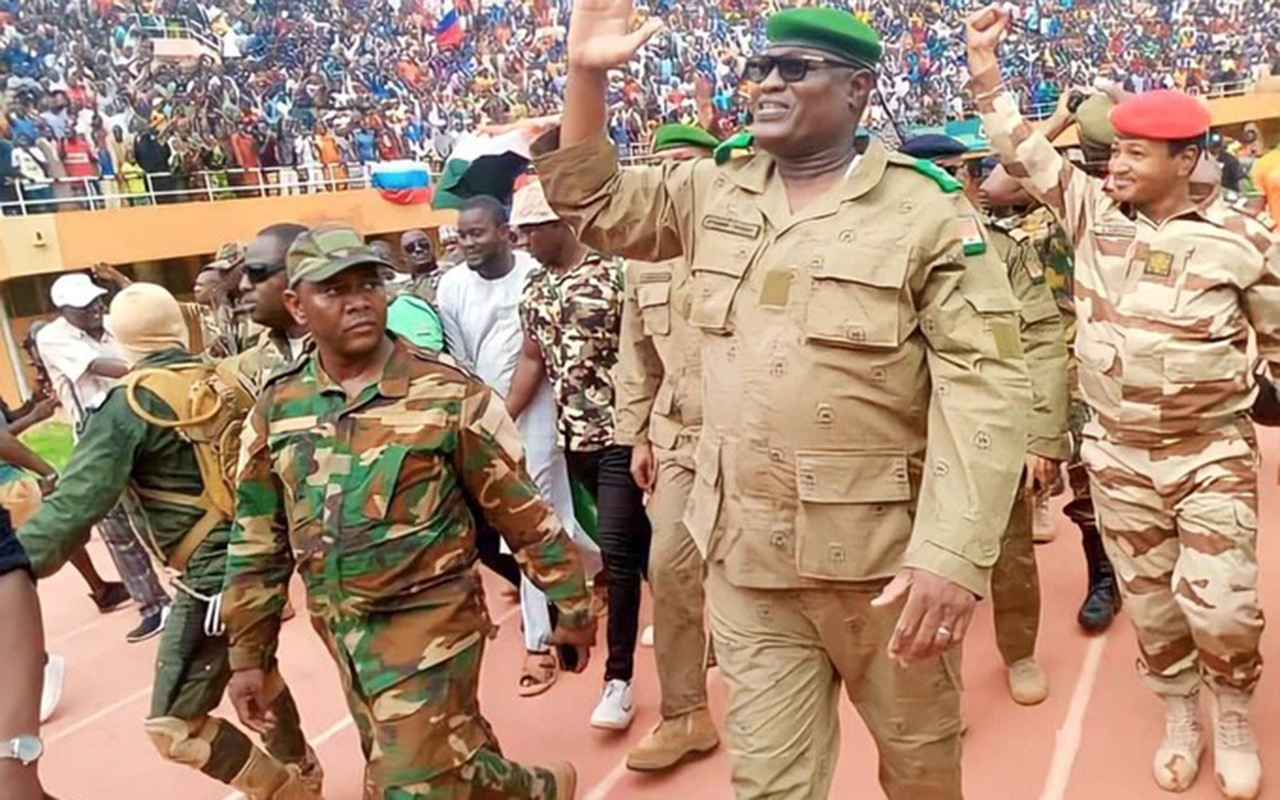
The Centre for the Promotion of Private Enterprise (CPPE) has said that Nigeria’s decision to go ahead with military campaign in Niger, may double its defence spending by 100 percent, with over 70 percent of the spending in foreign exchange.
The Centre made the remark on the economic implications of the military options in restoring democracy in Nigeria, noting that any plan of military intervention should take into account the wider social, economic, welfare and security implications for the countries of the sub region and their citizens.
Director of the Centre, Dr Muda Yusuf, in his analysis explained that there are far reaching macroeconomic, trade and security and geopolitical ramifications which should be carefully considered, noting that the risk of high collateral damage is also very high.
Yusuf admitted that this is a defining moment for the Economic Community of West African States (ECOWAS) which calls for rigorous thinking, robust consultation, sound diplomatic judgment, a deep sense of history and an exhaustive evaluation of the many ramifications.
He noted that it was also critical for ECOWAS to consider the geopolitical dimensions of the unfolding developments in the sub region.
On its trade implications, the CPPE boss noted that it would perpetuate fragmentation of the region and trade within the region will be severely impacted.
“This has grave consequences for the economies of the economies of member states and the welfare of the citizens.
Already the recent border closure is beginning to adversely impact on traders on both sides of the divide.”
There is a risk that the fragile security situation in the sub region may further deteriorate in the event of a military assault on Niger.
“ The lesson here is that the cost of military interventions can be very prohibitive. Similar military operation at this time may cost considerably higher, given the inflationary trend over the past 25 years. At the very minimum it would cost Nigeria a minimum of $2 billion annually to prosecute a military operation in Niger, taking into account the prevailing geopolitical dynamics in the Sahel. It will be difficult to accommodate such huge financial commitment at this time without putting a serious strain on our fiscal operations and foreign reserves.
“With the benefit of hindsight, it is doubtful whether Nigeria got any significant benefit from the military interventions in both Liberia and Sierra Leone. Yet the operation was a huge financial burden on Nigeria. The costs to Nigeria were colossal. Military spending in a war situation is largely in foreign currency. It could therefore be a major drain on the Nigeria’s reserves.”
He said Nigeria’s current balance of payment position is weak and may not be able to support any major military engagement outside our shores.
“Our external sector is fragile, posing a profound challenge of currency volatility.
The worsening of the external sector would adversely impact investors confidence , weaken growth prospects and decelerate the pace of economic recovery.
In a war situation, there are inherent risks of destruction of assets, damage to infrastructures, disruption of the livelihoods of innocent citizens, softening of investors’ confidence, deceleration of investment growth, aggravation of country risk and the dampening of GDP growth prospects.
“Recent reforms by the current administration have impacted positively on the fiscal consolidation efforts. Prospects of fiscal deficit reduction in the near term looks very bright. However, in the event of a military intervention in Niger, these gains may be eroded. The reason being that we would see an escalation in the defense budget which would trigger a surge in fiscal deficit, worsening of inflationary pressures and a spike in debt levels and related debt service burden.”