Follow Us on Google
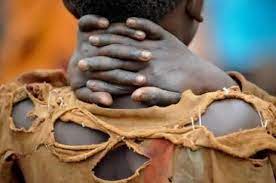
It is unacceptable that about 92 million Nigerians do not have access to electricity from the national grid despite billions of naira spent in reviving the power sector over the years. At the 7th Nigeria International Energy Summit in Abuja where this fact was revealed, operators and other stakeholders in the power sector canvassed for partnerships in the deployment of solar power to bridge the nation’s electricity gap.
The nation’s energy poverty is so glaring in terms of energy generation and supply. At present, Nigeria reportedly generates and supplies between 3,000 and 4,000 megawatts of grid electricity. For a population of over 200 million people, this is grossly inadequate to meet the electricity needs of Africa’s biggest country. Although this is a global challenge, the Minister of Power, Adebayo Adelabu, observed that over 92 million Nigerians or 40 per cent were currently affected by energy poverty. He also claimed that the federal government’s huge investments in the sector were underutilised.
The World Bank has also criticized Nigeria’s rising energy poverty. According to the Managing Director for Operations of the bank, Anna Bjerde, despite progress in the past 20 years, Africa has been the exception in terms of electricity supply. Bjerde said that in Nigeria alone, 85 million people or more than four in ten persons are deprived of electricity. Under the ambitious Distributed Access through Renewable Energy Scale-Up (DARES) programme, the World Bank will provide access to clean and reliable energy to 20 per cent of those without electricity and over 200,000 Micro, Small and Medium-sized Enterprises (MSMEs) by 2030 through private sector interventions. To this end, the bank is working with the Nigerian government on grid reforms and sector performance improvements.
We decry the growing energy poverty in Nigeria and urge the federal and state governments to work with the World Bank and private sector operators to increase access to clean and reliable energy through renewable energy. We enjoin them to increase investments in solar energy as a way of bridging the nation’s electricity gap.
Good enough, Nigeria has adequate supply of sunshine all the year round. Solar energy remains the low hanging fruit to be tapped to enable over 92 million Nigerians have access to clean and renewable energy. The government can easily electrify the rural areas and reach many homes with clean energy using solar energy. Already, there are many companies providing solar energy services in Nigeria. The government should partner with these solar energy operators to increase access to electricity of millions of Nigerians.
Let the government engage the services of available solar energy companies to electrify the country using clean and renewable solar energy. The solar energy sector needs to be urgently funded for the country to increase access to electricity.
Apart from being clean and green energy, solar energy is more secure than conventional power sources and it is easy to maintain. Its renewable nature makes solar energy a never-ending energy source. It also reduces the bill on electricity. Solar energy is used all over the world. At present, China, Japan, and the United States lead the world in terms of total installed solar capacity.
According to 2020 data of installed solar capacity by country, China had 254,335 MW, United States, 75,572; Japan, 67,000; Germany, 53,783; India, 39,211; Italy, 21,600; Australia, 17,627; Vietnam, 16,504; Korea, 14,575; and Spain,14,089. In Africa, solar energy use is still abysmally low.
Unfortunately, Africa owns 40 per cent of the world’s potential for solar power, yet it only inhabits 1.48 per cent of the total global capacity for electricity generation of solar energy. South Africa is the largest producer of solar power capacity in Africa at 6,326 MW. It is quickly followed by Egypt at 1,724 MW. However, Nigeria, the giant of Africa ranks 16th in Africa in terms of solar energy production at 70MW. Among the African regions, Southern Africa came first with 6,652MW, Northern Africa, 3,392, Eastern Africa, 767MW and Western Africa, 763MW.
Therefore, It is time for Nigeria and other African countries still lagging behind in solar energy production to wake up and do the needful. President Bola Tinubu should use the solar energy option to address the widening energy poverty in the country.