Follow Us on Google
From Fred Ezeh, Abuja
President Bola Tinubu has been urged to direct the Ministry of Budget and National Planning to establish a predictable, efficient and sustainable immunisation financing framework for the country.
It was stated that vaccine funds are part of the service-wide vote, thus making disbursement uncertain, and that immunisation is not just a health priority but a smart economic investment that saves lives and reduces healthcare costs.
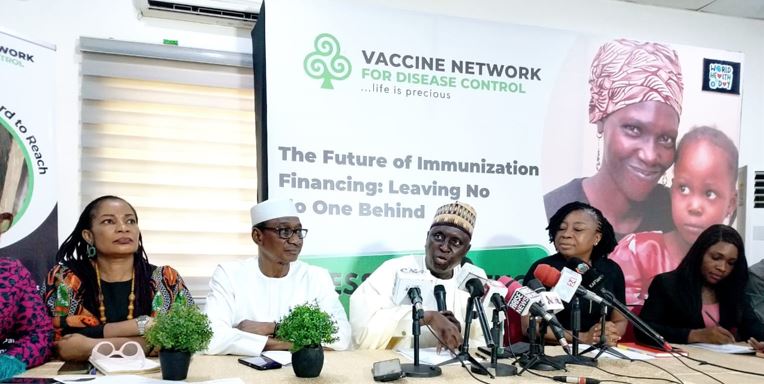
Executive Director, Vaccine Network for Disease Control (VNDC), Chika Offor, at a press conference, in Abuja, yesterday, raised the alarm that Nigeria’s posterity, particularly its human resources were under serious threat because of poor attention being paid to vaccine financing, hence the appeal for the special funding line for vaccine/immunisation.
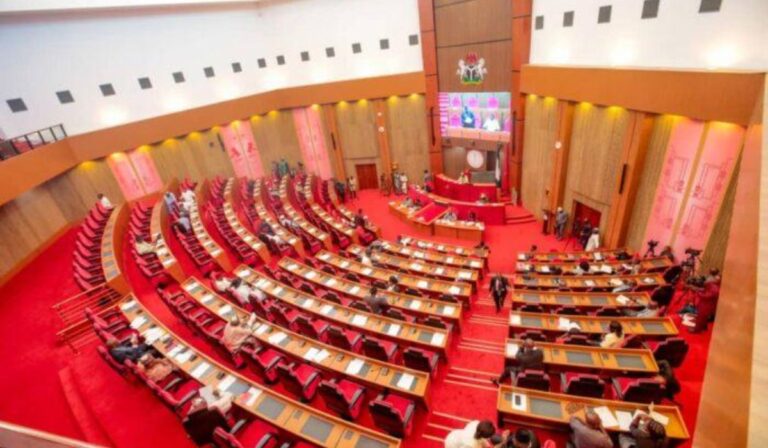
She appealed to members of the National Assembly to support the push for consideration and inclusion of vaccine financing as a first-line charge in the annual budget, stating it would ensure timely and predictable funding for immunisation.
She also suggested that state and local governments should allocate dedicated vaccine funding, ensure timely budget releases and establish accountability mechanisms to ensure effective resource utilisation.
She added: “since December 2023, the fate of vaccine financing in Nigeria has been uncertain. Despite continuous advocacy through the Partnership to Reach Zero-Dose Children (PREACH) initiative, the 2022 and 2023 vaccine funds remained unreleased.
“But, there was a breakthrough in December 2024. The Federal Government released the outstanding funds and allocated 25 percent of the 2024 vaccine budget. We commend President Bola Tinubu, the Coordinating Minister of Health and Social Welfare, Prof. Muhammad Ali Pate and the Minister of Finance, Wale Edun, for prioritising immunisation.
“However, the 2025 budget’s allocation of N231.7 billion for immunisation, malaria vaccination and vaccine tracking is a significant milestone toward universal vaccine coverage. But, the sustainability of these gains is now at risk.
“With the exit of USAID funding and diminishing donor support, Nigeria’s vaccine financing is more vulnerable than ever. Shrinking fiscal space and competing national priorities further threaten immunisation programmes. If we do not act swiftly, we risk reversing the progress made in 2024.”
She also challenged the private sector to actively support vaccine financing at federal, state, and local government levels, recognising that a healthy population drives economic growth.
She commended President Tinubu’s commitment to investing N1 trillion in strengthening Primary Healthcare Centres (PHCs), insisting that a well-equipped PHC system means better vaccine access, fewer zero-dose children, and improved health outcomes.
“The time to act is now. We must work together to ensure that no child is left behind. Every child, every eligible girl and every community, deserves access to life-saving vaccines. We need to invest wisely in immunisation and protect our nation’s future.”
She maintained that vaccines have saved millions of lives and remained central to Nigeria’s health and development goals, stating that in two decades, immunisation efforts had eradicated the wild poliovirus; protected over 30 million children under five; achieved 71 percent national HPV vaccination coverage, protecting over 12 million girls.
“Despite these achievements, Nigeria remains one of the countries with the highest number of zero-dose children, which are children who have never received any routine vaccine. These numbers represent real lives and futures at stake. We cannot afford to let vaccine shortages put our children at risk.
“A sustainable vaccine financing strategy is essential to ensure predictable funding and timely vaccine supply, hence we urge the government to include vaccine financing as a first-line charge in the national budget, ensuring timely disbursement and sustainability,” she appealed.
Former Kwara senator, Ibrahim Oloriegbe, in his submissions, highlighted the importance of adequate and improved funding for immunisation and procurement of vaccines for use in the country.
Oloriegbe who was recently appointed Chairman of the Board of National Health Insurance Authority (NHIA), stressed the importance of uninterrupted access to funds/funding for immunisation/vaccine. “This commitment will help to protect the health and well-being of our younger population, which is our largest and most valuable asset.”