 Follow Us on Google


By David Masagbor
For thousands of Nigerian students struggling to pay their university fees, the Federal Government’s student loan scheme offers a measure of relief. Since its introduction in 2024, the Nigerian Education Loan Fund (NELFUND) has expanded access to financial assistance for students who might otherwise struggle to remain in school. This is a welcome development.
Yet, beyond the growing figures of loan disbursements, a more important question deserves attention: Is the scheme actually reducing the financial barriers to higher education, or merely changing how students pay for an increasingly expensive university education?
By November 2026, NELFUND had received more than 2.4 million applications and reported approximately N375 billion in disbursements, covering about 1.68 million student loans. These are significant figures.
However, the government’s assessment of the programme should go beyond the number of loans issued. We need to know how many applicants actually receive assistance, how long they wait, and what happens to those whose applications remain pending or unsuccessful.
More fundamentally, the scheme deserves examination within the wider context of university financing in Nigeria. Over the past few years, students at several public universities have witnessed substantial increases in compulsory fees, sometimes amounting to several times what they previously paid. For families already struggling with rising living costs, these increases have made university education considerably more difficult to afford.
This raises an important fiscal question. How much is the government spending on student loans compared with its direct financial support to public universities?
Has there been a reduction in the real value of government subsidies, and if so, how much of that burden has shifted to students? We should also ask whether the financing arrangement has translated into better-equipped laboratories, improved classrooms, functional libraries and more adequate student accommodation. Without such an assessment, there is a risk of celebrating an expanding loan programme while overlooking the deterioration of the institutions students are borrowing to attend.
There is also the question of who benefits.
NELFUND currently serves students in public tertiary institutions, but access is not necessarily uniform across institutions or among students within the same university. Differences in institutional verification, administrative capacity and the speed of processing applications may leave equally deserving students with very different experiences. How equitable is the distribution across federal and state institutions, and what provisions exist for financially disadvantaged students outside the participating institutions?
Of particular concern are students who have already interrupted their education because they could no longer afford it.
Financial hardship does not always result in permanent withdrawal; some students leave school hoping to return when their circumstances improve.
Yet, such students may be among the least able to navigate a loan system that depends on current enrolment and institutional verification.
A serious policy of educational inclusion must provide a credible route back for those who have already been pushed out.
Even for students who receive loans, the actual cost of attending university extends well beyond the fees listed on an institution’s payment portal. Students still have to pay for textbooks, laboratory materials, departmental charges, transportation and, in some cases, pressure to purchase lecturers’ handouts. How much of these additional expenses is genuinely addressed by the loan scheme?
Perhaps the heaviest burden for poorer students is simply surviving while studying.
Food, accommodation and daily transportation can cost more than the formal charges imposed by a university. Many students must depend on relatives or seek scarce part-time employment, sometimes at the expense of their academic performance.
NELFUND provides a monthly upkeep allowance of N20,000, but how far does that amount go in today’s economy? Its adequacy deserves regular review based on actual student living costs rather than administrative convenience.
Questions of accountability are equally pressing. Complaints about delayed payments, outstanding refunds and discrepancies in institutional processing have already attracted public attention and official scrutiny. Some students have reportedly paid their fees while waiting for loan disbursements, only to encounter further delays in securing refunds after their institutions receive payment from NELFUND.
Stronger oversight is necessary, particularly at the institutional level. Students should be able to confirm when payments have been made on their behalf, what charges were covered and how quickly any excess payments will be returned. Public reporting and independent audits would help establish whether the funds are reaching their intended beneficiaries.
Finally, the scheme raises a broader ethical question about the purpose of public education. Although NELFUND loans are interest-free, beneficiaries must eventually repay what they borrow. For young graduates entering an uncertain labour market, that obligation can represent a substantial financial burden. Should a country with Nigeria’s natural and human resources increasingly rely on student indebtedness to finance access to public higher education? And what does this mean for graduates from poorer households who may already be expected to support their families financially?
Student loans are not inherently undesirable. Properly administered, they can help students overcome immediate financial difficulties and prevent educational disruption. But loans should complement sustained public investment in higher education, not become a substitute for it.
Ultimately, the success of NELFUND should not be judged by disbursement figures alone. It should be measured by how many students remain in school because of the scheme, how many are able to return after financial interruptions, whether the financial burden on families has genuinely declined, and whether public universities have become more accessible and better equipped.
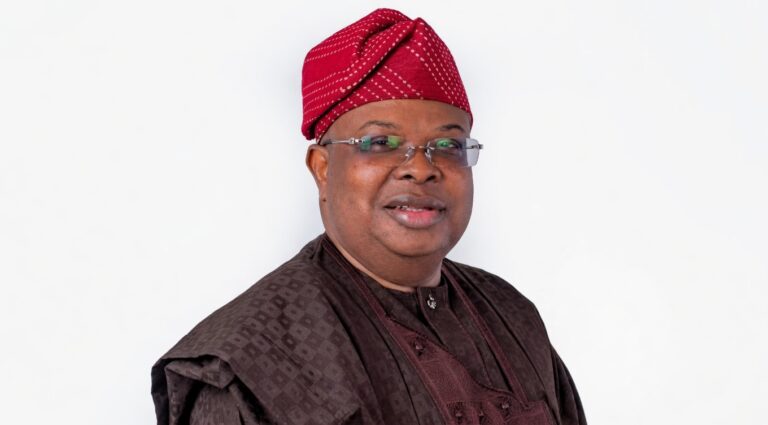
– David Masagbor, PhD, is a public policy researcher with interests in community development, development economics, educational equity, urban inequality and program evaluation.