Follow Us on Google
By Daniel Kanu
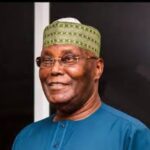
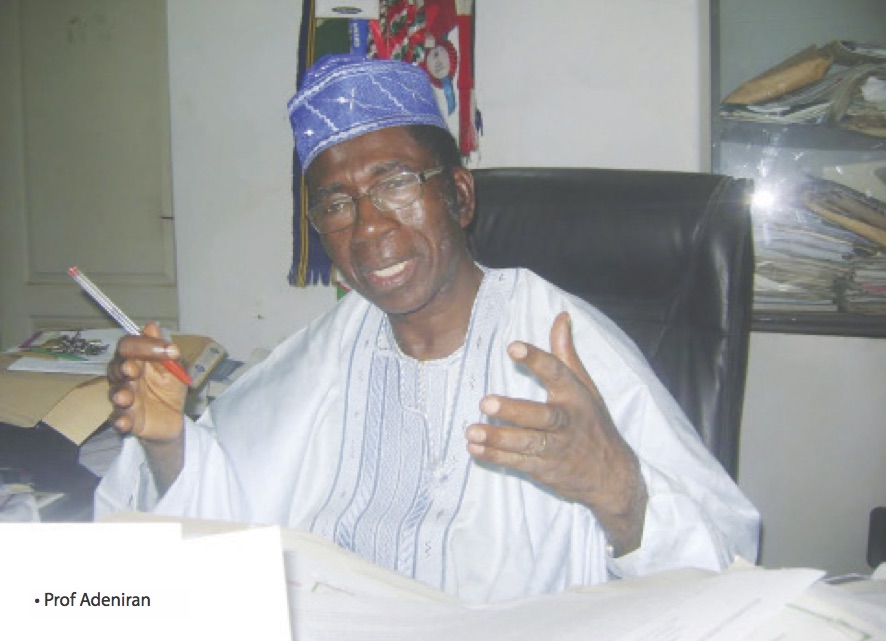
Prominent scholar and politician, Prof Tunde Adeniran, was former Minister of Education, former Ambassador of Nigeria to Germany and served as the chairman of the Directorate for Social Mobilization (MAMSER).
He was also a former member of the Board of Trustees (BoT) of the Peoples Democratic Party (PDP) before his defection to the Social Democratic Party in 2018, where he took over from Chief Olu Falae as the acting National Chairman.
In this exclusive chat with Sunday Sun, the renowned academic spoke on the 2023 elections, the mistakes of INEC, need to restructure Nigeria and the greatest challenge for the incoming president, among other national issues. Excerpts:
We seem to be getting ethnic hate speeches from different actors recently…?
(Cut’s in) It is alarming and condemnable. I am very worried. Our country is a diverse country and that diversity is a blessing from God Almighty and we should use those diversity to advantage rather than weaponizing them. The differences in ethnicity, the differences in religion, the differences in socio-cultural tendencies, all these God packaged them to make a great country called Nigeria, so that today, you can never see a country that is as diverse as richly blessed not just in natural resources, but in human resources and in culture. So, when we now have a situation in which people are beginning to hate themselves to talk as if they are adversaries by the mere name that they bear, by the cultural background that they come from, as a result of the religion they practice or as a reason of ethnicity etc. It was never like this before, we were our brothers keeper, we loved one another. In fact, Nigerians will go out of their way to bless and assist and help others outside their ethnic enclave before they think of their own. That used to be the practice. And the culture of naming parts of Nigeria is such that when people are in difficulty you leave your own challenges, your problems and assist the others before you even think of yourself. And because of that cultural diversity that we had, we used to be anxious to know what the others have to offer, what are their practices? What are their tendencies? Their predisposition? And we even borrowed some of those things that they liked that the others are doing. It’s all this that lead to a number of inter-marriages that lead to the acquisition of the cultural tendencies: the way some other people eat, the type of food they eat etc. And we got so interwoven to such an extent that in different parts of the country you see some people, either whole parents are from the mother ethnic groups and you see some of them marrying outside and so forth. But what we see today is so shocking, so frightening that you begin to wonder whether a time will not come when those who married from other ethnic groups will not be asking for divorce, whether children who married from some other ethnic groups will not be told to park and come back home or to send their spouses back to where they came from. And it is worrisome, indeed, I will call it a shame that in the 21st Century at this stage of our national development when we are to be amending the fractions, the frictions and be rebuilding nationhood and try to consolidate the fragile basis of our relationship as peoples of the same country, we are more or less putting petrol on the unity, we try to burn it. The bridges that bind us we are trying to break those bridges and we are trying to tell the future generation that as far as we are concerned, love has no meaning anymore, unity should not have a place in our midst and being our brothers keeper and of course having a common vision and a common goal of building the giant of Africa that will be the model for others is no more part of our mission. It is a tragedy and I pray and appeal to our present leaders, particularly, the active advocates, those who try to promote some narrative about this country to be mindful of the consequences of their action because in the final analysis when the chips are down, if people succeed in breaking the unity of the country and they recoil to their little confines, ethnic based entities, those enclaves will again explode as time goes on because it is then that you will now reduce the whole thing, the animosity, the hatred, the antagonism to a sub-national level. It is then that they will know that within your own ethnic group there are some sub-nationalities, you will now see some people taking undue advantage or prospering more than the others and then you begin to challenge until you are reduced to the village level, that is not the way to go, that is not good not only for this country that should be the giant of Africa that not only some other Africans should be proud of and decides to live in, but all peoples of African descent should look at Nigeria as their home and be willing and anxious to come and share in the development of Nigeria and the enjoyment of what God Almighty have provided for the black race through Nigeria.
The elections have come and gone. Tell us your own assessment of its conduct?
With the conduct of the election we have some issues to commend, we also have some issues to condemn. The INEC did a lot to try to have not just an Electoral Act that will advance the course of democracy, that will lift us from where we where before to a new level. They also wanted a situation whereby the implementation will be such that will give effect towards what they had as their mission and vision. Unfortunately, in the process of implementation there were some problems. In other words some of those that carried out those responsibilities either compromised or did not buy into the laudable vision to the extent that people now had to be lamenting that some of the instruments, some of the phases were compromised to such a way that it produced far less than was promised. BVAS, for example, was a wonderful innovation, but what is the value of it if it was there and was not utilised? Or of what benefit is the process and procedure laudable, commendable, but was not followed? So, we had elaborate preparations that were made and the leadership of INEC really prepared to give their best, but at some point they did not get the best out of the situation at the state and local government levels. We could have done better, but at the same time we have something to learn from that and that we will never go back to the shortcomings which will mar the democratic efforts we have planned to achieve. Then there is another dimension, people talk about INEC all the time they forget that there is the populace, the electorate and the political leadership. They have their roles; our people are yet to learn that elections are not warfare, but to use your mandate to elect those that will govern you. You are not going there to conquer other people in other words your weapon is your voters card not gun, not cutlasses, not knives, not sticks…things that people who believe in violence readily need. I believe very strongly that over the years by now this country ought to have passed that stage. For goodness sake, it is a reflection of the type of leadership that we have had in different areas. The political parties also have not done sufficiently well to encourage and re-orient their members to appreciate the value and essence of democracy that when people want you, they want you on the basis of who you are, your track record and your potential. They are not looking on your capacity to suppress them, to intimidate them, to use violence in order for them to be imposed on you. The parties still have a long way to go and the leadership of those political parties should send the message out to the rest of the country that indeed our leadership recruitment process is very faulty, and it has to be looked into for the sake of the future generation and humanity in general. By now Nigeria should be teaching other African countries the practice of democracy. When people talk about differences in culture, differences in environment and all that, that is why we cannot be where other European countries or where America is; they are talking rubbish. Our people, African people, Nigerian people are humane, we love our fellow human beings, we respect them. Those things show the type of regard we have for life, they are our cultural heritage, but we are compromising it in our elections, it’s sad and unfortunate. We have to retrace our steps and be people who believe in humanity, who believe in the sanctity of life. People who believe that leadership must be earned and not imposed, who believe that whatever we have to do must now be done to correct the ills of the past.
The election now particularly the presidency is shifting to the courts for interpretation. Most Nigerians say they no longer have confidence in the judiciary. How do you feel?
I have written, I believe considerably on the Nigerian judiciary and I have said I have regard for the rule of law and I believe that we have good hands in the judiciary with the potential to do justice, but the prevailing environment that we are in created problems even for the Nigerian judiciary too. It is as if anything that you have, either you talk about the Executive arm of government, or you talk about the legislature and now the judiciary that indeed we are bastardising virtually everything about them. I believe that among the things that are wrong today is that there are things not meant to go to the judiciary that we are taking to the judiciary. The judiciary is overwhelmed and they are being overstretched. They are also part of the state and also face the pressure of the environment that if care is not taken they will become politicised and people will begin to lose confidence. As of now there are some people who are afraid to go to court because they believe it is a very expensive venture and there are people whose pre-occupation is to make sure that too many things get to the court because of individual business and of course we as a country we are at a stage where wherever we look at either at the executive branch or the legislative branch or the judiciary or even the private sector, we need men of honour, men and women of integrity, people that will be ready to say the truth and stand by the truth, the rule of law, do justice and damn the consequences. A time like this demands that people should rise up and defend the future of the country by protecting justice and the rule of law. We need men and women who will stand up at this time and I believe we have people who can do it and this country will be saved. If we lose the opportunity to do that then of course people are going to lose confidence and there will be no trust anymore. And trust is very important in whatever we are doing today in the country, in the various interactions among the various peoples of this country, in the governmental processes and particularly among those who operate the governance system and the processes of governance and particularly, the dispensation of justice. I pray and do hope that the conscience to determine and direct the thoughts and good action will be put to practice.
Political commentators are contending that without restructuring there will be no headway, and no genuine progress will be made even with the best of a leader in office. Do you share in this view to restructure the country?
My position has always been very clear on this that if we do not restructure we can’t get to where we need to get to in our development as a country. There need to be a review of what we have now. There is this antagonism, this conflict of orientation of goals; of developmental perspective, all will be reduced considerably through restructuring. And again you can also not do this in isolation. I have said it over and over and I am repeating it now that the constitution that we presently have cannot take us to anywhere. The constitution we have today is not helpful, we have to revisit the constitution and give Nigeria the peoples constitution and, of course, restructuring will be guaranteed and some of the things that are contained there will be justiceable, such as issues of education etc. I believe that so much needs to be done about it and Nigerians are very resourceful. We have wonderful people who can give Nigeria the people’s constitution and unless and until we do that we will just find ourselves enslaved within the confines imposed by the constitution that was imposed on us by the military when they were leaving the stage. I believe that all these things will be done and it doesn’t cause much to do those things and before long we will be on the right part towards achieving the goal of Nigeria as a nation, not people put together antagonizing themselves in their relationship on a permanent basis.
What is the greatest challenge before the incoming president?
It is security. When the nation is secured people will be able to move around and tension will reduce, children will be able to go to school without fear and, of course, farmers will be on the farm, there will be no famine and people will be able to travel from one place to the other and the freedom that we want for ourselves in terms of being able to do whatever we want to do as a people of this country, we will be able to do that. If the country is secured, it will positively affect the economy, it will affect all aspects of our national life.