Follow Us on Google

Delayed releases of capital funds in 2025 undermined Nigeria’s investment momentum and slowed progress toward the country’s long-term growth ambitions, according to PwC.
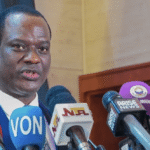
Kenneth Erikume, Partner at PwC, made the assessment during an Executive Roundtable on Nigeria’s 2026 Budget and Economic Outlook, where he emphasised that funding delays disrupted project timelines, forced rollovers from the 2024 budget into 2025, and complicated economic planning at a time when Nigeria is striving to accelerate growth and attract investment.
The roundtable, themed “Nigeria’s Economic Outlook 2026: The Executive Playbook for Growth, Resilience, and Efficiency,” explored fiscal execution challenges, revenue mobilisation, and the outlook for public investment as the government prepares its 2026 budget.
Erikume explained that Nigeria’s recurring budget deficits are not the main issue. Instead, he argued that weak capital expenditure execution has had a far larger economic impact. “The slowness in the release of funding meant that we essentially carried over parts of the 2024 budget into 2025,” he said, adding that this placed “material pressure from an economic standpoint.”
He described the delays as creating “a time reset on the ambition to build a $1 trillion economy,” noting that while recurrent spending has at times exceeded expectations, capital spending lagged, particularly in 2025. According to Erikume, delayed public investment has broader implications, as infrastructure and other capital projects are critical to stimulating growth and attracting private sector participation.
“Government has to do certain things to address that risk,” he said, highlighting revenue mobilisation as a key lever. On tax reforms, he stressed that the focus should not be on raising rates but on deepening administration and efficiency. “There’s a lot of focus around efficiency, using data and using technology,” Erikume added, cautioning that without such a reset, closing the gap between revenue and expenditure will remain difficult.
Other News
Erikume also addressed Nigeria’s debt position, noting that with public debt at about N152 trillion by mid-2025, borrowing will remain unavoidable in 2026. Yet, he stressed that debt must be complemented by stronger revenue generation and improved efficiency at agencies like Customs.
On oil revenues, he noted weak earnings, security challenges, and underinvestment continue to constrain fiscal performance despite ongoing divestments by international oil companies. He cautioned that gains from oil and gas investments have long lead times.
He cited exchange-rate stability in 2025 as a rare positive, attributing it to tight monetary policy and increased transparency in the FX market, which helped manage demand, boost reserves, and moderate inflation, averaging in the mid-teens.
Looking ahead, Erikume urged the government to monetise assets and expand private sector participation, especially in infrastructure. He noted that even with a larger 2026 budget, per-capita public spending remains far below peer economies. “There is now clearer alignment between fiscal priorities and tax incentives, with healthcare, education, infrastructure, and agriculture emerging as key focus areas for policy and investment,” he said.
Nigeria now routinely operates with overlapping budgets, a practice that intensified around 2023 when the federal government began extending main and supplementary budgets into subsequent fiscal years.