Follow Us on Google

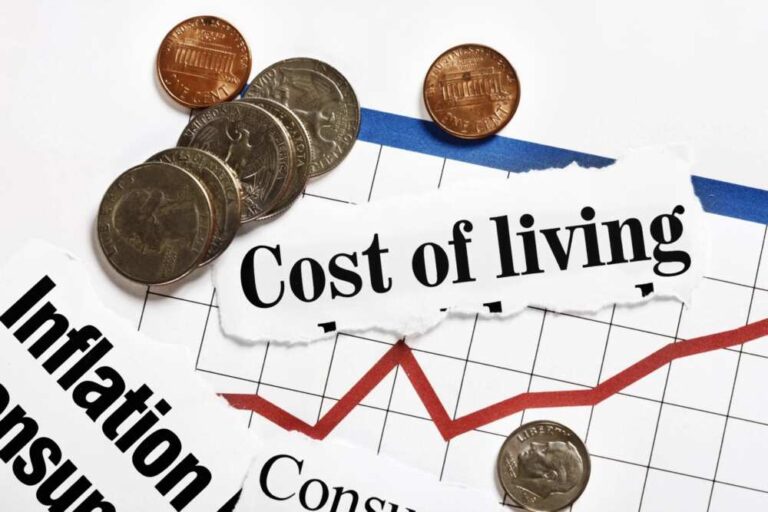
In a recent damning report, the World Bank has described the Nigerian economy as being in its lowest ebb in the nation’s history. Consequently, the global financial institution recommends the deployment of sound fiscal and monetary policies to bring the economy out of the doldrums. The bank’s gloomy picture of the economy was contained in its latest report entitled: “Development Updates on Nigeria.” In the report, the bank stated that inflation would likely push seven million more Nigerians into poverty by the end of 2022. The inflation rate as at May 2022, according to the National Bureau of Statistics (NBS) stood at 17.71 per cent and it is adjudged as the highest in almost one year.
The World Bank’s report, which was presented by its Lead Economist for Nigeria, Dr. Marco Hernandez, painted a particularly worrisome picture of the economic situation in Nigeria, stating that petrol subsides could cost the Federal Government as much as N5.4 trillion this year. In its words, this is much higher than “all of the resources allocated to health, education and social protection put together.” The bank also projected that net oil/gas revenue for 2022 will fall to N1.6trillion from N2.6trn recorded in 2021.
The startling report also stressed that inflationary headwind has made nonsense of the national minimum wage of N30,000 ($82), reducing it to N22,000 ($37) in value. Even at that, most of the state governments have yet to implement the national minimum wage.
Altogether, the World Bank’s report is no different from the latest position of the Federal Government on the economy. The Minister of Finance, Budget and National Planning, Mrs. Zainab Ahmed, has expressed similar concern, particularly on the controversial petrol subsidy regime, saying the policy is hurting the economy and the ability of government to service its mounting debts. Undoubtedly, petrol subsidy remains a sticky issue in Nigeria that has often pitted the government against organised labour and the citizens. It is not yet clear how much government spends on fuel subsidy as it is shrouded in secrecy. For instance, in 2015, government claimed it spent N1.43trillion on subsidy and N417billion in 2020. Clearly, government has not charted the right course on the economy that will convince Nigerians that the removal of fuel subsidy will reduce the fiscal pressures caused by government’s debt servicing portfolio and other overhead costs. Besides, government insisted that petrol subsidies cost additional N4trillion than was originally planned.
In spite of the gloomy prediction for the economy, we believe that the situation is redeemable if the government can chart a pragmatic course for the economy by initiating policy reforms that will lift the economy out of the present stormy waters, rather than pander to the recommendations of the World Bank and the International Monetary Fund (IMF). The extreme poverty rate in the country, which has pushed an estimated 90 million Nigerians into poverty, the increasing misery index, which is a combination of rising inflation and unemployment, as well as the ever increasing debt profile now put at over N41trillion, are challenges the government should quickly address.
It is disturbing that since the inception of the present administration, economic growth has not reached three per cent. In 2015, the economy grew to only 2.79 per cent, 1.58 per cent in 2016, an average of 1.8 per cent in 2017 and 2018, 1.98 per cent in 2019, and 1.95 per cent in 2020. The last time Nigeria recorded an appreciable economic growth was in 2014 with 6.22 per cent. Nigeria needs a consistent annual growth of six per cent to achieve sustainable economic growth. But this has not happened in seven years. It is a pointer that the economy is wobbling. Therefore, Nigeria’s bleak economic forecast by the World Bank and IMF is not in doubt.
This is the time to intensify diversification of the economy through huge investment in the non-oil sector, especially export promotion that will yield the much-needed foreign exchange. Though the government has made some efforts in this direction, it should do more in the diversification drive to boost the economy and the Gross Domestic Products (GDP). It is likely that the months ahead will be tough because of election spending. However, it requires workable measures to pull the economy out of the woods. In addition, let government create an enabling environment that will attract local and foreign investors.