Follow Us on Google
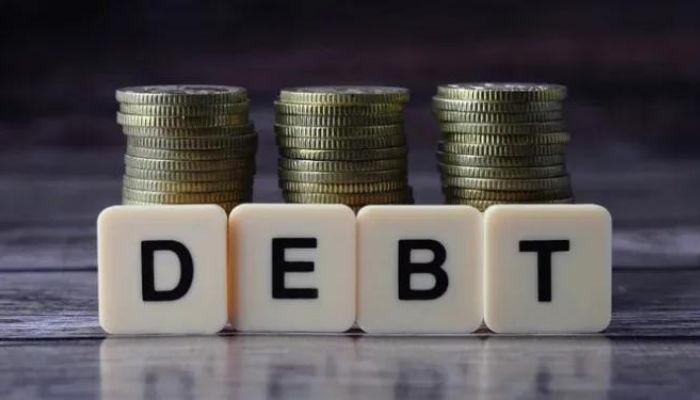
Nigeria’s debt stock has been on a steady rise. This is a clear indication that debt sustainability is at risk. Between March and first week of September, 2025, the Senate has approved about $24 billion external loan requests from President Bola Tinubu. Some of the loans are already embedded in the 2025 Appropriation Act. The loans included a combined external loan package of $21.5 billion, €2.2billion and ¥15billion Japanese yen, as well as €65 million grant. In March, government took a loan of $632 million from the World Bank to support economic reforms and development. There was N758billion domestic bond issuance to settle outstanding liabilities under the Contributory Pension Scheme (CPS).
As of June 2025, Nigeria’s total external debt stock stood at $18.2billion, representing outstanding obligations to the World Bank’s International Development Association (IDA). But, in the first quarter 2025, total external loans from all global lenders, including the World Bank IDA was $45.9billion, indicating 26 per cent year-on-year rise. As of June 2025, external and domestic debts stood at N149.3trillion. This has pushed Nigeria’s debt-to-GDP ratio to 52 per cent, surpassing the 40 per cent threshold. By all indications, this makes Nigeria’s debt management unsustainable despite recent claims by Tinubu that his administration has met, and exceeded its projected revenue for the 2025 fiscal year.
Ironically, two days after the President stated this, he sought the Senate approval for a fresh $1.75billion World Bank loan, to address funding gaps. This signifies serious fiscal burden. The weakening of the naira against major international currencies has contributed to the rise of the external debt. Currently, Nigeria is managing its Euro bond repayments, with a significant payment due in November, 2025. Amid this fiscal burden and the combination of FX and external shock challenges, declining inflation rate in recent times, Nigerian economy is still at risk.
In view of all these challenges, prudent borrowing has become expedient. At the recent Eleventh Annual Conference and General Assembly of the West Africa Association of Public Accounts Committees (WAAPAC), held in Abuja, the DMO boss, Patience Oniha, called for a robust debt management practices that will ensure that policy decisions are based on realistic information. This is one of the right steps towards achieving debt sustainability. The advice has become imperative because of rising borrowing costs resulting mainly from global interest rate hikes, which have increased the cost of sourcing funds from both domestic and external markets. The situation has been worsened by weak domestic capacity. As it stands now, Nigeria’s debt structure is highly exposed to foreign currency risk. The uncertainty in the FX market means that external borrowing carries heavy vulnerability. Before the recent rebasing of the economy by the National Bureau of Statistics (NBS), Nigeria’s nominal GDP was N269.2trillion (about $180illion). Figures from the CBN showed that the federal government had borrowed about 70 per cent of the nation’s previous GDP. Even after rebasing, the Manufacturers Association of Nigeria (MAN) said, there is still ‘no evidence of economic progress.’
Statistics show that the present administration has borrowed over 50 per cent of the new GDP, the highest debt-to-GDP ratio in the nation’s history. The year-on-year increase is about N27.72trillion, representing quarter -on-quarter rise of about N4.72trillion. In 2024, Nigeria’s debt payment rose to a 4-year high of $4.65billion, reflecting federal government’s continued reliance on borrowing. Last year, the federal government spent $4.65billion in debt servicing, a 32.9 per cent year-on-year increase compared to $3.5billion spent in 2023. The last time the government spent more money to service debt was in 2020, when debt payment was $5.8billion. The lowest debt payment was recorded in 2021 when $2.1billion was spent on servicing debts. After then, debt payment rose again to $2.5billion in 2022. The rise in debt obligations also resulted in the uptick pressures in the FX market during the period. According to figures from NBS, Nigeria’s external debt in the first Quarter (Q1)2024 stood at N56trillion (about $42.12billion), while the total domestic debt was N65.65trillion ($49.35billion). The surge was attributed to escalating debt levels and higher borrowing costs in the international debt market. This was driven mainly by global monetary tightening aimed at controlling inflationary headwinds. The most recent external borrowing is one too many.
Though there is nothing wrong with borrowing, there is need for caution. There are many African countries that have had their precious national assets taken over by the lenders as a result of debt repayment default. This trend, if not checked, could also result in soaring inflation and strained public finances. Therefore, to ensure long-term economic stability of the country, government should balance debt management with prudent investment in economic growth, improved revenue generation and control inflation.
Above all, borrowing should impact positively on the living standards of the people.