Follow Us on Google

…Say regulators must be referees, not players
…Rewane sees brighter 2027 outlook
Experts drawn from diverse disciplines have identified Nigeria’s deepening trust deficit as a major impediment to economic stability and sustainable growth, hence the need to restore trust and confidence of Nigerians and foreigners in the socioeconomic and political system.
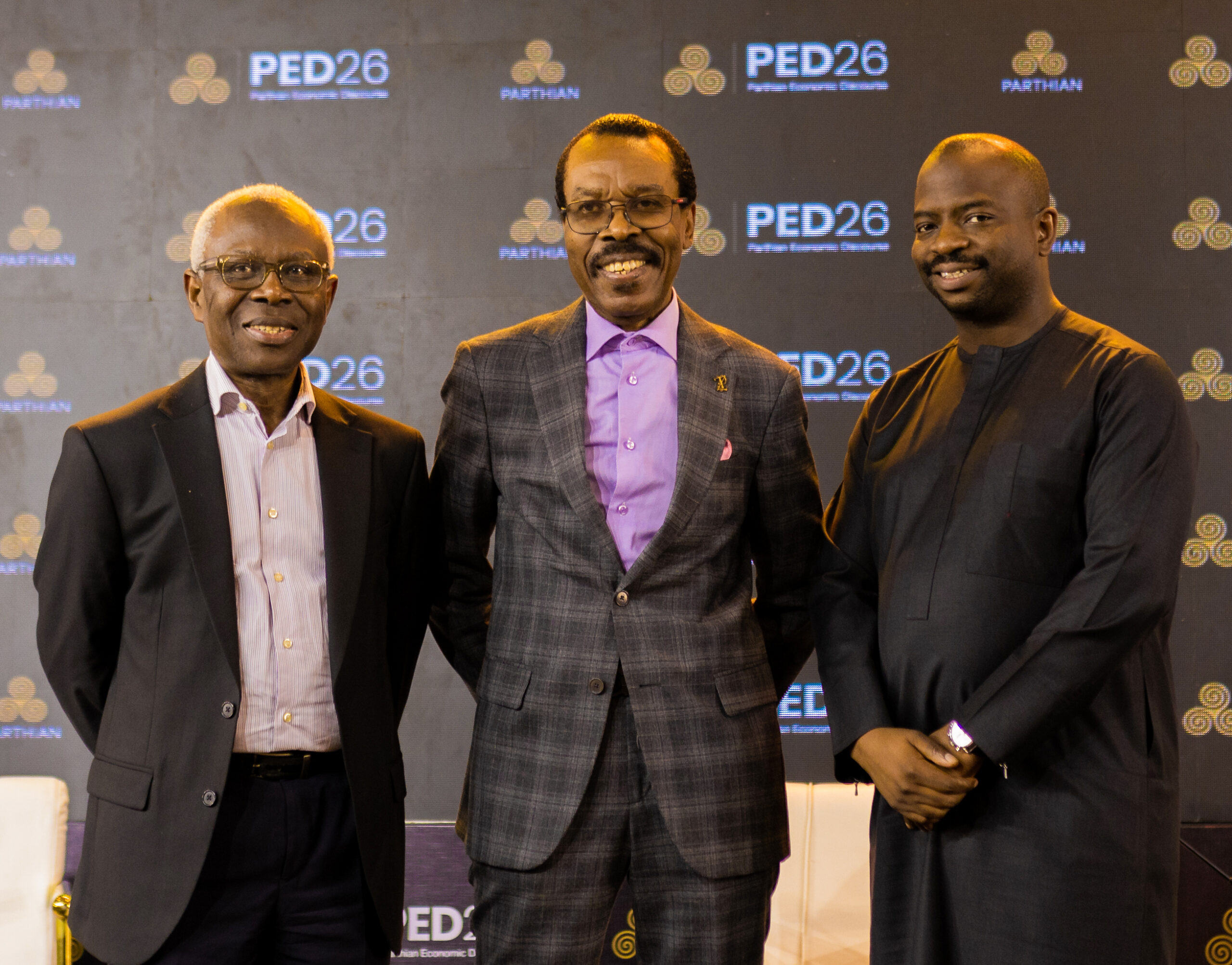
Speaking at the 2026 Parthian Economic Discourse in Lagos with the theme, “Beyond Stabilisation, Positioning Nigeria For Long-term Competitiveness”, professionals across different fields warned that the erosion of confidence among Nigerians, investors, businesses, policymakers is fueling uncertainty, weakening economic activities and undermining the country’s recovery efforts.
During a panel sessions: “Building A Competitive Economy, The Next Frontier of Nigerian Reform Agenda” doyens argued that the persistent lack of trust in public institutions, government policies and the business environment has continued to discourage investment, distort economic decisions and weaken public confidence.
They argue that rebuilding trust through policy consistency, transparency, accountability, strong and credible institutions is critical to ending the cycle of economic instability and placing Nigeria on the path of sustainable growth and development.
In a keynote address, the Managing Director/Chief Executive Officer of Financial Derivatives Company Limited (FDC), Mr. Bismarck Rewane maintained that institutional reform is what Nigeria requires now than policy reforms.
According to Rewane, policies does not make good managers, but deliberate positive changes in the mode of operations- geared towards restoring public confidence, strengthening and enforcing corporate governance across all government institutions are critical to improve citizens’ welfare and well-being. “Policy reforms are not institutional reforms. We need institutional reforms. We must decide whether to be here, there or nowhere” he said.
In his presentation, 2027 Macroeconomic Outlook, the financial analyst pointed out the power sector, renewable energy, oil & gas (refining), telecoms, healthcare, agriculture, and fintech as sectors with strong linkages and greater opportunities.
The renowned economist forecasted the Nigerian stock market outlook for 2027. According to him, profit-taking and high valuations may heighten volatility. He revealed that IPO funding could temporarily drain liquidity from existing stocks, while post-listing trading could attract fresh capital.
Additionally, lower interest rates may drive more investors into equities, while banks, telecoms, industrial goods and oil-and-gas companies could attract interest where earnings growth supports valuations.
He noted that interest rates, inflation, currency stability and pre-election uncertainty will influence market direction. However, sustainable economic growth, corporate profitability, financial-sector reforms and deeper foreign investor participation could support the market. More so, inflation, currency depreciation and inconsistent policy implementation can stagger performance.
He summarily added that the stock market is expected to grow more than double by 2028, growing at 2.25 folds, while government share of GDP will decline due to increase in private investment both domestic and foreign investment.
On the side of private investment, the private investment across most sectors will drive economic growth, while government participation would gradually declines.
At OPEC level, Nigeria is positioning itself to compete in the new OPEC landscape in the global oil economy. On the government share of GDP, the economist asserted that the government share of GDP will decline due to increase private investment both domestic and foreign investment.
Be that as it may, the reality remains that, Nigeria is transitioning into an era of new normal, reminiscent of the pre-shock era, but shaped by a fundamentally different economic landscape. Utimately, “Nigeria is on its way to industrialisation” he believes.
For the Managing Director/Chief Executive Officer of First Bank of Nigeria Limited, Mr. Olusegun Alebiosu, who looked into credit administration, corporate finance and institutional resilience, reminded the federal and state governments that constant electricity is key for any economy that desires to grow.
X-raying the structural changes needed to channel more financial resources into productive investments that build domestic capacity, accelerate industrialisation and strengthen Nigeria’s export competitiveness, he equally reminded the government that SMEs are the engine of any progressive economies in the world if such have the requisite character.
“The biggest problem we have in Nigeria is trust. If we don’t fix the trust problem, we are going nowhere. So character is the most important seal”
Alebiosu pointed out the legal system, the enforcement of contracts and the quality of infrastructure as major factors investors look at before making decisions. “I lived in an environment where they have 24 hours electricity, and I saw how SMEs thrived”
He explained that banks do not lend money to people due to default in keeping to terms and agreements. “Government policies and anything can change and ruin you, so operating environment is key, but the fundamentals of credit will never change” he stressed.
In a welcome address, the Group Managing Director of Parthian Financial Services, Mr. Oluseye Olusoga, remarked that, Nigeria, for the past three years has been in the emergency room. From the removal of fuel subsidy, to unifying the exchange rate, tightening the monetary policy and reformed the tax system, as a result, every household and business in the country felt the pains.
But the good news is, the patient is out of intensive care. “Being discharged from hospital is not the same as running a marathon. Stabilisation means the patient is no longer dying. Competitiveness means the patient can win the race. That is why our theme this year is ‘Beyond Stabilisation’.
“A weak naira can make our goods cheap for a while. Protection can make our goods the only option for a while. But neither makes us competitive. Competitiveness is when a Nigerian product wins in Accra, Nairobi or Rotterdam on price and quality, without help. Competitiveness is not an abstract idea. It is the difference between a salary that lasts the month and one that runs out by the 15th”
Olusoga reminded the Federal and State governments that no economy ever become industrialised on a generator, and a viable economy is one with ports that clear goods in days, not months; rail that actually carries cargo; roads without a checkpoint and a levy every few kilometres.
He explained that a prosperous economy must have a deep domestic capital market that turns its savings, including pension assets into long-term finance for infrastructure, housing and industry, at rates factories can actually afford.
“We need an economy whose people can build, run and repair the digital economy. We need institutions with clear rules, contracts that are honoured, and regulators who are referees, not players”
On the coming elections, he believes that, in low-income countries, governments spend more before the vote and then cut public investment afterwards to pay for it. “Nigeria knows this pattern well. The music plays before the election, and the bill arrives after it. Investors don’t ask, “Who will win?” They ask, “Will the rules still be the same on Monday?”
“Nigeria needs Policy stability where there is no reversals, no surprises, no return of what we have already removed. Nigeria needs strong institutions: an independent central bank, a credible electoral commission, impartial courts and professional regulators”
Nigeria he believes also needs to stay on the course: “We have paid the price of reform. It would be a tragedy to give the refund back just before the benefits arrive. “If you don’t take an interest in policy, policy will take an interest in you, usually at the worst possible time and at the highest possible cost.
“Engagement is not partisanship. It means bringing data, evidence and practical experience to the policy table. It means telling government what works and what doesn’t before it becomes law, not after. It means supporting the institutions that protect everyone’s contracts, including those of people you disagree with. Business cannot sit in the stands and complain about the referee. We have a seat at this table, and we should use it”
He counselled corporate organizations to be resilient against all odds. Concentration risk, he said is real, whether in cloud services, crude oil or foreign exchange. And reforms, like software upgrades, need careful rollout, testing and a backup plan.
“We should make sure we compete for that future, not just the last one. Protection is a crutch. It may be useful for a while, but nobody wins a race on crutches. If power were reliable, capital affordable, ports efficient and policy predictable, our industries would not need protection. They would need passports. The goal is an economy so competitive that the protection debate becomes unnecessary”.
Looking ahead 2027, he added there should be clarity, specific ideas on the policy direction, investments and reforms that will turn stability into competitiveness and the right action.
Speaking on Financing Nigeria Next Growth Phase, Mobilizing Long Term Capital For Sustainable Development, the Managing Director of Nigerian Sovereign Insurance Authority (NSIA), Aminu Umar-Sadiq, assured that his administration would leave no stone unturned to ensure it achieves the Authority’s mission, corporate mandate, philosophy and reach its vision. “We are ready to work with Nigerians to achieve mandate” he assured.