Follow Us on Google

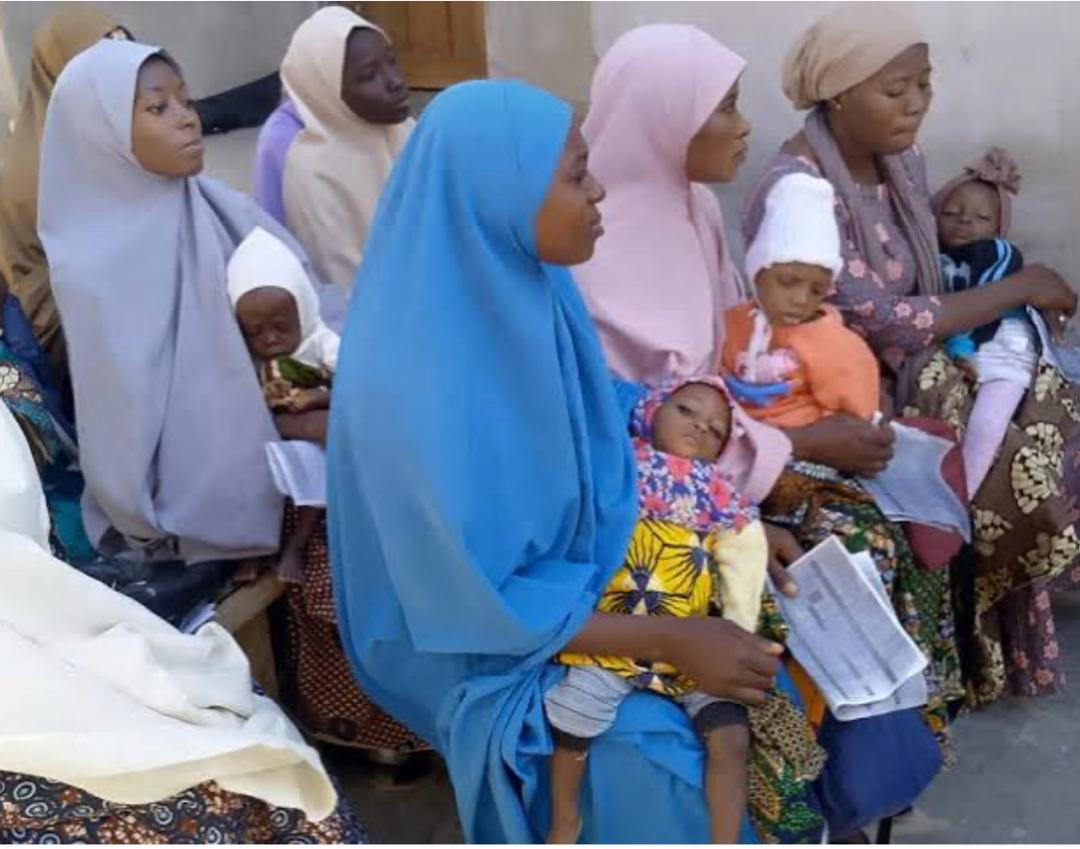
As Nigeria joins the rest of the world to mark World Children’s Day, a paediatrician has urged parents to seek care early for sick children. She warns that delays at home are turning treatable illnesses into emergencies. At the same time, a government-led programme is taking protection directly to children’s doorsteps in the communities where they are most at risk.
Dr Marcia Ihekaike, a paediatrician and health educator who has practised in northern Nigeria for 15 years, said late presentation at health facilities remained one of the most common reasons children’s conditions became critical.
“Parents don’t come to the hospital until it’s complicated. Then they expect you to perform a miracle,” she said. “Just some days ago, I attended to a child who had been sick for about five days before the parents came in. Unfortunately, this work is not magic.”
Nigeria’s under-five mortality rate remains among the highest in the world, and the burden is heaviest in the northern states. There, long distances to health facilities, the cost of care and low awareness of danger signs often combine to delay treatment.
It is in these communities that SARMAAN (Safety and Antimicrobial Resistance of Mass Administration of Azithromycin in Nigeria) is working to close the gap. The programme is led by the Nigerian Institute of Medical Research (NIMR) with the Federal Ministry of Health. Trained community distributors go from house to house to give children aged one to 59 months a supervised and approved dose of the antibiotic azithromycin.
Large trials in Africa, known as MORDOR and AVENIR, found that the approach reduced deaths among children in this age group by 13 to 14 per cent. SARMAAN has so far reached about 16 million children across 11 northern states, and it monitors safety and antimicrobial resistance along the way.
SARMAAN is not a vaccine, and it does not replace routine immunisation, clean water or prompt treatment when a child falls ill. It adds a layer of protection, delivered through the same community health system families already rely on. Some northern states have begun including the programme in their own health plans, which is a key step towards sustaining it.
For Dr Ihekaike, that protection must go hand in hand with parents knowing when a child needs care. She said few parents delayed on purpose, but many did not recognise when a child’s illness had become serious.
“Fever in a child is never normal. It is a signal that something is off. Many parents don’t consider it major, so they manage it at home until it becomes complicated,” she said. “With diarrhoea, parents are already taught to mix an oral solution. But if the diarrhoea becomes persistent and the child is dehydrated or weak, the child needs the hospital. The same goes for respiratory problems.”
She explained that childhood illnesses were managed at different levels, which was why the health system was organised into primary, secondary and tertiary tiers. For most families, the first point of contact is the primary health centre and the community health worker, who is trained to spot symptoms parents may miss. However, she noted that some community health workers unknowingly gave caregivers the wrong advice, leaving it to observant parents to seek care at the next level.
Prevention, she said, remained the easiest place to start. She urged families to practise basic hygiene, including regular handwashing, drinking clean water, cooking food properly and protecting it from pests. She also expressed concern that fewer caregivers were taking immunisation seriously.
“There are infections that are vaccine-preventable, and I know that after COVID, many parents started to believe vaccines are bad. That has led to a resurgence of illnesses like diarrhoea,” she said.
Dr Ihekaike said communication between health workers and parents remained a major gap. Parents of sick children were often anxious and blamed themselves for not acting sooner, she noted, while many secondary and tertiary facilities were short of staff. To bridge the gap, she has turned to technology.
“I share my pre-recorded videos with parents. For those who don’t have smartphones, I hand them my phone to watch while I attend to their child. That way, when they raise a problem or have questions, I have videos ready to help them,” she said.
She added that not every sick child needed a paediatrician. Parents must understand the tiers of care and take symptoms seriously, she said, while community health workers must know their limits and refer cases early. She also called on families to be more intentional about family planning.
Asked what single factor could improve child care in Nigeria within the next five years, Dr Ihekaike pointed to education.
“Education, especially female education, is essential. If mothers are educated, they know to seek help early, and they tend to do better,” she said.
She also called for stronger government support for healthcare, noting that cost remained a major barrier.
“Seeking healthcare is very expensive. Many people delay because they cannot afford it, and when they finally come, they end up spending more,” she said.
As the world marks World Children’s Day, the message from the frontline is clear. Educated mothers, well-supported community health workers and sustained government investment in prevention, from routine immunisation to programmes such as SARMAAN, give Nigeria a real chance to see more children live to their fifth birthday.