Follow Us on Google
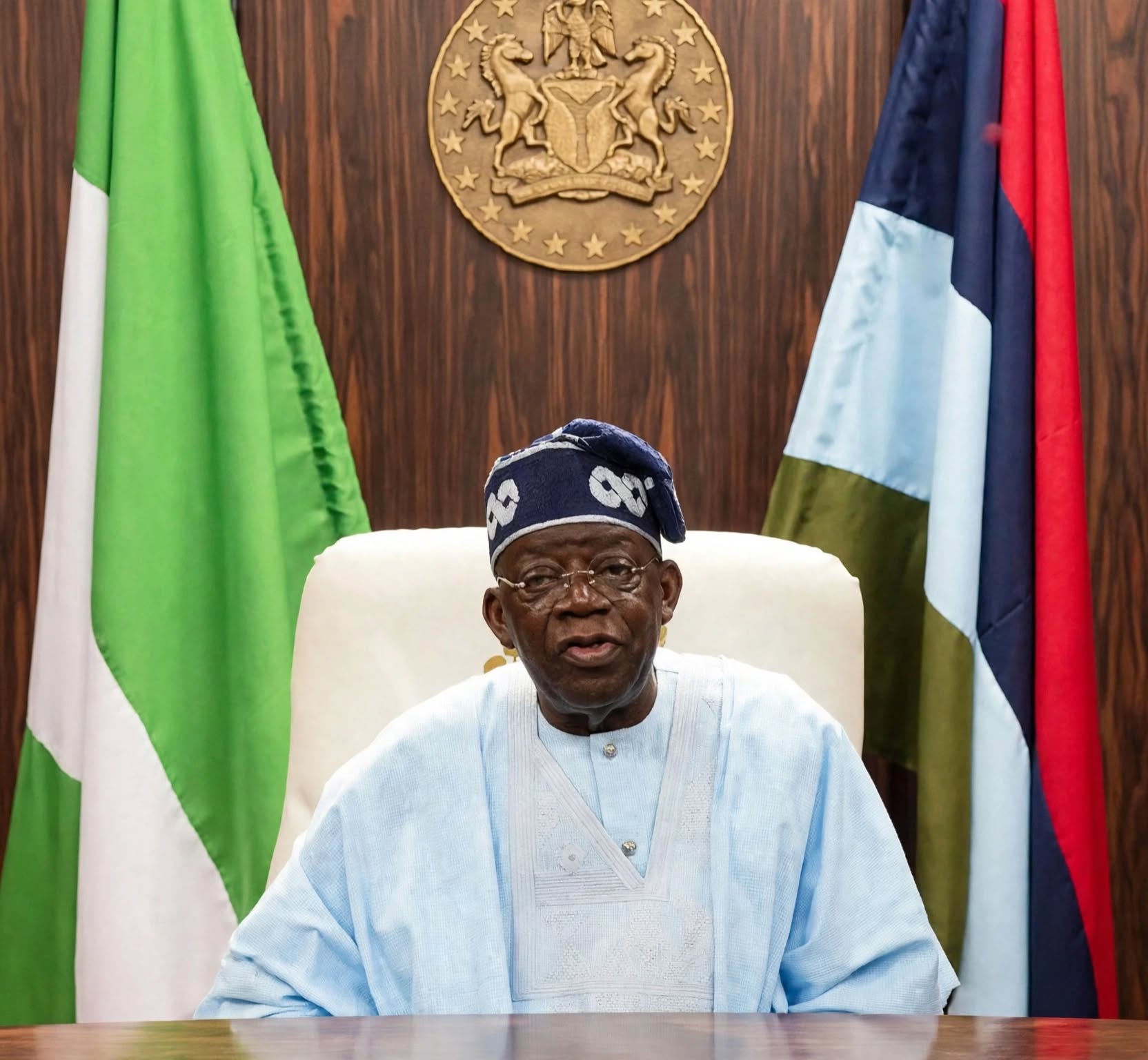
As has become the routine in Nigeria every Independence Day anniversary, President Bola Tinubu, on October 1, 2026, made a national broadcast where he reeled out his administration’s programmes and made promises of a better future for Nigeria. Titled “From Reform to Prosperity,” the broadcast noted that the toughest phase of economic reforms had ended and that the country had passed through its ‘Red Sea’.
The President’s optimism was partly hinged on the real GDP growth of over 4 per cent year-on-year, $55.25 billion external reserves, and non-oil export earnings surpassing $6.1 billion in 2025. He also cited student loans through the Nigerian Education Loan Fund (NELFUND), consumer credit via Credit Corps (CREDICORP), expansions of the National Social Register, and some other citizen-support progammes.
Despite the high pump prices of petrol, Tinubu said there was no going back to fuel subsidies, saying the removal and foreign exchange unification were necessary. He promised to lower food and transportation costs by expanding mechanised irrigation and dry-season farming, holistically increasing mechanisation, improving access to seeds and fertilizer, investing in storage and transportation, and building and completing the roads, railways and ports that connect farms and factories to markets.
“The emergency treatment is over. The foundation has been repaired. The central economic task before us has changed. For three years, our overriding purpose was to correct our nation’s course. Now, our purpose is simple: shared and widespread prosperity,” he enthused.
This sounds logical. But the evidence on ground does not support the President’s assertions. The questions remain, are farmers producing more cheaply currently? Do manufacturers spend less on electricity? Are the infrastructure better managed now than before? Do the citizens feel better secured in and outside their homes?
For many citizens, the President made empty promises of a better future. They are traumatised that terrorists and bandits have continued to operate with impunity, kidnapping, maiming, and killing innocent Nigerians in different parts of the country. On Easter Sunday this year, terrorists killed scores of citizens in Benue, Kaduna, and Borno States. On May 24, 2026, they invaded the Yashikira community in Baruten LGA of Kwara State, burnt the palace of the emir and abducted several residents, including the emir’s wives.
Between March 2024 and May 2026, over 600 students were abducted across schools in Nigeria. Other Nigerians, including military officers are not spared as they have either been kidnapped or killed by terrorists. As expected, Nigeria ranked fourth most terrorised country in the 2026 Global Terrorism Index. This is worse than in 2024 and 2025 when the country took the eighth and sixth positions, respectively.
Nigeria may have crossed its Red Sea, but how does it reach its Promised Land when over 60 per cent of the citizens are poor and lack the strength to continue the movement to the desired destination? Many Nigerians cannot afford a healthy diet anymore. According to the National Bureau of Statistics (NBS), the national average cost of a Healthy Diet rose from N1,477 in March 2025 to N1,541 per adult per day in March 2026. This is 4.38 per cent increase year-on-year. In 2024, approximately 11 million under five Nigerian children experienced severe child food poverty.
About 45.3 per cent of Nigerian households experienced job losses, business closures, or inability to find work in 2025, according to a survey conducted by SBM Intelligence.
Due to acute poverty, many people cannot afford the high cost of medical care. That is why patronage of herbal concoctions is high. Recently, about 182 people were affected and no fewer than 48 of them died after taking some herbal concoctions in some parts of Ondo State. Allocations to the Health Ministry remain poor. Out of the N218 billion appropriated for the ministry’s capital expenditure in 2025, it got N36 million.
Sadly, the rainy season this year exposed the deep rot many Nigerian roads have become. Reports have it that motorists and truck divers often spend several days on some federal roads, including Bida-Lapai Road in Niger State and Benin-Agbor-Asaba Expressway, due to the heavy gridlock occasioned by poor state of the roads. There are frequent accidents and deaths on these roads. Sometimes, trucks overturn on the roads leading to serious economic losses for transporters and entrepreneurs.
Reforms have not succeeded because of lack of accountability. Leaders waste money on irrelevant ventures and starve sectors that need money. For instance, N21 billion was spent for the new residence of the vice-president. National Assembly members collect a lot of salaries and allowances even when their productivity is too low. Nigeria’s total public debt, as of June 2026, stands at N166.79 trillion. This is a 9.4 per cent increase from the N152.4 trillion recorded in June last year. In the 2026 World Economics Governance Index, the country merely ranked 112, with a poor governance score of 33.9.
For over three years, Tinubu promised Nigerians renewed hope. To millions of Nigerians going through excruciating hardship, this is nothing but a mirage.