Follow Us on Google

•Essential services face funding squeeze, experts warn
By Chinwendu Obienyi and Adesuwa Tsan, Abuja
Nigeria’s public debt could hit N200 trillion if President Bola Tinubu’s latest external borrowing proposal is fully implemented.
This has raised fresh concerns about debt sustainability and the government’s ability to adequately fund essential services.
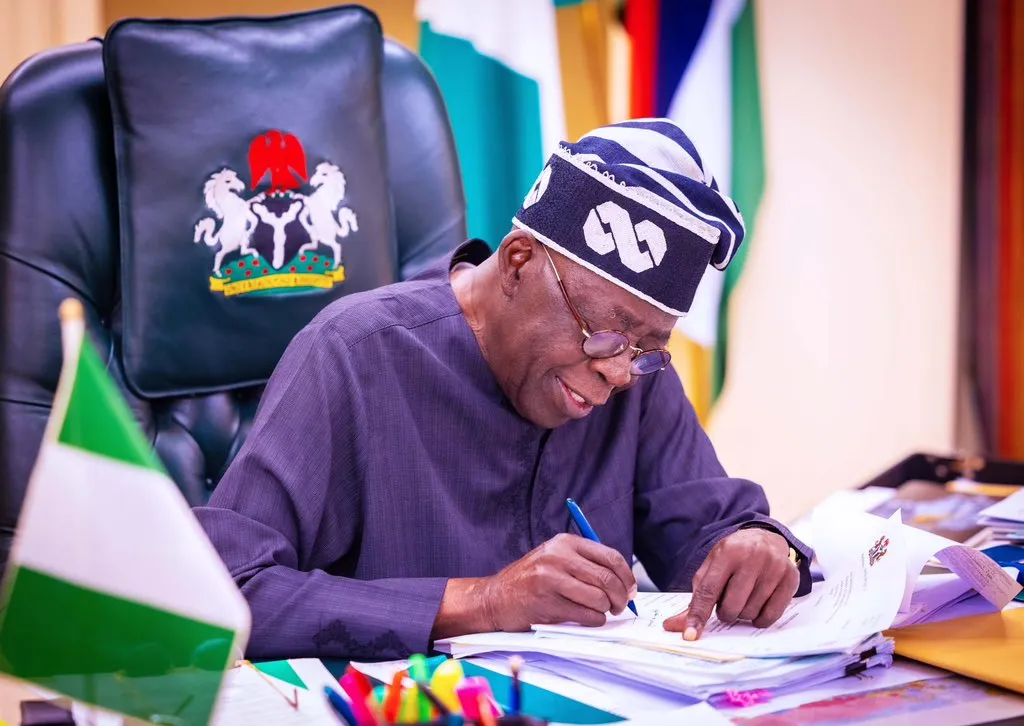
Tinubu, on Tuesday, asked the Senate to approve a supplementary external borrowing plan of $20.52 billion and €1.05 billion for 2026–2027 to finance infrastructure and development projects across the country.
The request, contained in a letter addressed to Senate President Godswill Akpabio, was read during plenary on Tuesday.
Akpabio subsequently referred the borrowing proposal to the Senate Committee on Local and Foreign Debts, directing it to examine the request and report back within one week, in collaboration with the relevant committees on Appropriations and Finance where necessary.
The President said the proposed loans would support investments in power, transportation, healthcare, agriculture, education, water supply, security and employment generation, while strengthening public financial management.
He argued that external borrowing had become necessary to address Nigeria’s infrastructure deficit and close funding gaps for projects considered important to socioeconomic development.
According to Tinubu, most of the projects would be implemented across the country’s 36 states and the Federal Capital Territory.
He urged lawmakers to give the proposal urgent consideration, saying approval would facilitate timely disbursement and effective project implementation. Akpabio, however, noted that the borrowing plan had featured in the Federal Government’s previously approved borrowing programme.
He subsequently referred the request to the Senate Committee on Local and Foreign Debts for further consideration, alongside the Committees on Appropriations and Finance.
The latest proposal comes as Nigeria’s public debt continues to rise. Data from the Debt Management Office (DMO) show that total public debt increased to N166.79 trillion as of June 30, 2026, from N159.35 trillion at the end of March. The figure compares with N87.38 trillion recorded in June 2023, shortly after Tinubu assumed office.
Domestic debt accounted for N91.59 trillion, while external debt stood at N75.20 trillion. Thus, using illustrative exchange rates of N1,500 to the dollar and N1,750 to the euro, the proposed financing would be equivalent to approximately N32.62 trillion. If the entire amount represents additional borrowing, Nigeria’s debt could rise to about N199.41 trillion.
Other News
However, this is a projection, not an official debt forecast as the calculation depends on exchange rates and whether the proposed loans are additional to existing obligations rather than already covered by previously approved financing.
The growing debt stock has renewed concerns about the pressure borrowing costs could place on government finances.
Already, the International Monetary Fund (IMF) estimated that interest payments would absorb 53.7 per cent of Federal Government revenue in 2026, following 53.2 per cent in 2025. This leaves a substantial share of revenue committed to interest rather than other government priorities.
The IMF has also identified weak domestic revenue mobilisation and potential expenditure overruns as risks to Nigeria’s fiscal outlook. It assessed the country’s risk of sovereign debt stress as moderate, highlighting the importance of stronger revenue generation and improved public financial management.
These concerns have implications for funding healthcare, education, security and other essential services, particularly if revenue growth fails to keep pace with debt obligations.
President Tinubu himself has acknowledged the pressure of debt servicing. In May 2026, he estimated Nigeria would spend about $11.6 billion servicing debt that year, nearly half of projected government revenue. Accordimg to him, high borrowing costs were diverting resources from infrastructure, healthcare, education and industrial development.
Economic concerns surrounding additional borrowing centre on whether the projects financed will generate sufficient economic and social returns to justify their costs.
Commenting on the development, analysts have emphasised the importance of improving revenue collection, strengthening expenditure controls and ensuring that borrowed funds deliver measurable development benefits.
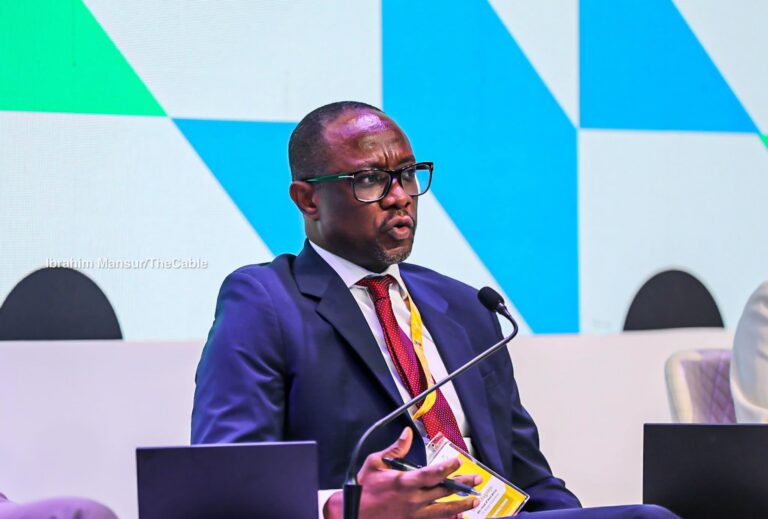
Vice Chairman, Board of Directors, Highcap Securities, David Adonri, said, “foreign-currency borrowing also exposes the government to exchange-rate risks, as a weaker naira can increase the domestic cost of servicing dollar- and euro-denominated obligations.
While borrowing can finance infrastructure that supports long-term growth, poorly implemented projects could leave taxpayers with repayment obligations without corresponding economic benefits”.
The Senate’s review is therefore expected to be important in determining the scope of the proposed financing and the conditions attached to its implementation.
As Nigeria considers additional external loans, the central question remains whether the funds can translate into reliable electricity, better transport networks, stronger public services and more jobs while keeping the country’s debt burden manageable.