Follow Us on Google
By Chinelo Obogo
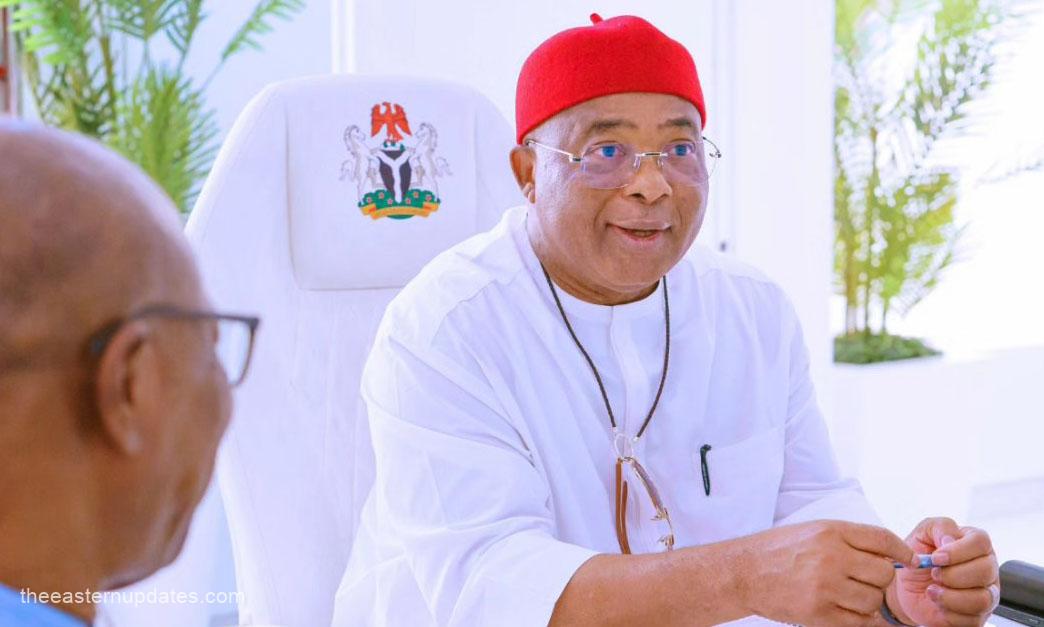
Imo State Governor Hope Uzodinma has advocated for the formalisation of the roles of traditional rulers in Nigeria, which he said would strengthen the institution for the responsibilities before it.
The governor said this in Lagos on Monday, October 13, 2025, while presenting the keynote address at the meeting of the National Council of Traditional Rulers in Nigeria (NCTRN) with theme: “The Traditional Institution: The Imperative of its inclusion in effective and efficient governance in Nigeria.” He said the theme was not only appropriate, timely, and necessary, but reflects the reality that “traditional rulers across the country continue to carry out responsibilities that are essential to the stability, cohesion, and governance of our communities.”
Uzodinma said that such responsibilities, which are largely formal but acknowledged, should now have legal backing in the constitution. According to him, the absence of a constitutional role for traditional rulers is a gap that ought to be filled, saying it was a failure that should be immediately rectified.
“The traditional institution remains one of Nigeria’s most enduring systems. Its custodianship of culture, its ability to mediate disputes, its place in the lives of the people; all make it indispensable to national stability. The absence of a constitutional role is a gap that ought to be filled. It is a failure on our part that we have not updated our laws in line with our realities.
“That is why I believe the time has come to make this right, not necessarily by creating a new role, but by giving legal status to what already exists. It is no different from formalising a long-standing union. The marriage is real. The only thing missing is the certificate. I believe the time has come to make it right and not necessarily by creating a new role but by giving legal status to what already exists.”
Other News
Uzodinma described the traditional institution as very unique in the architecture of power, attracting the best of the nation from politics, law, the military, and academia. He noted that given the enormous responsibility of traditional rulers in peace mediation, conflict resolution, and custodians of tradition and culture, they ought to be more respected through a constitutional role. But he urged them to remain non-partisan to preserve their integrity, especially when it comes to politics.
“Traditional rulers represent the cultural and customary identity of the people. They serve as the unifying forces that bind our people together. The evidence of our history shows that our royal fathers have continued to play these roles, with or without constitutional protection. Across towns and villages, traditional leaders remain the first point of contact in moments of crisis, the first to be consulted when tempers rise, and the last to retreat when disorder threatens stability.
“It is not by chance that community-level peacekeeping, dispute resolution, moral guidance, and cultural preservation still fall to the palace. The law may be silent on this, but the people are not. We must stop pretending that the absence of a constitutional role means an absence of function. I can tell you today without fear of equivocation that your relevance is not in question, was never in doubt and would never be in doubt. What is questionable is the failure of the system to give legal backing to a role it already depends on,” he said.
Tracing their previous roles in the First Republic and comparing them to what currently obtains in some African countries, the Imo State Governor totally supported their push for a more defined role in the constitution.
“I assure you that if this matter comes before the National Assembly or requires support at any level in government, I will stand with you without hesitation,” Uzodinma promised.