Follow Us on Google
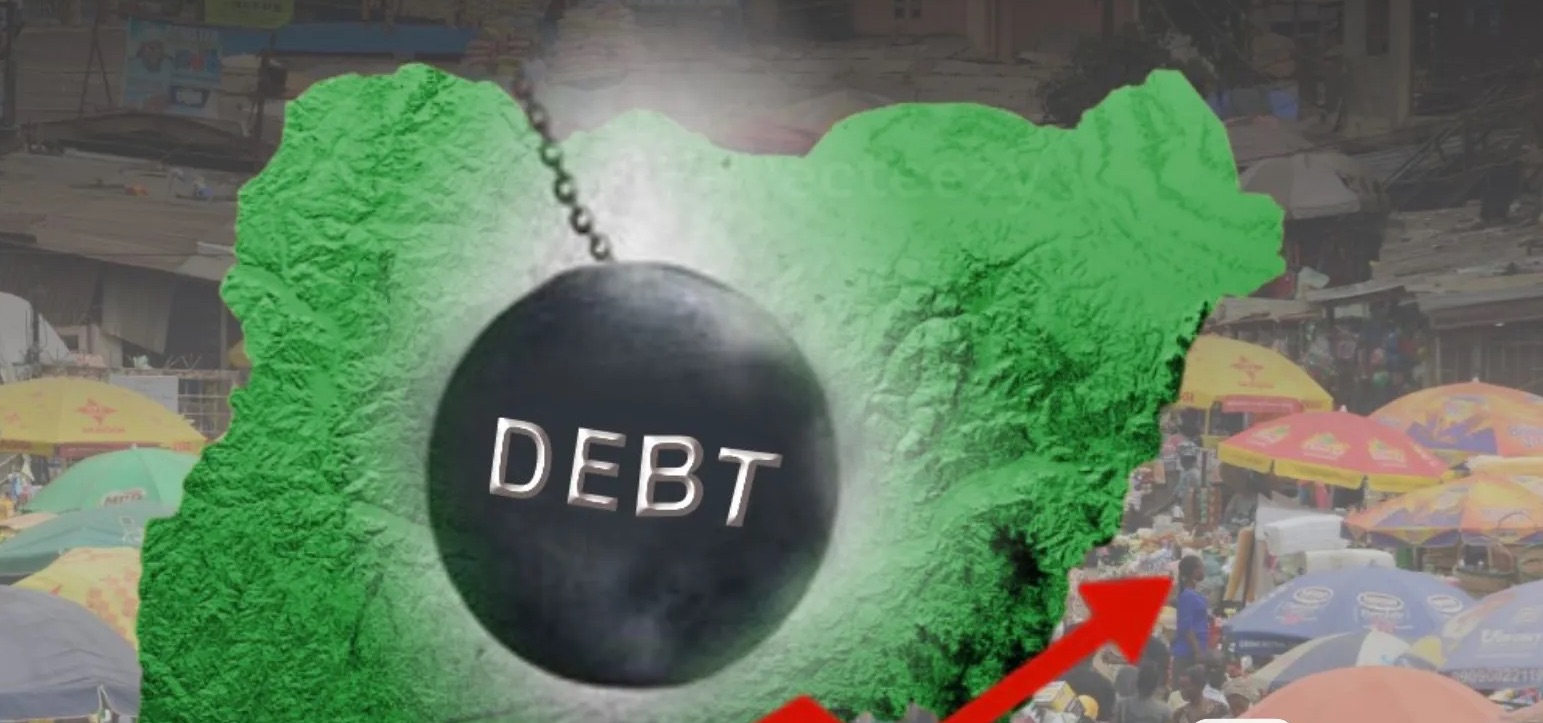
Despite several warnings that the country is edging towards dangerous territory due to accumulated public debt and the amount spent on debt servicing, the federal government has remained adamant. The government has continued in its tradition of excessive borrowing that has threatened to suffocate essential infrastructure spending. Huge debt bill may likely mortgage the future of the country. Last week, the Senate approved N17.89trillion new borrowing request from President Bola Tinubu for 2026 budget. It also approved N54.46trillion spending plans for the 2026 financial year.
So far, Nigeria’s debt burden has escalated sharply since 2023, moving from N49.85trillion to over N134trillion in 2025. Debt servicing and personnel costs had already gulped about 105 per cent of the federal government’s total revenue from January to July 2025, even as receipts fell sharply below target and capital projects suffered deep crisis in the outgoing year. All of this has vitiated the president’s claim in September that his government had met its projected revenue target for the year in August, and would exceed it by year-end. He said this would reduce Nigeria’s dependence on external borrowing.
But an analysis of the 2026-2028 Medium Term Expenditure Framework (MTEF) and Fiscal Strategy Paper released last week by the Budget Office showed that contrary to the claims, the federal government earned only N13.67trillion as aggregate revenue, compared with a pro-rata target of N23.85trillion. With the new loans, Nigeria’s public debt has been projected to reach a new-high of N188trillion by end of the year, from N152trillion recorded in the second quarter of 2025, according to data from the Debt Management Office (DMO). In the Q1, 2025, Nigeria’s public debt stood at N149.39trillion (about $97.1billion).
The situation has been aggravated by the recent borrowing binge, currency devaluation, governance issues and revenue shortfalls. This has made Nigeria’s debt to increase rapidly in 2025. With the projected public debt of N188trillion by year-end, this translates to N652,000 per Nigerian citizen. The development is ominous for the economy and the future generation. As of December this year, statistics from Budgit show that the Tinubu administration has accumulated N17.36trillion in total new borrowings, from domestic and foreign creditors for the year.
This figure surpassed the initial target outlined in the 2025 Appropriation Act. Out of this, N15.8trillion, representing 80 per cent of the total borrowing, was sourced from the domestic market, while foreign loans constitute 20 per cent, or N1.56trillion. An additional N1.15 trillion domestic loan was approved by the National Assembly in November 2025 to bridge a budget shortfall. More recently, the federal government initiated plans to borrow another $2.35billion via Eurobonds to finance budget deficit and refinance existing debt servicing, even as it insists that the new loans are expedient to fund a widening budget deficit because revenue projections have fallen below expenditure needs.
Minister of Finance and Coordinating Minister for the Economy, Wale Edun, contrary to the president’s claims, revealed that the government, indeed, faced a significant N30trillion revenue shortfall for 2025, with expected revenue at N10.7trillion against N40.8trillion target. He attributed this to weak performance of oil/gas earnings that resulted in rolling over capital projects to 2025. The shortfall, he added, impacted Tinubu’s “Budget of Restoration” agenda. Sadly, consumption took a big chunk of the 2025 budget. This also means that the government has prioritised its budget to please creditors at the detriment of the citizens’ welfare. The implications are dire.
The federal government will spend N15.9trillion on debt service in 2026 alone. It also means that one in every two naira generated goes to debt obligations that will leave the fiscal space shrinking at an alarming rate. With the projected revenue of N34.33trillion, about 46 per cent of all expected income will be devoted to debt repayment, and little left for the critical sectors. This will affect the funding of infrastructure, social safety net for the poor, education and health.
The unpleasant situation did not come by accident. It stemmed from inadequate planning of previous administrations. However, this has been worsened by the government’s unrealistic revenue projections. Few weeks ago, some members of the National Assembly mustered the courage to question the practice of merging budgets. They called for realistic projections. This is what has resulted in the present full-blown fiscal crisis. It bears repeating that there is nothing wrong with borrowing. But there is everything wrong when it is not prudently managed.
The danger is grave. It could lead to the confiscation of choice national assets by the lenders. It has happened in Zambia and some other African countries. We enjoin the government to be circumspect in taking loans in order to avoid plunging the country into debt crisis. The recourse to unbridled loans is not helpful to the economy and the future of the country. Therefore, the government should explain the budget deficit of N30trillion in 2025. Let the government check the rising debt burden forthwith.