Follow Us on Google
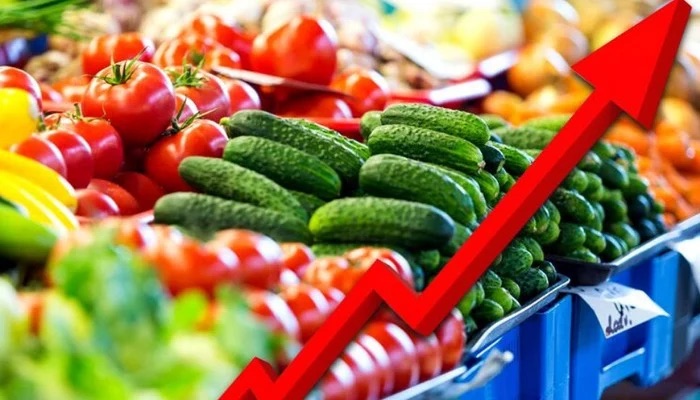
…55% now borrow for food, essentials
Despite improving macroeconomic indicators, a growing number of Nigerians are losing their financial safety nets as rising living costs continue to outpace incomes, according to findings from the PiggyVest Savings Report 2025.
The report highlights a widening disconnect between headline economic stability and the realities faced by households, with savings capacity declining steadily over the past three years.
Data from the report show that only 40 per cent of respondents currently save, either consistently or when they have surplus funds after meeting expenses. In contrast, 53 per cent of Nigerians said they do not save at all, while 7 per cent save occasionally.
A breakdown of savings behaviour between 2023 and 2025 underscores the deterioration. The share of Nigerians who did not save rose sharply from 21 per cent in 2023 to 43 per cent in 2024, before climbing further to 53 per cent in 2025.
The trend signals increasing financial pressure on households and a shrinking capacity to build economic buffers. Analysts say this erosion of savings reflects the deepening cost-of-living crisis, which continues to weigh heavily on household finances.
Spending patterns from the report show that most Nigerians operate within tight budgets. A significant proportion of respondents reported monthly expenses below N200,000, with the largest segment spending between N50,000 and N99,999. Another sizeable group spends under N50,000 monthly, while only a small fraction reported expenses above N200,000.
Food and groceries account for the largest share of household spending, reinforcing concerns over persistent food inflation. Other major cost drivers include transportation, housing, and utilities, expenses considered essential and largely unavoidable.
Income data further reveal the scale of the challenge. Nearly three in five Nigerians reported either having no monthly income or earning below N100,000 in 2025, limiting their ability to absorb rising costs or maintain savings.
As a result, more households are resorting to borrowing to meet basic needs. The report indicates that about 55 per cent of Nigerians now rely on loans or informal credit to afford food and other necessities, a development that underscores growing financial vulnerability.
Commenting, the Co-founder, PiggyVest, Odun Eweniyi, said the rise in nominal incomes does not translate into improved welfare for most Nigerians. According to her, while wages have increased on paper, particularly following the minimum wage adjustment to N70,000, the purchasing power of incomes has weakened significantly.
“Inflation peaked above 33 percent in 2024, so people are earning more and affording less,” she said.
Eweniyi noted that the decline in savings is symptomatic of a broader structural shift, where households are prioritizing survival over long-term financial planning.
“What we are seeing at scale is that even people with the discipline and intent to save are being forced to redirect those funds towards the basics, food, fuel, rent, school fees. These are not discretionary expenses you can cut,” she said.
She warned that the implications extend beyond households to the broader economy. “Declining savings weaken financial resilience, reduce the pool of domestic capital available for investment, and contribute to widening inequality.
When savings decline broadly, households become more fragile, the economy loses a critical source of domestic capital, and inequality widens, not just between rich and poor, but even within the same income brackets”.
With inflationary pressures persisting and income growth lagging behind real costs, Nigeria’s household finances remain under strain.
The report concludes that savings buffers are thinning rapidly, leaving many Nigerians increasingly exposed to economic shocks.