Follow Us on Google
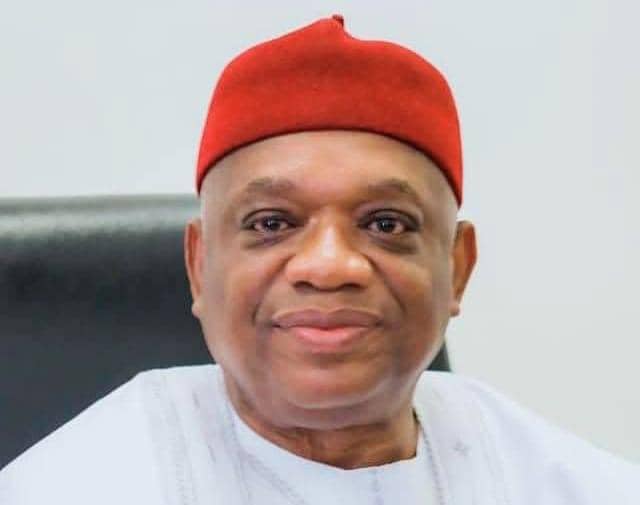
Chairman of the Senate Ad-hoc Committee on Safe Schools Initiative Probe, Senator Orji Uzor Kalu has warned that Nigeria’s schools remain “soft targets” for kidnappers despite billions of naira invested in the Safe Schools Initiative (SSI).
In his address marking the committee’s inauguration, Kalu decried the “profound national tragedy” of ongoing attacks, emphasising that every kidnapped child represents “a piece of Nigeria’s future stolen.”
The 18-member panel, constituted by Senate President Godswill Akpabio on November 27 following an urgent motion by Senator Yahaya Abdullahi (APC, Kebbi North), has a four-week mandate to audit funds, review implementation, engage stakeholders and recommend reforms to safeguard educational institutions in the country.
Members of the committee include Senators Tony Nwoye, Yemi Adaramodu, Harry Ipalibo, Ede Dafinone, Mustapha Saliu, Diket Plang, Binus Yaroe, Kaka Shehu, Musa Garba Maidoki, among others.
The probe comes amid escalating violence in northern and central Nigeria, where terrorists have abducted hundreds of schoolchildren in recent weeks.
On November 18, gunmen stormed Government Girls Comprehensive Secondary School in Maga, Kebbi State, killing Vice Principal Hassan Yakubu Makuku and kidnapping 25 female students.
Just three days later, on November 21, assailants raided St. Mary’s Catholic Primary and Secondary School in Papiri, Niger State, abducting 303 students and 12 teachers.
These incidents echo a pattern of school-based kidnappings that has persisted since the 2014 abduction of 276 girls by Boko Haram in Chibok, Borno State, which prompted the launch of the Safe School Initiative the following May under then-President Goodluck Jonathan.
Kalu recounted the initiative’s origins as a multi-stakeholder effort involving the Nigerian government, former UK Prime Minister Gordon Brown (then UN Special Envoy for Global Education), the Global Business Coalition for Education and Nigerian business leaders.
He noted that it began with $20 million in seed funding—$10 million each from private donors and the federal government—managed by the Ministry of Finance, eventually mobilising over $30 million by 2021.
The initiative’s core pillars include physical security enhancements like perimetre fencing and guards (led by the Nigeria Security and Civil Defence Corps), community vigilance groups and rapid-response systems for post-attack recovery.
The Federal Government reinforced its commitment by ratifying the Safe Schools Declaration in 2019 and adopting the National Policy on Safety, Security and Violence-Free Schools in 2020.
Other News
In December 2022, the government unveiled a National Plan for Financing Safe Schools (2023-2026), projecting N144.8 billion in investments: N32.58 billion for 2023, N36.98 billion for 2024, N37.15 billion for 2025 and N38.03 billion for 2026, with an initial federal allocation of N15 billion in 2023.
The plan targets high-risk northern states, starting with 48 schools per state in 18 vulnerable areas.
However, Kalu decried the programme’s “grim” failures, noting that key elements like early warning systems and infrastructure upgrades “exist largely on paper.”
Since Chibok, reports indicate over 1,680 children have been kidnapped in about 70 attacks, resulting in more than 180 deaths through December 2022—a toll that has only grown, with at least 10 abductions affecting over 670 children since January 2024 alone, according to Save the Children analysis.
Earlier incidents include the 2021 Dapchi and Jangebe kidnappings, the 2020 Kankara abduction of 344 boys and a March 2024 raid in Kuriga, Kaduna State, where over 200 students were seized before rescue.
Persistent insecurity has swelled the ranks of out-of-school children to around 19 million nationwide, disproportionately in the north, according to UNICEF.
The Kalu-led committee’s terms include a full financial audit of all domestic and international funds “from inception to date,” tracking “every naira and every dollar,” alongside evaluations of security deployments and stakeholder testimonies from ministries of education, finance and defence, the NSCDC, governors and civil society.
Kalu emphasised the inquiry is “not a witch-hunt, but for the pursuit of truth and accountability,” urging zero tolerance for obfuscation and full transparency from all parties.
“Nigeria has demonstrated further commitment by ratifying the Safe Schools Declaration… yet our schools remain soft targets,” Kalu said, vowing the panel would “re-engineer the SSI” to make learning environments “truly safe, secure and conducive.”
He called on colleagues in the Senate to approach the task with “diligence, patriotism” and on stakeholders to partner in “clearing the air.”
The investigation unfolds against a backdrop of broader security reforms, including President Bola Tinubu’s November 26 declaration of a national security emergency and orders for mass recruitment into the armed forces and police.