Follow Us on Google

By Christy Anyanwu
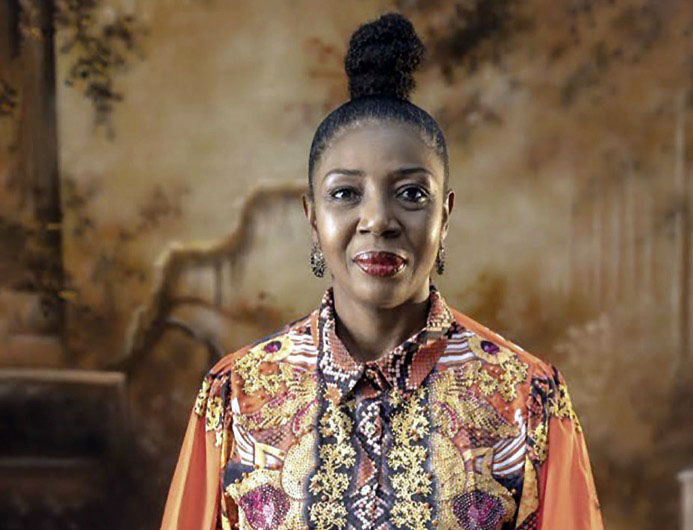
Mrs Opeyemi Komolafe is the founder and Chief Executive Officer of Edukom Learning Limited, an education-oriented company offering consulting, training and online tutorial services. She has risen to the occasion to fill the gaps where parents and their wards require personalised tutorials and learning assistance.
Her career of over 20 years has covered human resources management, education administration and managing employees who offer vital services in a fast-paced Internet environment.
With Edukom, her passion for teaching, learning and training has found expression and tangible results. She believes every child deserves quality education and no child should be left behind despite the different learning capabilities and styles of individuals.
In this interview with Saturday Sun, she offers a glimpse into her life and work.

You’re CEO of Edukom Learning. What is the age range of the children you teach?
We provide education for children from Reception, starting at age five, up to ages 18 and 19 (A levels). We begin at age five because that is usually when children can stay focused and attentive in an online learning environment.

What were you doing before starting the agency?
Before starting the tutoring agency, I built my career in human resources, beginning in 2005. However, being married to a military officer meant I had to move around frequently, which made it difficult to stay in one organisation long-term. About 10 to 15 years ago, I made a conscious decision to remain within the education sector, working in HR roles within schools. This gave me the flexibility to be available for my children when my husband was away on assignments and also allowed us to travel to be with him during the holidays.
My husband’s military career largely influenced this decision, as his postings often took him across Nigeria and abroad. His most recent course was in the UK, from 2022 to 2023, and we all moved with him for that period. Upon returning, I found myself reflecting on whether I wanted to start searching for another job, given how often I have had to restart due to relocations. My husband, Doyin, has constantly encouraged me to start my own learning organisation, but I have always feared the responsibility.
At that point, my elder sister in the UK mentioned she needed tutors for her daughter in Mathematics, Physics, Chemistry and Biology. Within 15 minutes, I was able to source four tutors for her with excellent experience and expertise in teaching the British curriculum. That moment made me realise this was something I could build into a sustainable venture. With my background in education and HR, I already had the skills to identify and engage quality tutors, as well as structure effective learning systems. It was clear to me that this could become both a viable business and a meaningful service.
I officially launched the tutoring agency in November 2023. Alongside this, I continue to work as an HR consultant, offering services such as recruitment, training and organisational development to various organisations. In the agency, my role is more strategic and relational. I engage directly with parents, understand their children’s academic needs and goals and match them with suitable tutors. We prioritise building strong relationships with families, monitoring each child’s progress and creating a supportive learning environment tailored to each child.
We also operate with a high level of flexibility and care. If a session is cancelled in advance, we either reschedule or provide a refund. This approach reassures parents that our focus goes beyond profit; it is genuinely about the child’s growth and long-term success. The relationship we build with families is, therefore, collaborative and built on trust.
We have also managed to address a need caused by current global issues. The swift relocation of skilled middle-class Nigerians and other West Africans has created a significant demand for African students abroad to maintain the discipline and diligent attitude that enables us to succeed worldwide. Most of our clients are Nigerians living abroad who urgently want their children to gain a competitive advantage among their international peers. For this reason, they hire Nigerian online tutors to keep preparing their children academically, ensuring they remain ahead of their current classmates. Fortunately, we regularly receive praise and testimonials from very happy parents.
How did you transition from your background in the sciences into HR?
I actually didn’t start in science as a career path. My background in science was more academic, but my real entry into HR happened during my NYSC year.
I had studied Industrial Chemistry at the University of Ibadan (UI) and was initially posted to work with NNPC as my Place of Primary Assignment (PPA). Unfortunately, there was a mix-up with the placement. By the time I was able to resolve it, there was no space left for me. So I found myself without a PPA for about a month, just trying to sort things out.
Then a friend told me about an opening for another corps member at his PPA, so I went for it without even thinking about the organisation. I just needed somewhere to start. That opportunity turned out to be with an HR consulting firm in Lagos called Human Capacity Development Consultants (HCDC).
I was interviewed by the Executive Director, and eventually accepted as a Personal Assistant and Training Course Administrator. My role involved handling training logistics, printing and managing forms, following up on feedback after sessions and checking in on how participants were applying what they learned in their jobs. Until HCDC, I had never even heard about Human Resources Management.
Over time, I began to notice that a lot of what I was doing actually came naturally to me, things like organisation, attention to detail, structure, compliance and even reinforcing accountability. I didn’t force it, it just aligned with my personality. That experience is really what opened the door for me and gradually shaped my transition into HR.
Are there other agencies like yours in Nigeria?
There are. One of the major challenges in this line of work is maintaining that personal touch. It can be quite demanding and there’s always a level of risk involved. Many tutoring agencies try to limit direct communication between tutors and parents because of the risk that parents could make private arrangements with the tutors.
However, I adopted a different approach. I built the agency on strong personal relationships and open communication, and that has worked in my favour. Over time, even when some parents attempted to make private arrangements with tutors, the tutors themselves redirected them back to me. That level of trust did not happen by chance: it came from consistently demonstrating integrity, confidence in how the system is run and honestly, the hand of God over Edukom.
At the same time, it is simply impractical to manage every detail alone. Following up on each child’s academic progress, reviewing their schoolwork, managing individual learner schedules, and keeping track across multiple curricula, including British, American, Canadian, South African and Nigerian systems, can be overwhelming, even with administrative support.
For real, measurable progress, tutors need to communicate directly with parents. They need to ask questions, understand the child’s challenges in school, and respond to feedback from their school teachers. Without that connection, it becomes difficult to deliver meaningful results.
To make this work, I have focused on building a strong, family-like culture within the team. The tutors are not treated as just employees, they are trusted partners. That sense of belonging has helped foster loyalty, accountability and mutual respect, which ultimately reflects in the quality of service we provide.
You work with different people in different countries. What currency do you charge in?
I charge in the currency that is comfortable for my clients to transact in, as not all our clients are Nigerian or even African, and I pay my tutors in naira. I do have one or two tutors who are currently outside the country, but they started working with me before they relocated, so the payment structure has remained the same.
Other News
Regarding scheduling, we work around time zones quite flexibly. Tutors adjust their availability, often using weekends or suitable time slots that align with the students’ schedules. When it comes to hiring, I am quite intentional. I mostly work with teachers who are actively teaching in British schools. That’s very important to me because the educational system is constantly evolving, with updates to curriculum content, teaching methodology and assessment standards. Having tutors who are directly involved means they’re up to date, they have access to the right resources, and they’re already teaching those same subjects and levels in their schools.
I only have about two tutors who tutor full-time so they are not currently teaching in schools, and that’s mainly to support students in Canadian and American time zones. It is not practical for a full-time teacher to be available at very early hours (midnight to about 4am WAT) and still function effectively at school the next day.
That said, even those tutors are very committed. They stay updated by studying current teaching methods, tracking curriculum changes, and continuously improving their skills. For me, it’s important that every tutor, whether in a classroom or not, is actively learning and growing, so they can deliver the best possible support to the students.
What subjects do you offer basically?
We mainly cover core academic subjects like Physics, Chemistry, Biology, English, Mathematics, Literature, Economics, History, ICT, Computing, French, Geography, Sociology, Business Studies etc. But beyond that, we also teach Bible Knowledge, and not in the usual way.
A number of our clients are families living abroad and they’ve noticed that Sunday School there doesn’t always have the same depth or structure. From my own experience living in the UK and the US, I saw that it often involves short lessons with worksheets and activities, but not much focus on truly understanding or memorising scripture.
So, what we do is more intentional. We help children actually learn the Bible, understand it, and memorise scriptures in a way that stays with them. That has been really valuable for a lot of Christian parents who want that stronger foundation for their children.
We also offer French and Yoruba language. In addition, we’ve started incorporating music as well. At the moment, we have a student learning the recorder, and we’re about to begin online keyboard lessons. So, it’s not just academics, it’s a mix of academic subjects, languages, Bible knowledge and musical instruments.
We’ve also had some parents ask about lifestyle skills like public speaking and teamwork. It’s something we’re considering for the future. For now, our focus is on what we already offer and doing it well.
If you were to advise the Minister of Education in Nigeria, what would you tell him?
If I were to advise the Minister of Education in Nigeria, I would start by saying that the current curriculum feels overloaded. Secondary school students are often taking nine to 14 subjects (even more in schools combining multiple curricula), many of which do not translate into practical skills they can use after leaving school. I think there needs to be a serious review of what is truly essential and what is just adding pressure without long-term value.
Beyond academics, there’s also a gap in soft skills training. Skills like communication, public speaking, confidence-building, teamwork, conflict resolution, and even basic people management skills are not being taught intentionally, yet they are critical for life after school. About 15 years ago, entrepreneurship was introduced as a compulsory WASSCE subject, but even that is still limited.
Another area I would highlight is how children learn differently. The Nigerian system still leans heavily toward one teaching style for everyone, but in reality, students learn at different speeds and in different ways. This is where differentiated learning becomes important. In a classroom, some students grasp concepts quickly while others need more time and support. The system should allow teachers to adjust their approach and class grouping so that no child is left behind simply because the lesson moved too fast.
Currently, lessons often progress even if not everyone is keeping up, and some children quietly fall behind because they are afraid to speak out. Over time, these gaps accumulate, and the child continues through school without fully grasping essential concepts. That becomes a much larger issue later.
I would also encourage a reduction in content overload. It’s not that subjects like science, literature or history are not important, but the volume and structure need to be reviewed so that there is space for practical learning. Schools should be able to balance academic knowledge with real-life preparation.
For example, students today need more than just textbook knowledge. They need to understand how to function in the real world, how to manage relationships, how to present themselves, how to think critically about global issues and how to adapt to change.
So, overall, my advice would be to simplify the curriculum, make it more focused and relevant, integrate life skills and incorporate differentiated learning properly into the system. That way, education becomes not just about passing exams but also about preparing children to actually live and thrive beyond the classroom.
How did your background shape your life in general?
I grew up in Kaduna. I was born in Zaria but when I was about five, my family moved to Kaduna. I attended Federal Government College, Malali, where I was a boarding student.
Back then, boarding school was very different. Parents weren’t as anxious as they are now; they felt confident that their children were safe. Living in that environment taught us a lot. We learned time management, responsibility and how to be organised. It really built a sense of independence. But now, things have changed. There’s more concern about the kind of influences children might be exposed to, and even I would think twice about sending a child to boarding school today.
After secondary school, I went to the University of Ibadan, where I studied Industrial Chemistry. I later went on to the University of Port Harcourt for my master’s degree in Geography and Environmental Management.
Alongside that, I’ve built a strong career in Human Resources Management. I hold several professional certifications, including international credentials from the Human Resource Certification Institute (HRCI) in the United States. I’m also a certified member of the Chartered Institute of Personnel Management in Nigeria; I’ve been a member since 2011. In addition, I’m involved as an HR Subject Matter Expert (SME) with HRCI, contributing to global certification exam development, and I periodically travel to the U.S. as part of that work. I’m also a member of the Learning and Development Network International (LDNI) and the Nigerian Institute of Training and Development (NITAD).
HR has been my passion for over 20 years, but over time, I’ve developed a deep interest in education as well. Being a parent has made that even more personal. I’ve seen the gaps, both through my own children and through the wider system, which has made me feel that something needs to be done differently.
So in my own way, through this tutoring agency, I’m trying to contribute to that change. It may seem small, but the goal is to make a real impact and, hopefully, over time, expand that impact to reach even more children.
What lessons have you learned about life?
One of the biggest lessons I’ve learned in life is that we don’t live for ourselves. We’re here to make an impact. I like to think of it this way: you shouldn’t be like a lake or a pond that just collects and sits still, because, over time, that kind of stillness leads to decay. Instead, you should be like a channel, something that flows – A pipe, a tap. You allow things to pass through you. You allow blessings to flow through you to other people. You’re not just meant to be blessed, you’re meant to be a blessing.
Another lesson is that life is deeply spiritual. Things don’t just happen randomly. I’m a person of strong faith, a committed Christian, and I believe there’s more to life than what we can see. It’s easy to say “whatever will be will be,” but I don’t see life that way. I believe you have to be intentional, hold on to your faith, and actively guide the direction of your life. There’s a spiritual dimension to everything, and being aware of that changes how you live.
I’ve also learned that even though we’re meant to make an impact, it shouldn’t come from a place of seeking recognition. It’s not about wanting people to applaud you or say ‘thank you’. It’s about understanding that you’ve been given something, and you have a responsibility to give back.
For me, every opportunity to help someone, to support a child, to make a difference in even one life, is a privilege. I don’t take that lightly. At the end of the day, life, to me, is really about service.
What is your preferred holiday destination?
Funnily enough, I facilitated a training session yesterday and during the foundation session, I was asked what my preferred holiday destination would be. I said Florida.
For me, it’s mainly about the peace of the horizon upon the ocean. I love beaches. Just being able to walk on the sand and sit with that quietness in nature. It’s very calming.
Also, I’m a mother of three wonderful children, so I’ve always had this dream of taking my children to Disneyland. Since Disneyland is in Florida, it just ties everything together for me. So, yes, Florida is that place I would really love to visit properly one day with my children. It’s something I’m definitely looking forward to making happen.