Follow Us on Google
By Rita Okoye
CIPREM Model by Dr. Omolola Atanda reshapes STEM education at Nile University and inspires nationwide pedagogical reform
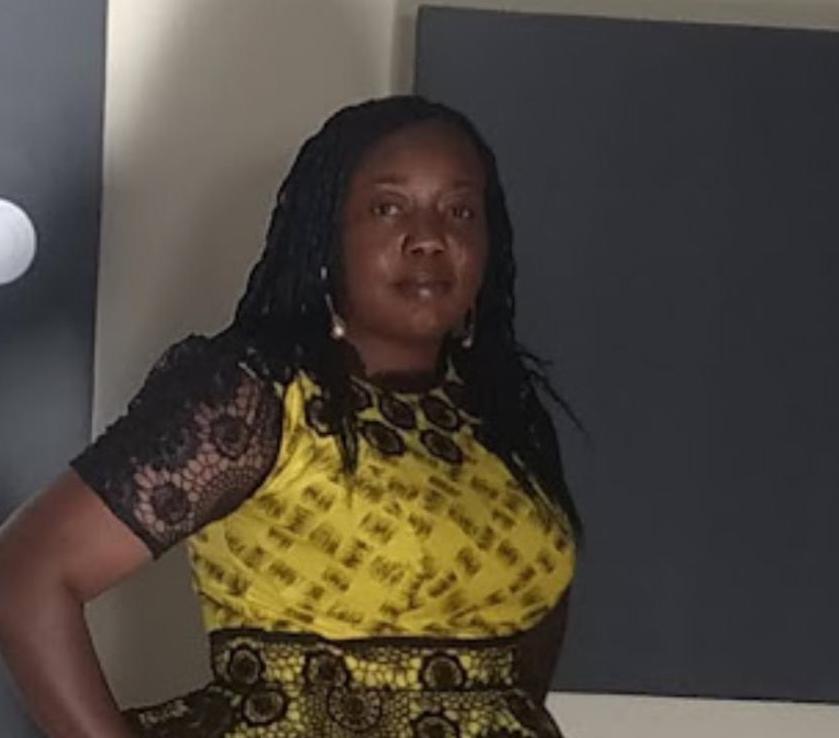
In a bold effort to revolutionize the way mathematics is taught in Nigeria and across the Global South, Dr. Omolola Atanda, a renowned mathematics educator at Nile University of Nigeria, has developed a new instructional model that is helping students understand, retain, and apply mathematical concepts in unprecedented ways. Known as the CIPREM Model, her innovation is being hailed as a timely breakthrough in the drive for inclusive, student-centered STEM education in Africa.
Breaking Away from the Chalk-and-Talk Tradition
For decades, mathematics instruction in Nigerian classrooms has followed a rigid “chalk-and-talk” model. In this method, teachers dominate classroom time, writing formulas on the board while students passively copy and memorize. This approach has long been criticized for stifling creativity, discouraging critical thinking, and contributing to widespread anxiety and failure in STEM subjects.
“Students were disengaged and disconnected,” explained Dr. Atanda. “They didn’t see how mathematics related to the world around them. I knew we had to completely rethink how we teach maths.”
CIPREM: A Model Built for African Classrooms
Drawing on her extensive experience in mathematics pedagogy and curriculum leadership, Dr. Omolola Atanda designed what she calls the CIPREM Model short for Contextualized, Inquiry-Based, Peer-Driven, Real-World, Engagement-Oriented Mathematics Pedagogy. The model represents a deliberate departure from passive, lecture-heavy instruction, offering instead a dynamic and adaptable framework built around active student engagement. At its core, the CIPREM Model encourages students to explore mathematical ideas through inquiry-based learning, allowing them to ask questions, investigate patterns, and construct understanding rather than simply memorizing formulas. It fosters peer collaboration, where students learn in small groups, solving problems together and supporting one another’s growth. To make mathematics meaningful, the model emphasizes real-world application, connecting abstract concepts to everyday contexts such as trade, architecture, and agriculture fields that are both familiar and relevant to students in the region.
In addition, the model incorporates technology-enhanced instruction, utilizing simple digital tools to improve visualization, interaction, and accessibility, even in settings where internet and infrastructure may be limited. Most importantly, the CIPREM Model is context-sensitive, intentionally crafted for use in resource-constrained classrooms typical of many Nigerian institutions, making it both practical and scalable.
“It’s not about copying Western methods,” Dr. Omolola explained. “It’s about creating something that works for our students, in our classrooms, with our realities.”
Other News
Institutional Transformation at Nile University
The CIPREM Model was first piloted and scaled at Nile University of Nigeria, a private tertiary institution located in Abuja. As Head of the Mathematics and Physics Unit, Dr. Omolola led the complete overhaul of the teaching framework for both the Joint Universities Preliminary Examinations Board (JUPEB) programme and the undergraduate mathematics curriculum. Before CIPREM, many students struggled to engage with foundational concepts. Under Dr. Atanda’s leadership, the department observed remarkable improvements in students’ classroom participation, conceptual understanding, and enthusiasm toward mathematics. Students previously considered “weak” in maths began contributing meaningfully during collaborative sessions and tackling real-life challenges through mathematical thinking.
When the COVID-19 pandemic forced universities to close their doors in 2020, Nile University’s Mathematics and Physics Unit, under Dr. Atanda’s guidance, transitioned to online instruction without interruption. The CIPREM Model’s existing digital components and flexible structure made the shift seamless. Classes continued virtually, students progressed steadily, and learning did not stall. The success of the approach was documented in internal academic quality assurance reports and formally acknowledged by the university’s academic board.
Recognition and Influence Beyond the Institution
The impact of the CIPREM Model has extended well beyond the confines of Nile University. Through multiple faculty development workshops facilitated by Dr. Omolola Atanda, numerous junior lecturers trained under her mentorship have successfully adopted the model in their classrooms.
Dr. Atanda also presented the CIPREM Model at the National Mathematical Centre, Abuja, where she led a training program for various lecturers across Nigerian universities and colleges. Additionally, the model was adopted by the Maarif Educational Institution in Nigeria to train girls from rural communities in northern Nigeria, an initiative recognized by the foundation’s director as one of the most successful educational interventions in recent years.
A Vision for Pan-African STEM Reform
Looking ahead, Dr. Atanda envisions broader adoption of the CIPREM Model across sub-Saharan Africa.
“The goal is to make maths meaningful and accessible to every learner,” Dr. Atanda explained. “If we want innovation and problem-solving in Africa, we must start with how we teach the next generation.”
As Africa grapples with the need to expand STEM education in response to rapid development challenges, innovations like the CIPREM Model offer practical, scalable, and evidence-based solutions. Dr. Atanda’s contribution stands as a shining example of African ingenuity meeting global educational imperatives.