Follow Us on Google
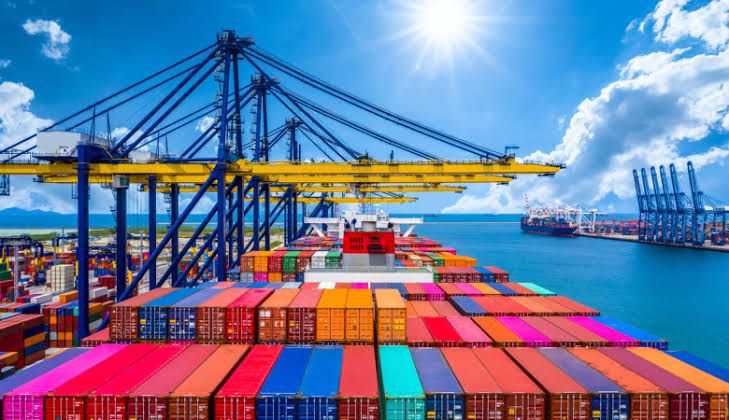
In spite of claims by the Nigeria Customs Service (NCS) that the problem of cargoes trapped at the nation’s ports has been largely addressed, available evidence shows that clearing of goods has either been halted or significantly scaled down in recent months, with over 5,000 cargoes yet to be cleared. This has resulted in huge losses to port users estimated at over N2trillion in demurrage. The ports affected are Apapa, Tin Can Ports and Terminal Multi Services Ltd (PTML) command, owned by Grimaldi Group, a global shipping giant.
The disruption has been attributed to persistent network glitches on the NCS platform, which has left manufacturers and other port users incurring about N1.2trillion demurrage in the last five years, according to figures from the Manufacturers Association of Nigeria (MAN). The challenge, which highlights the poor of ease of doing business in Nigeria is bound to affect the government’s ambitious $1trillion economy, has been exacerbated by the recent reintroduction of the controversial 4 per cent Free on Board (FOB), a shipping term which shifts the responsibility and risk of goods from the point of transfer, that is, from the seller to the buyer.
This has increased the cost of clearing of goods to over 200 per cent. According to port statistics, a 40-ft container currently attracts a daily demurrage of between N120,000 and N140,000, while a 20-ft container attracts a 24-hour demurrage of N80,000. Also, a car attracts a daily demurrage of N10,000, a truck, N35,000, while a caterpillar is charged a daily demurrage of N45,000. The charges increase after the initial grace period elapses. It is largely due to these exorbitant charges that huge volumes of cargoes bound for Nigerian ports have been diverted to the ports of Lome, Togo, Cotonou in Benin Republic and Tema in Ghana. It is also for this reason that the United States and Russia have reportedly planned to position these neighbouring West African ports as their preferred maritime hubs is the sub-region.
Despite the fact that Nigeria’s maritime sector is valued in excess of $6.4trillion, and expected annual revenue estimated at N1.6trillion, Nigeria ports are losing their preeminence position among West African ports. This is not helping the economy that ought to depend on the efficiency of the ports. Currently, Nigeria is ranked among the lowest African countries in global maritime tourism. Just recently, data from the World Trade Organisation(WTO) showed that Nigeria’s contribution to world trade is as low as 0.33 per cent.
Other News
The abysmal contribution should serve as a wake-up call on the government to overhaul our ports in the face of global maritime competitiveness. It is unfortunate that the issue of trapped cargoes at the ports has been a recurring one. It raises the question why ports located in Lagos have been given preference at the detriment of other ports such as the Onne and the Calabar ports. In 2019, thousands of cargoes were trapped at the various ports after which the NCS agreed to clear third-party containers at a 25 percent penalty to be paid by the owners of the goods.
The NCS had in a circular signed by Mr. Issa Talatu, the then Deputy Comptroller General in charge of Trade and Tariff, said the problem was due to the increasing number of Fom M, Bill of lading and Pre-Arrival Assessment Reports(PAAR) that bore different names from those of the consignees. We had expected the leadership of the maritime sector to learn from the experience of the past, and deploy multiple units and ad-hoc task force teams to sanitise the ports. Ordinarily, these clearing procedures should not take more than a day to complete.
However, some port users have also complained that they are often unable to connect to the Customs portals for payments, and that even when the portals are working, they are very slow. These challenges have hindered or paralysed cargo movement at the various ports and bonded terminals. This has also made imports and exports to sometimes grind to a halt. The situation has put intense pressure on manufacturers. The Comptroller General of the Customs, Bashir Adeniyi, recently stated that the disruption at the ports that hampered the clearing of cargoes was partly due to attempts by hackers to infiltrate its digital system.
This is one excuse too many. It is affecting the ease of doing business in Nigeria. Nigerian ports should operate 24 hours even on public holidays as it is the practice globally. Let our ports operations be digitalized in line with global best practices. The federal government should pay attention to the Eastern ports to ease the congestion at the Lagos ports. All Nigerian ports must be functional. The government should make our ports attractive for business by being competitive and offering best and timely services. We bemoan the analog operation of four ports in a digital age. The report that we are losing many businesses to other ports in Togo and Ghana is unfortunate. We call for a change of the ugly narrative.