Follow Us on Google
From Juliana Taiwo-Obalonye, Abuja
At the 21st All Nigeria Editors Conference (ANEC) themed “Democratic Governance and National Cohesion: The Role of Editors” with the sub-theme “Electoral Integrity and Trust Deficit: What Nigerians Expect in 2027,” the Nigerian Guild of Editors (NGE) President, Eze Anaba, urgently appealed to the federal government for intervention to save Nigerian media houses struggling to pay staff salaries amid soaring operational costs.
In his address, Anaba traced the significance of the conference back to its founding in 2004, praising the foresight of past leaders like Baba Dantier for establishing an invaluable forum where editors converge to influence national governance positively. Highlighting the critical role of editors as custodians of information and architects of public opinion, he said this role is particularly vital in times marked by insecurity, economic hardship, misinformation, and a worrying decline in public trust towards institutions and governance.
He stressed, “Democratic governance flourishes only when citizens are well informed and when the media acts as a credible independent watchdog. Editors must defend the sanctity of truth, insist on transparency, and hold governments accountable—not as adversaries, but as constructive partners in national progress.” He emphasised the media’s responsibility in fostering national cohesion by promoting tolerance, shared values, and avoiding using the pen as an instrument of division or hate.
Turning to the glaring economic challenges threatening media viability, Anaba laid bare the severe financial distress media houses face, saying, “Most newspapers and television houses today cannot pay salaries—not because they are not doing well, but because the cost of producing content is prohibitive. A single newspaper can cost up to 1.3 to 1.4 million Naira monthly just for production materials like ink and plates, which are largely imported.” He underscored that without economic sustainability, the media’s constitutional role to inform and hold government accountable is at grave risk.
Other News
Appealing directly to the government, Anaba said, “Your administration has worked hard to provide jobs, but if the media cannot pay its workers, it cannot help strengthen our democracy. That is why we look to you, Your Excellency, for intervention to strengthen the media industry.” He proposed fiscal support mechanisms modeled after practices in countries like Canada, India, and South Africa, including grants and tax incentives to sustain media houses over the long term.
Further, he called for the creation of digital transition and innovation grants to enable media organisations to upgrade equipment, embrace digital media, and enhance their capacity to deliver credible election coverage, national dialogue, and rural community development. The NGE also sought the establishment of safety nets such as low-interest loans for media to enable them to operate without crippling financial burdens.
Anaba reiterated the need for a free, responsible, and vibrant press deserving targeted fiscal incentives and legal protections to safeguard press freedom. “We appeal to your administration and all tiers of government to provide access to affordable finance for media sustainability,” he implored, “and to establish digital transition grants that will expand media reach, create jobs, and support democracy.” He warned that without such support, the media risks failing in its pivotal role to inform and unify the nation.
The NGE President concluded by promising the editors’ continued commitment to ethical journalism, transparency, and constructive engagement with government to advance national development and democratic consolidation. The conference is a critical platform to confront challenges like misinformation, editorial independence, and economic pressures while fostering national cohesion ahead of the 2027 elections.
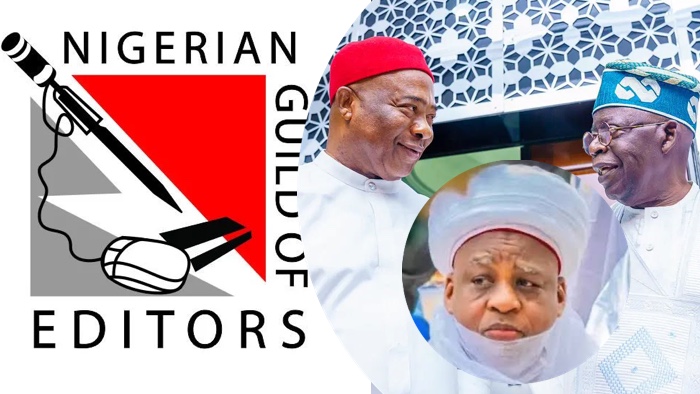
President Bola Tinubu, who was expected to declare the conference open at the State House Conference Centre, Abuja, further underscores the gravity of the issues raised by the media stakeholders and the hopes pinned on government intervention to safeguard democracy through media support.