Follow Us on Google
•Air Peace, United Nigeria Airline worst hit •We’re in talks with wildlife experts –FAAN
By Chinelo Obogo
Nigerian airlines are bleeding, not from tardy operations, but from external factors completely outside their control.
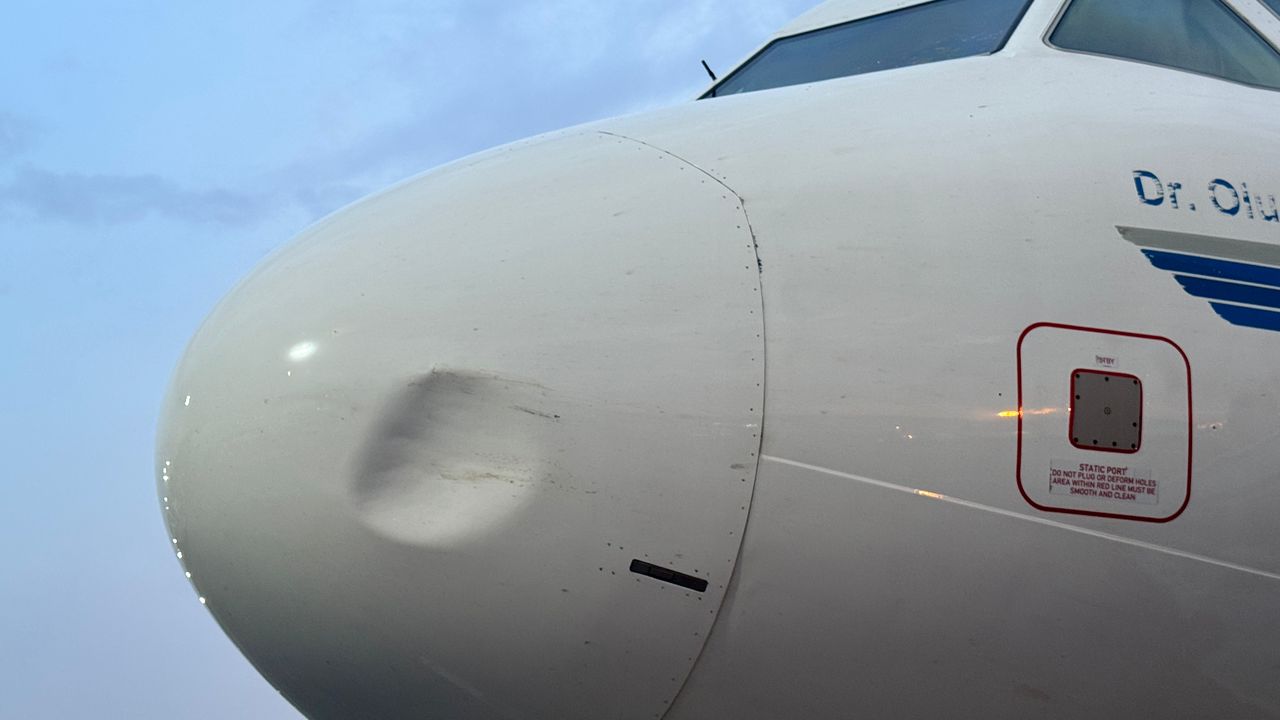
At the centre of their nightmare is bird strikes. They are losing millions of dollars on a regular basis to this menace, which continues to fracture their wings and literally cripple their operations.
Worst hit are Air Peace and United Nigeria Airlines. They have reported several incidents in 2026 alone and hope of succour is not on the horizon.
Air Peace suffered 10 bird strike incidents from January 2026 to date, while United Nigeria Airlines recorded six incidents so far in 2026 alone.
Industry sources told Daily Sun that losses from each bird strike incident fall into three categories: engine or structural damage, sector loss and aircraft cleaning and maintenance.
Engine damage is by far the most devastating of the three as a single engine damaged by a bird strike costs approximately $300,000 to repair or replace.
Other News
An airline source confirmed that Air Peace has had three engine damages from bird strikes this year alone, bringing the cost of repair to $900,000. This is a complete loss that was not envisaged but ate deeply into its finances.
The second category of damage which is sector loss is the revenue forfeited when a flight is grounded due to a bird strike. Every sector loss translates to a minimum loss of $1,000,000 and when multiplied across each bird strike incident from the Air Peace and United Nigeria Airline alone, it brings the cost to $16,000 for the 16 bird strikes. This does not include the incidents that other airlines have suffered.
The third category, aircraft cleaning and maintenance, involves hosing down an aircraft following a bird strike, conducting penetrative and integrity tests to certify its airworthiness and carrying out quality checks on all affected components.
This costs $50,000 per incident. The process according to an industry source is a very rigorous engineering exercise involving specialised equipment and trained technicians who must verify that every component, from the engine cavity to structural surfaces, has not been compromised.
“There is what you call sector loss in the sense that if that aircraft is supposed to do a sector, because of the bird strike, the aircraft has to return to base and undergo necessary maintenance checks. Those are the three categories; engine damage, maintenance and cleaning and sector loss.”
Air Peace’s Chairman and Chief Executive Officer, Allen Onyema, disclosed in January 2025 that his airline suffered 115 bird strikes over five years, with more than 30 occurring in a single year. Onyema described two serious incidents that occurred in a single day, one at the Owerri airport and another in Port Harcourt.
During the Port Harcourt incident, he said a large bird struck the aircraft’s landing gear during landing, causing significant damage, though the flight landed safely.
The Owerri incident was more alarming as a large bird which Onyema said was bigger than his lap,collided with the aircraft mid-flight, shattering the windshield and threatening cabin depressurisation. The aircraft, originally bound for Abuja, had to abort its journey entirely. Daily Sun could not get an official response from the Federal Airports Authority of Nigeria (FAAN), but a senior management who spoke Daily Sun on condition of anonymity that the Managing Director of the Authority, Olubunmi Kuku convened an emergency meeting over the issue and gave a marching order to tackle the problem. The source admitted that current efforts are not adequate but that however, FAAN management is in active discussions with external consultants who would advise on the deployment of more sophisticated bird deterrent equipment especially the ones that can be deployed at night when patrols are less effective and the activity of birds is harder to monitor and control.
“I know talks are going on to get external professionals to tackle the problem and it will be done in a matter of days because the MD has given a marching order to that effect. We are internally improving our own patrols because the scale of the challenge extends beyond birds alone, with animals also encroaching on airport environs,” the source stated.