Follow Us on Google
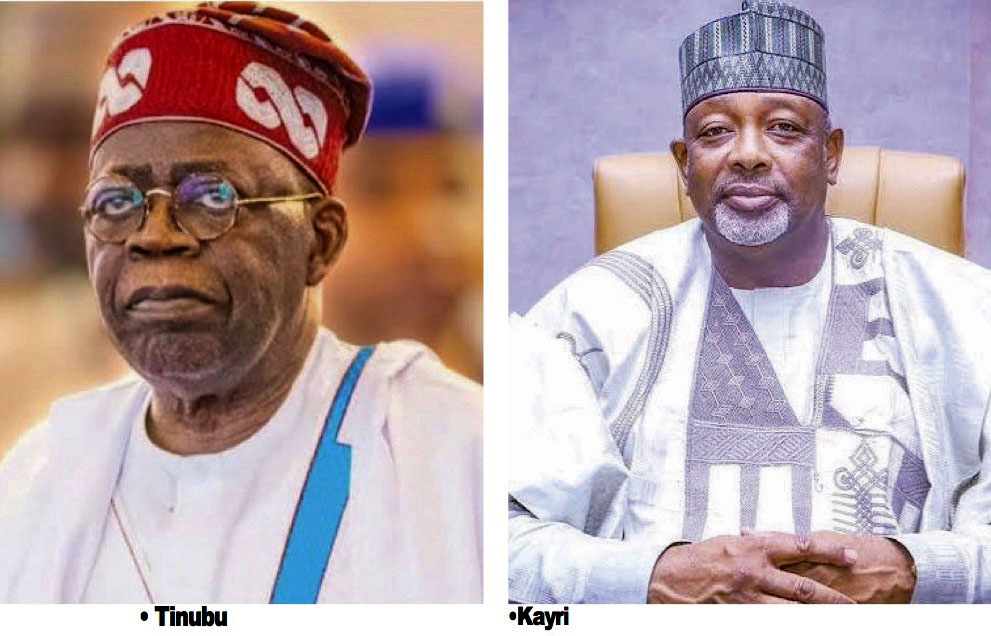
By Chinyere Anyanwu and Okwe Obi (Abuja)
Sixty-six years after independence, Nigeria, often touted as Africa’s giant, is still battling to put enough food on the tables of its people.
Millions go to bed hungry daily and many feed from dumpsters.
Despite vast stretches of fertile land, abundant water resources, a favourable climate and a youthful population capable of powering agricultural production, the country continues to grapple with food shortages, rising prices and heavy dependence on imports.
From the farm to the market, a web of problems exists.
Many agrarian communities are battling insecurity, poor infrastructure, inadequate financing, climate shocks, high input costs and weak storage systems.
These perennial horror continues to frustrate farmers and consumers alike.
Millions of households, especially those in terror-infested North East and North West, are battling high level malnutrition and hunger owing to reduced access to quality food, a situation which most often results in avoidable health challenges and diseases.
Nigeria’s quest for food sufficiency has remained hamstrung by a combination of insecurity, decaying infrastructure, inadequate financing for farmers, corruption and years of disproportionate focus on crude oil at the expense of agriculture. These challenges have weakened the country’s capacity to produce, move and store food efficiently, leaving millions struggling with the basic questions of availability, accessibility and affordability.
The consequences are increasingly evident in Nigeria’s rising dependence on imported food.
For instance, the country’s livestock sector is valued at $60 billion but Nigeria expends approximately $2 billion on the importation of milk.
The Special Adviser to the President Bola Tinubu, on livestock, Prof Attahiru Jega, noted that by 2035 in 10 years time, the value could rise to between N74 billion to N96 billion.
Data from the National Bureau of Statistics (NBS) show that the country spent N3.3 trillion on food and beverage imports in the first half of 2026 alone, highlighting the widening gap between Nigeria’s vast agricultural potential and its ability to feed its growing population.
Agric as economic backbone of pre/post independence era
Agriculture was the backbone of Nigeria’s economy before and in the years immediately after independence. At independence, the country had a vibrant agricultural economy, with crops generating much-needed foreign exchange while also meeting a significant share of the food needs of its growing population.
The sector was a major contributor to Gross Domestic Product (GDP) and the country’s largest source of employment. Across the regions, Nigeria produced cash crops that were highly sought after in international markets. The West was renowned for its cocoa, the North for its famous groundnut pyramids, while the East was a major hub of oil palm production. Rubber and cotton also flourished across parts of the South.
In the years before and after independence, Nigeria was largely self-sufficient in food production and a major exporter of agricultural commodities. The cocoa boom in the West, the groundnut pyramids of the North and the oil palm belt of the East not only sustained livelihoods but also positioned Nigeria as one of the world’s notable agricultural exporters.
For a country that once earned substantial foreign exchange from its farms, the contrast with today’s struggle to feed its population is clear and troubling.
Crude oil discovery, agric’s albatross
Nigeria discovered crude oil in 1956 in Oloibiri (present day Bayelsa state). The nation was soon captivated by the allure of ‘black gold’ as the oil boom unleashed unprecedented wealth and shifted government attention away from agriculture. The sector became like the proverbial old wife, neglected and discarded when a new favourite arrived.
Years of underinvestment took a heavy toll on agriculture’s productivity and diminished its relevance both at home and in international markets.
Rural infrastructure deteriorated, while agricultural research, extension services and other support systems received inadequate attention.
Farmers who once benefited from government-backed programmes and technical support were increasingly left to rely on outdated farming methods, with little access to modern technology, improved inputs or the knowledge needed to raise productivity.
The consequences of the neglect on the agricultural sector, the economy and the farmers were far reaching. Nigeria, one of the major exporting countries of the world, became a major food importer, which in effect drained its foreign exchange.
Revamping agriculture
In a bid to revamp the sector, efforts were made from the 1980s by successive governments through several policy frameworks. There was the Structural Adjustment Programme (SAP) introduced under military rule, which emphasised the need to diversify the economy away from oil and reinvest in agriculture. The period saw the establishment of River Basin Development Authorities, fertiliser subsidy programmes and efforts to mechanise farming.
The full potential of these programmes were, however, not achieved owing to corruption, policy incontinuity, and mismanagement of resources. While certain programmes like Operation Feed the Nation (1976) and the Green Revolution (1980) created awareness, they lacked sustainability.
Other initiatives launched by governments to ensure the improvement of food production include the National Economic Empowerment and Development Strategy (NEEDS) and the Agricultural Transformation Agenda (ATA) under President Goodluck Jonathan, which promoted cassava, rice, and fish farming.
The ATA particularly focused on value chains, improving access to fertilisers through the Growth Enhancement Scheme (GES), and encouraging private sector participation. Some progress was recorded, especially in rice production, with states like Kebbi, Ebonyi, and Kano becoming hubs.
Most recently, the current administration of President Bola Tinubu introduced a number of initiatives, including the Renewed Hope Smallholder Support Programme which is targeting two million smallholder farmers with certified seeds, agrochemicals, and over 10 million bags of fertiliser; the Guaranteed Minimum Price (GMP) introduced to protect farmers from post-harvest losses and exploitative pricing through stable market uptake; the National Agricultural Growth Scheme (NAGS-Agro-Pocket) which implements direct input distribution and fertiliser subsidies for registered farmers; the Tractor Mechanisation Programme aimed at expanding machinery service centres across the six geopolitical zones in partnership with private stakeholders; and the EU-Nigeria Twinning Project launched early this year to enhance climate-smart agriculture and reduce post-harvest losses.
Challenges
Despite these interventions, Nigeria’s agriculture and operators in the sector continue to face incessant challenges. Most farmers still rely on rain-fed agriculture, making production highly vulnerable to climate change. Access to credit remains a major hindrance, with many smallholder farmers unable to secure financing.
Post-harvest losses, estimated at 30–40 per cent of output, remain a significant issue due to poor storage, weak transportation networks, and limited processing facilities. Insecurity, particularly in the North, has disrupted farming communities, displacing millions and reducing output.
Nigeria’s rising population, now estimated to be over 220 million, is further increasing pressure on food demand, widening the gap between production and consumption. The result is persistent food inflation, with prices of staples like rice, beans, and maize going beyond the reach of many households.
The Tinubu administration has placed emphasis on food security, declaring a state of emergency on agriculture. Initiatives are being rolled out to boost mechanisation, support irrigation projects, and reduce dependence on imports. There is also increased investment in agribusiness, with young entrepreneurs venturing into crop processing, poultry, aquaculture, and agro-tech.
Insecurity, aggravated by the incessant attacks on farmlands and killing of farmers by bandits and Fulani herders across the country, has in no small measure, impacted the backwardness of Nigeria’s agricultural sector and food system. Over two decades of these attacks is still wreaking havoc on the country with a death toll running into tens of thousands in addition to burnt farmlands and crops. Research reports from International Organisation for Migration (IOM) puts the number of Internally Displaced Persons (IDPs) at approximately 3.7 million.
Just last week, suspected terrorists killed 15 farmers in Marte Local Government Area of Borno State.
The victims lost their lives while working on their farms to earn a living and contribute to the food security of the nation.
The situation has turned agricultural practice into an endangered venture as survivors of these attacks fear to engage in farming activities. The areas worst hit are the food basket states of the country, including Benue, Zamfara, Taraba, Plateau, Borno, Adamawa, Niger, Kaduna, Edo, Ebonyi, Anambra, Ondo, Abia, Ekiti, Kaduna and Nasarawa.
Stakeholders’ assessment
Operators in Nigeria’s agricultural sector, while assessing its journey 66 years after independence, are in agreement that the sector, which had its glory days in the wake of the country’s independence, has not fared well in the last couple of years.
Other News
In his assessment, the National President of All Farmers Association of Nigeria (AFAN), Alhaji Mudi Farouk, said in the last 66 years Nigeria’s agriculture has not been in good health because it has not been given the appropriate attention it deserves.
He said, “before the oil boom, agriculture was given necessary attention, and it was almost the highest percentage of Nigeria’s GDP. But because of the oil boom, agriculture has not been given good attention. Before now, agriculture succeeded beyond any doubt. It succeeded during the cotton, cocoa, groundnut pyramids. We lack the political will to make agriculture work. We pay a lot of lip service to agriculture but implementation is where the problem is.”
For Mudi, Nigeria does not lack the potential to get agriculture on the right footing, be it human resources, land resources, water resources, weather, money, among numerous other resources, but it falls short in putting these resources to work.
Lamenting the adverse impact of the long drawn farmer/herder conflict and the resultant insecurity bedevilling the country, the AFAN president said, “in most places, farmers cannot go to their farms. In some places, they have to pay a levy to bandits before they harvest their produce.”
Mudi noted that, “despite the low output due to lack of funding, research by government, lack of good seeds, lack of mechanisation, we know that Nigeria has everything that can put agriculture back in shape. And we are trying our best to see that we give all the possible advice that can guide the government to do the needful for Nigeria to succeed in agriculture. And on our part as farmers, we need to know that agriculture is a business like every other business.”
Decrying the government’s nonchalance towards investing in agriculture, Mudi said, “across the world, every country knows that agriculture is being subsidised in one way or the other. So why won’t our government look at agriculture? Because if you are subsidising agriculture, you are not only subsidising it for the farmers, you are subsidising it for the nation. Food security is the key to securing every other aspect of the nation’s life. Without food security, you can never secure the country. So food security is first before you can achieve any other form of security. That is why we are appealing to the government to look at this sector; they are not doing it for the farmers. They are doing it for the nation, for the success of our country.”
Speaking on what lies ahead for the sector, Mudi noted that the country’s agriculture can bounce back and occupy its former pride of place if the government would sincerely embark on upward adjustment of the budgetary allocations to the sector to reflect present realities.
He stressed the need to “look at the budget of agriculture. The funding of agriculture has to be more than what it is presently. If the government is always boasting that they supported one million or two million farmers, when we are having more than 18 million, it’s just a drop in the ocean. So, funding for agriculture has to be increased.”
Mudi also harped on the importance of involving real farmers in agricultural planning, saying, “we, the farmers, need to be seated at the roundtable when they are taking decisions about agriculture and farmers. Maybe they are buying things we don’t need. Or when it comes out, it doesn’t work.
So they have to carry all the farmers, the real farmers, along.
Now, we have more political farmers in the offices than the real farmers. We, the real farmers, are in the field while the political farmers are going from one office to another. So politicians are using them for their own interest.”
He advised all stakeholders, especially those saddled with the responsibility of implementing agricultural policies, “to put self-interest aside. Show love to Nigeria. Work diligently. That is our advice. Bring farmers’ cooperatives to any roundtable meeting for policy making. And when it comes to implementation, also take the farmers along. Also look at sectors like research, mechanisation, irrigation.
All these sectors have to be looked into. When they do this, I believe that Nigeria is going to succeed in terms of agriculture.”
Reacting to the issue of the current state of agriculture compared to what it used to be prior to and shortly after independence, the Director General of Centre for Research, African Trade Facilitation. Dr. Ekenechukwu Aloefuna, said Nigeria’s agriculture was already excelling globally and making a huge mark on the country’s economy.
Aloefuna was grieved by the level of setback agriculture and its practitioners have suffered shortly after independence.
“We were leading in farm produce, we were leading in groundnut, we were already doing a lot of agriculture. We had cocoa, and imagined more than a 12-storey building built as a cocoa house in Ibadan. Today, we have nothing to show for our agriculture 66 years later.
“There used to be a palm plantation economy in the old eastern region. The disappearance of all that has not been replaced by anything concrete and valid. We have been on backwards and backwards and backwards steps,” he said.
Lamenting the sorry state of Nigeria’s mechanisation programme, Aloefuna stated that, “at a time when food is produced with advanced mechanisation, Nigeria needs more than 10,000 tractors because of the population rise but we have less than 3,000 tractors across the country. And within these 3,000 tractors you have only about 45 per cent functioning. Then look at the cost of diesel. Can you also imagine the cost of using mechanisation?”
Making an analogy between the Nigerian and Brazilian economies, both being third world countries in the sixties, he noted that, “the Brazilian economy was highly competitive with the Nigerian economy then, and we were completely third world with Brazil. Today, 65 per cent of the fuel they are using in Brazil is bio-fuel coming from agriculture. The ethanol that you get from maize and cassava are used to mix the fuel. They are one of the biggest global exporters of ethanol. Nigeria is losing about N100 billion in annual ethanol imports. So you can imagine, as much as we claim to be the top producer of cassava, we don’t even have enough cassava to eat.
Because our population alone consumes most of it. So it means that we are far, far behind. We should have been producing three or ten times what we were producing 66 years ago.”
Admitting that some governments have tried putting in place a lot of laudable programmes aimed at revamping the sector, which were not sustained by successive administrations, he said, “I always praise the era of Buhari, the era of Operation Feed the Nation, and I think Buhari was able to put up the Nigerian Agricultural Development Fund (NADF), which is a fund coming out like education tax. It’s a fund that moves out of every food you import into Nigeria and goes to support agriculture. Through that fund, they are collecting a lot of money but they are not attending to farmers. So it means that the fund is not reaching out.
“As we speak, global bioenergy is the in-thing and that is because people are doing agroforestry to make things work. But we don’t have even one single agroforestry in Nigeria. You cannot say that you have a bamboo plantation or a cocoa plantation that is robust today in Nigeria. Not to talk of sugarcane plantation that is robust today in Nigeria. The only robust farm you have today belongs to the TY Danjumas. The new cocoa plantation where they are doing full value chain belongs to the TY Danjumas. So I will say that Nigeria is in need of agriculture. We are not yet there.
“We need to go back into agriculture. And in my view, it should be private sector-driven because the government has failed despite their loud talk on food security. They will collect money from donors and use it for workshops. They will use it for incentivisation programmes. It doesn’t get to the farmers. We have work to do. We are not agriculturally sufficient.”
The expert who expressed displeasure over the fate of the World Bank-sponsored FADAMA, said, “imagine that the World Bank spent billions of dollars in funding FADAMA. And as soon as they were no longer funding FADAMA, it went under. The Federal Government and state governments that received money for over two decades in FADAMA have not been able to sustain that project. There was no sustainable plan by the federal or any state government to keep FADAMA going. FADAMA had a direct intervention on rural farmers around the coastal regions and waterways but as we speak, it’s already dead and the Federal Government is not able to refinance it.”
According to him, “Buhari came with the right intervention in rice and we were getting to have sustainability in our rice consumption. But as soon as Buhari left, they opened the borders and the Asian market took over again. Nigeria is importing rice right now.”
In his submission on how Nigeria’s agriculture could fare better in the future, Aloefuna insists Nigeria must be intentional in taking relevant steps that will take its agriculture to where it ought to be as a 21st century economy.
He said, “the way forward is that the Food and Agriculture Organisation (FAO) has what they call the Global Bioenergy Partnership. And in 2001, Nigeria joined the Global Bioenergy Partnership as an observer. But, I understand that by this November, Nigeria will be signing its full membership in the Global Bioenergy Partnership.
That will mean that we will begin to work towards sustainable agriculture. We will begin to work towards sustainable clean cooking. We will begin to work towards producing biogas, biofuel from the agric sector. So, it means that there is room for industrial agriculture because the global bioenergy sector gives room to what is called sustainable aviation fuel where you have aviation fuel that has 25-35 per cent ethanol from agri-produce or bio-oils from agri-produce. So, the biofuel that will be used by the jets and the aeroplanes are supposed to be from agri-waste, from agri-residue, from sustainable value chains. So, it is a new opportunity in agriculture. And I understand that it is a level where energy, environment, the food system and health begin to meet.”
He added: “We hope that Nigeria prepares to sign itself into full membership of the Global Bioenergy Partnership. That it will give room for investors to be more active in agriculture, knowing that when I am cutting grasses or when I am harvesting cassava, all the waste will also give me money. It gives a new rationale for people to farm knowing that they are not producing money only from the rice. That the waste that comes out of the rice will even give them a lot of more money.
“So, there will be more income for farmers and more income for producers and that can actually grow the economy. That is the future goal. That is the next agenda. Unfortunately, the Ministry of Agriculture is not promoting it.”
A stakeholder in the oil palm produce value chain, Alphonsus Inyang, the President of National Palm Produce Association of Nigeria (NPPAN), does not differ in opinion on the state of the nation’s agriculture.
For him, Nigeria’s agriculture has not done well in 66 years of independence. According to him,
“Nigeria started independence in 1960 as an exporter of food. And Nigeria, 66 years later, is now an importer of food. Nigeria has become the largest importer of food in the whole of Africa.
Nigeria was the largest producer and exporter of palm oil after independence, and now an importer of palm oil. So Nigeria has not done well in agriculture and for agriculture.
“More than 50 per cent of global production and exports was controlled by Nigeria. This is the year 2026. Nigeria is a net importer of palm oil. Nigeria entered independence as a major exporter of rubber. There were rubber estates in Sapele, Ugheli, Ethiope East, Ethiope West, in Delta. There was palm oil in Odukpani in Cross River State, up to many parts of Cross River.
There were rubber estates in Rivers State. They have all died. The two major tire manufacturers in the world, Michelin and Dunlop, that found their nest in Nigeria because of the availability of raw material, rubber, have all long left Nigeria.
“And Nigeria is now a net importer of rubber products. Nigeria is the biggest importer of tires, vehicle tires, in Africa. Yet, Nigeria’s soil is the best for rubber. At the time, we excelled and were the largest producers of rubber in Africa.
“Nigeria imports nothing but food, so I cannot say agriculture has done well in 66 years of independence. Within the 66 years, agriculture has been destroyed by the discovery of crude oil and by successive leadership.
“Look at the governments of Southeast Asia, Indonesia, Malaysia, Vietnam, India. All these countries understand that you cannot grow industrially without heavy investment in agriculture. In Indonesia, palm oil produced 4.5 per cent of the GDP of Indonesia. And Indonesia now controls the industry with over 54 million tonnes per year, while Nigeria produces just about 1.5 million tonnes per year.”
Inyang lamented the culture of successive governments investing Nigerian resources only in petroleum and gas, querying, “you hear the government saying, we have done so much in the gas sector. We have done so much in the oil sector. What have you done for agriculture? The attention of this government and even governments before have been on petroleum, petroleum, petroleum. Farmers don’t have any help, no assistance.”
Inyang posits that for agriculture to take back its rightful place in the economic landscape of the country, the government must invest in agriculture. He called for private sector and government attention to be focused on agriculture, noting that, “agriculture is the only foundation. That’s why we call it the real sector. From agriculture, you have raw materials for everything you can ever think of.”