Follow Us on Google
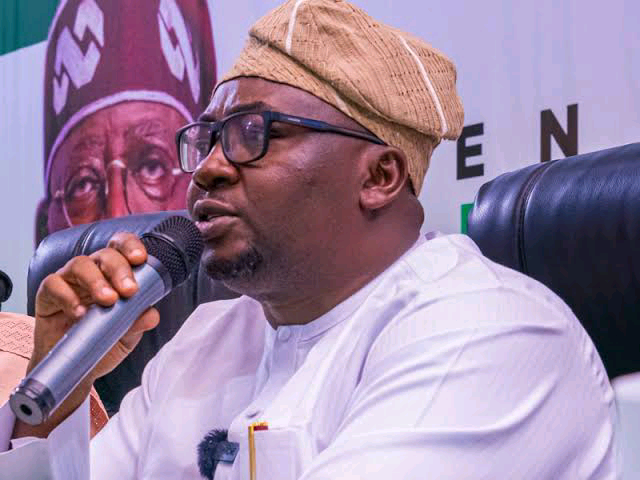
From Isaac Anumihe, Abuja
The Federal Government has assured that Nigeria’s ongoing synchronisation of its national grid with West African neighbours will significantly enhance the reliability of essential services nationwide, from hospitals and water supply to transport systems, digital infrastructure and other public institutions.
The West African countries involved in the synchronisation include Niger Republic and parts of Benin and Togo, and the rest of West Africa’s interconnected systems covering Ghana, Côte d’Ivoire, Burkina Faso, Liberia, Sierra Leone, Guinea, Senegal, The Gambia, Guinea Bissau, and Mali.
Speaking on the sidelines of the maiden stakeholders’ workshop organised by the Nigerian Independent System Operator (NISO) today in Abuja, Minister of Power, Chief Adebayo Adelabu, said that apart from regional integration, the synchronisation will enable the country to optimise generation costs, deepen industrialisation, strengthen regulatory oversight, and expand its leadership in the ECOWAS energy landscape.
“It will also support ongoing domestic reforms that allow states to participate in the generation, transmission, and distribution of electricity within a more stable national framework.
“While significant progress has been made, the journey ahead requires sustained investment, disciplined maintenance, stronger regulatory enforcement, improved gas supply reliability, and deepened regional co-operation,” he said.
However, Adelabu remarked that the public is encouraged to note that synchronisation is not an immediate solution to all challenges within the Nigerian Electricity Supply Industry (NESI). Rather, it is a foundational and transformative step that would reshape the long-term trajectory of the sector. It would create the enabling conditions for improvements that are sustainable, scalable, and capable of lifting the nation into a modern, interconnected, and economically vibrant energy future.
Confirming the minister’s assertion, Managing Director of NISO, Engineer Abdu Mohammed, maintained that for four unbroken hours, electricity flowed from Nigeria and Niger into the entire West African sub-region—covering Benin, Togo, Ghana, Côte d’Ivoire, Liberia, Sierra Leone, Guinea, Senegal, Mali, The Gambia, and Guinea Bissau—operating at a single, stabilised frequency.
According to him, Nigeria has made history with the successful synchronisation of the national grid with the West African Power Pool (WAPP) interconnected system. For four unbroken hours, electricity flowed from Nigeria and Niger into the entire West African sub-region covering Benin, Togo, Ghana, Côte d’Ivoire, Liberia, Sierra Leone, Guinea, Senegal, Mali, The Gambia, and Guinea Bissau, operating at a single, stabilised frequency.
“That achievement was not accidental. It was the result of strengthened co-ordination, harmonised operating procedures, and transparent system management.
It was a demonstration of what is possible when technical competence, operational discipline, and institutional collaboration work in harmony.
“The milestone recorded is more than a technical success; it positions Nigeria as a regional power hub, opens new avenues for electricity trading, unlocks foreign exchange potential, and reinforces investor confidence in the emerging Nigerian electricity market.
“A resilient electricity market requires more than engineering; it requires relationships. It requires trust among service providers, trust between the market and regulators, trust between government and operators, and, above all, trust from the Nigerian people.
“This is why NISO is committed to building a stakeholder-driven market architecture. Our approach is anchored on five principles:
Transparency in market and system operations,
Neutrality in all market decisions,
Operational discipline based on international standards,” the MD stated.