Follow Us on Google
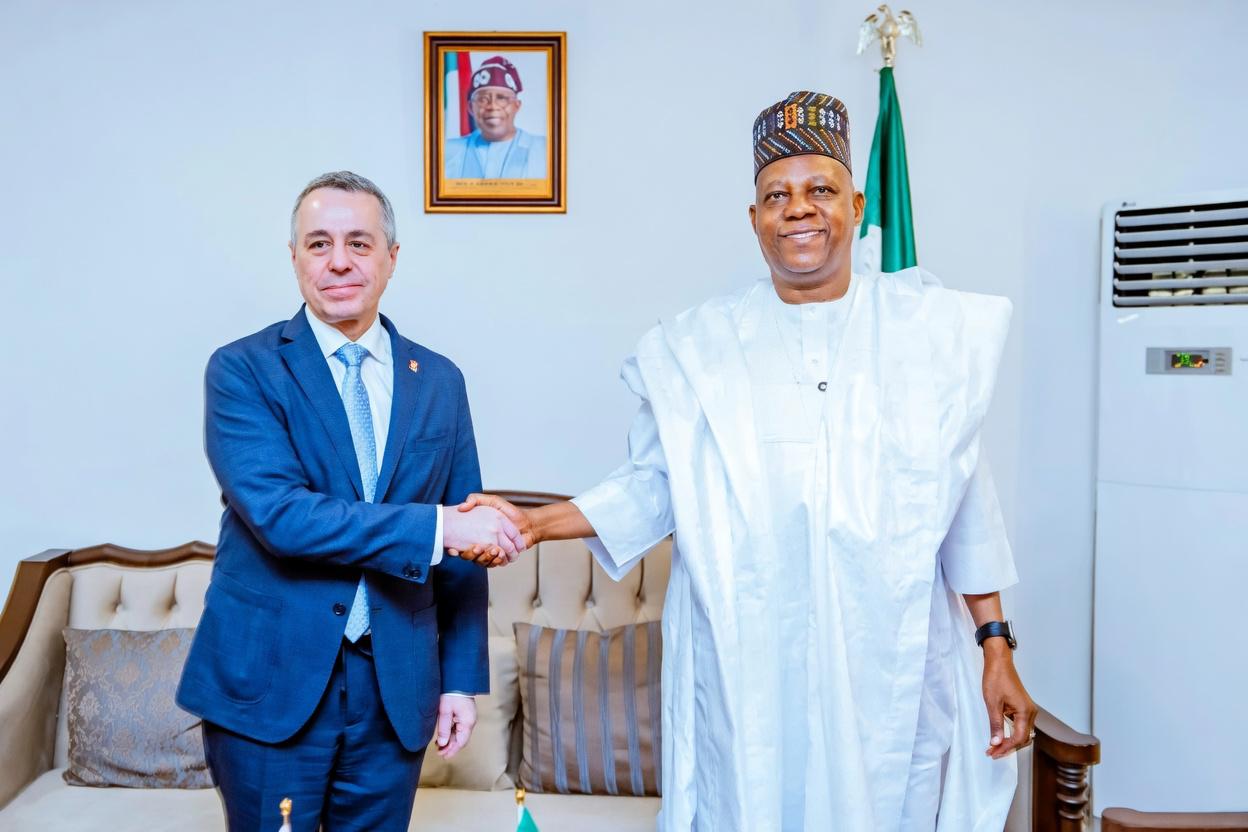
Nigeria and Switzerland have agreed to bolster bilateral relations, focusing on trade, security, economic collaboration, migration, and cultural exchange.
The commitment followed a high-level meeting on Tuesday between Vice President Kashim Shettima and his Swiss counterpart, Ignazio Cassis, held at the Presidential Wing of the Nnamdi Azikiwe International Airport.
Speaking after the discussions, Cassis highlighted plans to explore a free trade agreement linking Nigeria with the African Continental Free Trade Area (AfCFTA), emphasising the potential for enhanced economic ties.
He further stated that Switzerland would continue to support Nigeria’s efforts to tackle insecurity in the North-East through diplomatic and technical cooperation.
Moreover, the Swiss official noted that Swiss companies are actively engaged in vocational training across Nigeria, equipping young people with skills to secure employment and promote peaceful coexistence.
Other News
“Swiss enterprises in Nigeria are ensuring that youths gain the requisite skills to thrive in the labour market,” Cassis remarked.
In addition, both nations agreed to strengthen collaboration on migration and cultural matters. As part of these efforts, plans were confirmed to return cultural artefacts, including Benin bronzes, from Switzerland to Nigeria, marking a significant step in reinforcing historical and cultural bonds.
Yusuf Tuggar described the meeting as a continuation of the longstanding relations between the two countries, dating back to 1961. He noted that the Swiss delegation expressed keen interest in expanding private sector investments in Nigeria, signalling a boost for trade and industry.
Vice President Shettima, for his part, welcomed the outcomes of the discussions, reiterating Nigeria’s commitment to sustaining robust engagement with Switzerland. He also confirmed Nigeria’s active participation in the upcoming World Economic Forum in Davos, further consolidating international partnerships.
The meeting underscores a mutual desire to deepen cooperation across multiple fronts, while ensuring cultural restitution and economic development remain central to the partnership. Observers say the outcomes could pave the way for more structured and beneficial engagements between the two nations in the near future.