Follow Us on Google
• Okays taskforce “Detty December”
• Approves 163km Lagos–Calabar highway contract, reviews ongoing projects
____________________________
From Juliana Taiwo-Obalonye, Abuja
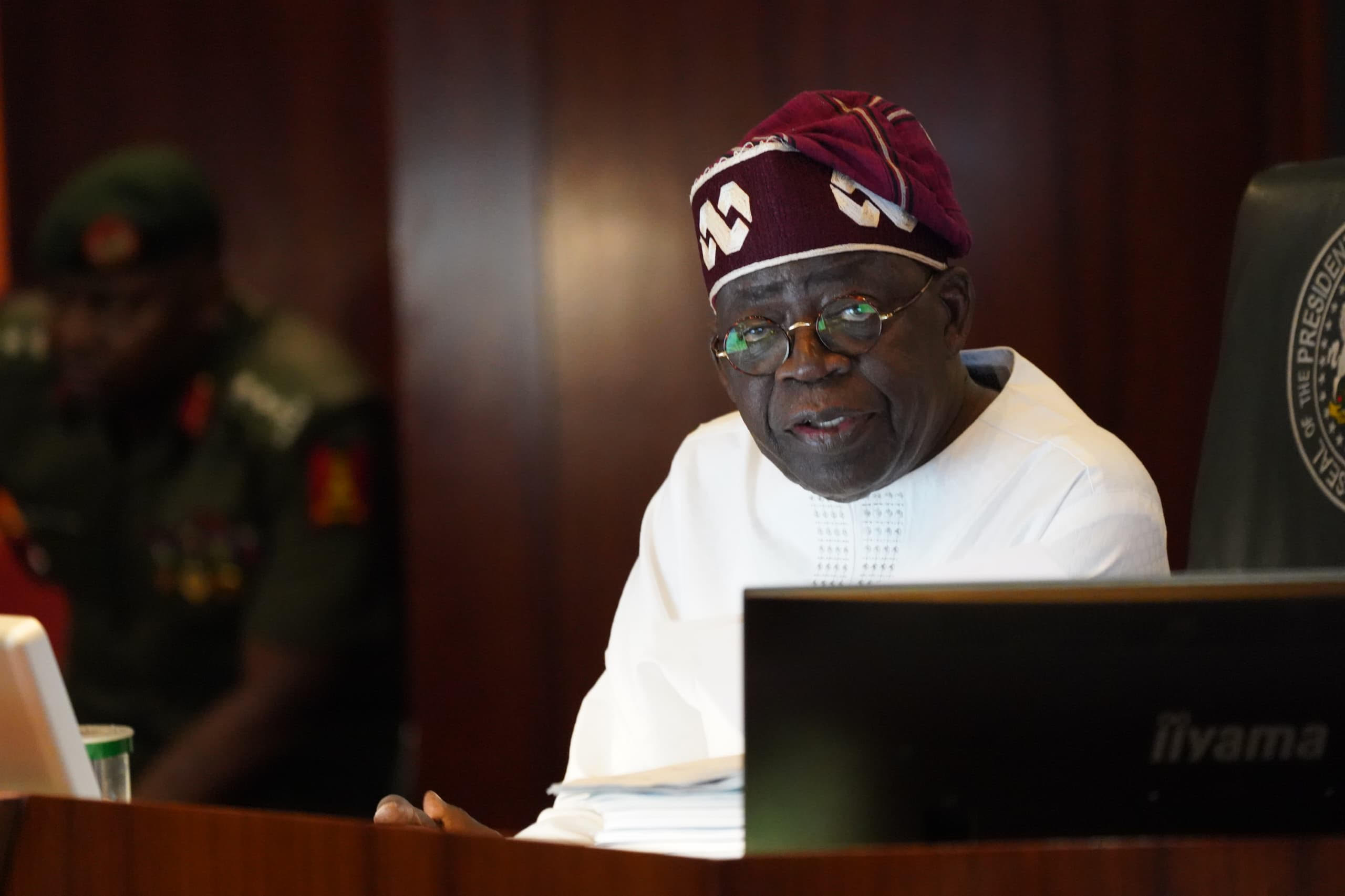
The Federal Executive Council (FEC) meeting presided over by President Bola Tinubu has announced that it has secured a total of $396 million in concessional financing from international development partners to support humanitarian and health infrastructure projects across the country.
Minister of Finance and Coordinating Minister of the Economy, Wale Edun, disclosed this on Thursday while briefing State House correspondents after the Federal Executive Council (FEC) meeting presided over by President Bola Ahmed Tinubu at the Presidential Villa, Abuja.
According to Edun, the FEC approved two separate credit facilities — a $300 million World Bank credit for internally displaced persons (IDPs) and host communities in northern states, and a combined $96 million facility from the African Development Bank (AfDB) and the Islamic Development Bank (IsDB) to finance the Sokoto State Health Infrastructure Project.
“The first memo was to seek FEC approval for a World Bank credit of $300 million for internally displaced persons and host communities across various northern states. The second was the approval of $46 million from the African Development Bank and $50 million from the Islamic Development Bank for the Sokoto health infrastructure project, with the Sokoto State Government also providing counterpart funding,” Edun explained.
The minister said the projects form part of the government’s broader effort to rebuild communities affected by insecurity and strengthen healthcare delivery at the sub-national level, while ensuring that external borrowing remains within sustainable limits.
Beyond the financing approvals, Edun said President Tinubu directed him to brief the Council on the current state of the economy, noting significant improvements across key indicators since the administration began implementing bold reforms.
He reported that Nigeria’s economy grew by 4.23 per cent in the second quarter of 2025, the fastest rate in a decade outside the post-COVID rebound period, adding that inflation had eased to 18 per cent, while foreign reserves rose above $43 billion.
“The economy is rebounding in terms of growth. Inflation is coming down, reserves are going up, and market distortions have been corrected. Importantly, Nigerians are spending about 50 per cent of their income on basic needs such as food, health, and transport, compared to 90 per cent previously — meaning affordability is improving,” he said.
Edun also highlighted Nigeria’s recent removal from the Financial Action Task Force (FATF) grey list, describing it as a major milestone in restoring global confidence in the country’s financial integrity and transparency framework.
“With Nigeria’s exit from the FATF grey list, we are now back in the mainstream of global best practices in combating money laundering and terrorism financing. It boosts investor confidence, reduces transaction costs, and allows for greater capital inflows,” he noted.
He further disclosed that the country’s recent $2 billion Eurobond issuance attracted an overwhelming $13 billion in investor bids, underscoring renewed global confidence in the Nigerian economy.
“The financial markets rewarded our disciplined approach with a resounding vote of confidence. We stayed within budgeted borrowing limits, but the oversubscription clearly shows Nigeria is now being viewed as a stable and attractive investment destination,” the minister said.
Edun added that the administration’s economic diplomacy and institutional reforms — including the expansion of the National Identity Number (NIN) system, which now covers 125 million Nigerians — have strengthened the government’s ability to directly identify and assist vulnerable citizens.
“With this digital ID coverage, the government can reach Nigerians directly with targeted support and social protection programmes. This places Nigeria on par with nations like India in digital inclusion and financial outreach,” he added.
The minister reaffirmed that President Tinubu’s economic policies are already yielding measurable results, placing Nigeria on a sustainable path of growth, stability, and renewed investor confidence.
The Council also approved a Presidential Task Force on “Detty December”, the popular end-of-year festival season that draws thousands of visitors home and abroad, as part of efforts to boost the country’s tourism and creative industry.
Minister of Tourism, Arts and Creative Economy, Hannatu Musawa, said the task force will coordinate key ministries including aviation, interior and power to ensure the right infrastructure and logistics for visitors, while providing federal support to Lagos and other states.
The Council also approved Tourism and Cultural Economic Zones across the six geopolitical regions and the FCT.
Other News
A restructured Presidential Council on Tourism Promotion and Investment, chaired by President Tinubu, was also endorsed to drive global visibility and investor confidence.
The Council also approved several infrastructure and urban development projects.
Minister of Works, Dave Umahi, said the ministry secured approval for two new contracts, including a 163-kilometre section of the Lagos–Calabar Coastal Highway and reviews of ongoing projects.
Umahi said he presented 11 memos during today’s Federal Executive Council meeting, with two contracts awarded and the rest focused on reviewing ongoing or inherited projects.
He explained, “Today, we the Minister of Works, presented 11 memos. After 11 memos, only two were memos presented for contract award. The nine of them, the rest of nine were review of inherited projects and few projects under the current administration.”
He highlighted the Lagos superhighway projects: “We inherited Lagos superhighway phases one and two, each divided into two sections. The first phase was completed by the previous administration and handed over to us. The second section of phase one was completed just about seven days ago under this administration and also handed over. However, for phase two’s sections one and two, we could not agree on cost and design with the contractor.”
Umahi said phase two, section one has been awarded, and “Today we awarded phase two, section two for ₦3 billion. This includes construction of concrete underpasses, flyovers, ramps, and adjoining roads.”
He also mentioned the “dualisation of the Motion Any MPC junction expressway, originally awarded in 2022 for ₦11 billion, was reviewed and increased to ₦19.097 billion due to price deflection.”
Discussing the Sokoto-Badagry superhighway, Umahi said, “Section three of the 106.8 km highway, awarded for ₦3.39 billion per kilometer, covers from Lagos to the Ogun-Oyo state border, designed for six lanes with concrete pavement.”
Other projects reviewed include:
• Rehabilitation of the 206.7 km Lorrain Homeba Road, which has been split into phase one (31 km, ₦43 billion) and phase two (180.7 km, awaiting funding).
• The Enugu-Onitsha section (89.94 km), phased due to funding constraints, with phase one (35.1 km) costing about ₦28.47 billion, of which ₦21 billion has been paid.
• The East-West Road, an inherited 15 km project initially budgeted at ₦6 billion, has been redesigned due to traffic needs. One carriageway is complete and 30% of the second carriageway is underway. Flyovers and bridges have been deferred to phase two.
Umahi reflected on funding challenges, noting, “We have engaged governors who have taken over several projects. For example, the Edo State government oversees four projects, Delta State three, and others two each.”
Regarding ongoing works, he said, “The Ota Idi-Oku section, part of National Assembly projects, is divided into three sections and a flyover, all awarded and reviewed due to high water tables and increased costs of reinforcement and concrete since 2024.”
He added, “The flyover section, 650.9 meters with ramps on both sides, saw costs increase from ₦17 billion to ₦23 billion. Section one, 14 kilometers, was changed from flexible to concrete pavement, raising costs from ₦43 billion to ₦98 billion, mainly due to underground water challenges.”
Other rehabilitation projects include: Phase two of Wasasa Kaduna Road, 42 km in length, costing about ₦30.238 billion, with a recent review expanding contract sum from ₦8 billion to ₦52 billion due to added bridge and upgraded permanent structures.
• The Ijebu-Igbo-Eta-Eba-Omoru Road in Oyo State, initially awarded for 30 km at ₦13 billion, increased with an additional 7 km and sum review up to ₦53 billion, using concrete pavement and improved structures.